
Window AC Units in Phoenix: Why They Fall Short (and When They Still Work)

Window AC Units in Phoenix: Why They Fall Short (and When They Still Work)
TL;DR: Window AC units are not designed for Phoenix's climate. They lose 20-30% of their rated cooling capacity when temperatures climb above 105F, which is a normal summer afternoon in the Valley. A window unit might work for a studio apartment under 400 square feet or a temporary situation, but for anything larger, central AC is the only system that actually handles Phoenix heat and monsoon humidity without running constantly and driving your electric bill to $400 a month. See real central AC pricing without dealer markups at acrebel.com.
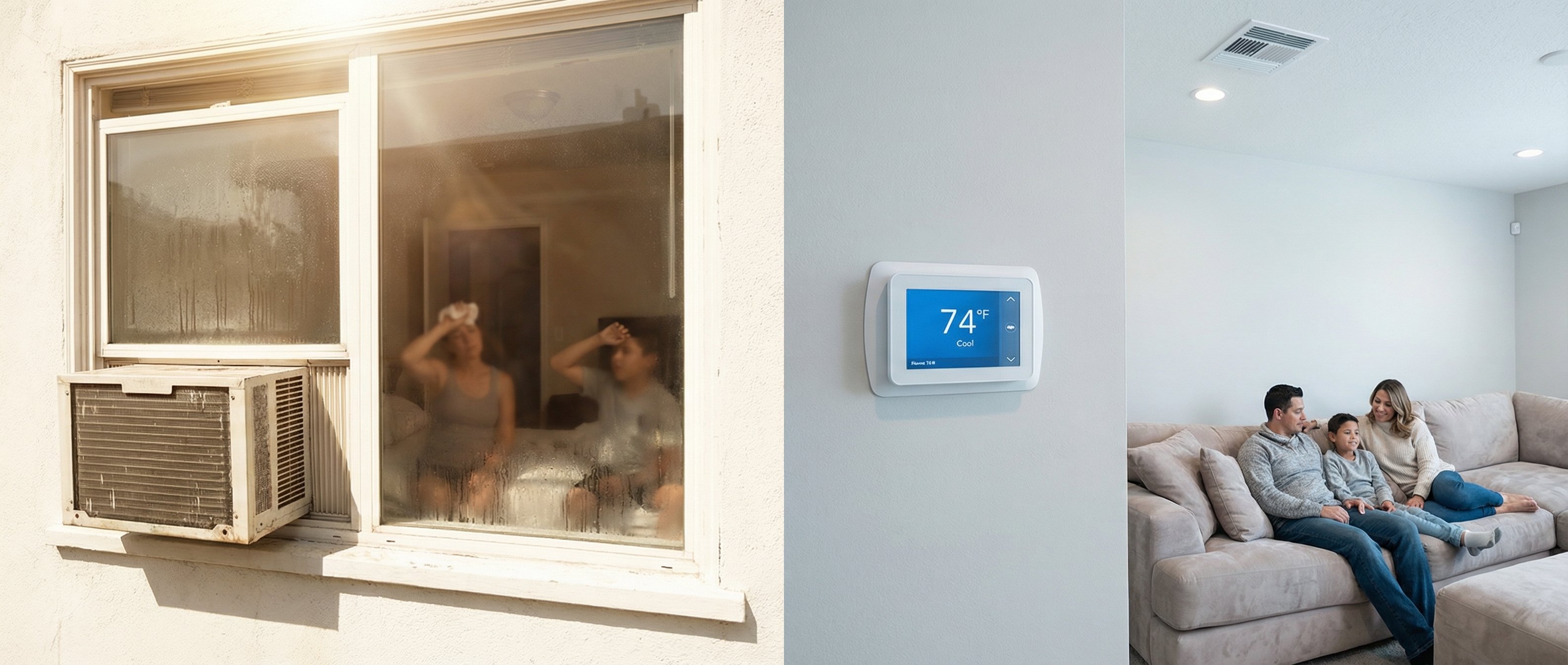
The Problem With Window Units in Phoenix Heat
Here is what the window AC unit in your apartment or guest room is actually doing on a 112-degree Phoenix afternoon: it is moving air. It is not cooling it. That distinction matters more in Arizona than anywhere else in the country.
Standard window air conditioners are engineered for temperate climates, not the furnace that is a Phoenix summer. Most units have a maximum operating rating of around 95 degrees Fahrenheit. When the outside temperature sits at 108, 111, or 115 degrees, which happens routinely from June through September in the Valley, your window unit is working against the temperature it was designed for. The compressor runs harder, cools less effectively, and burns through electricity at a rate that shows up starkly on your APS or SRP bill.
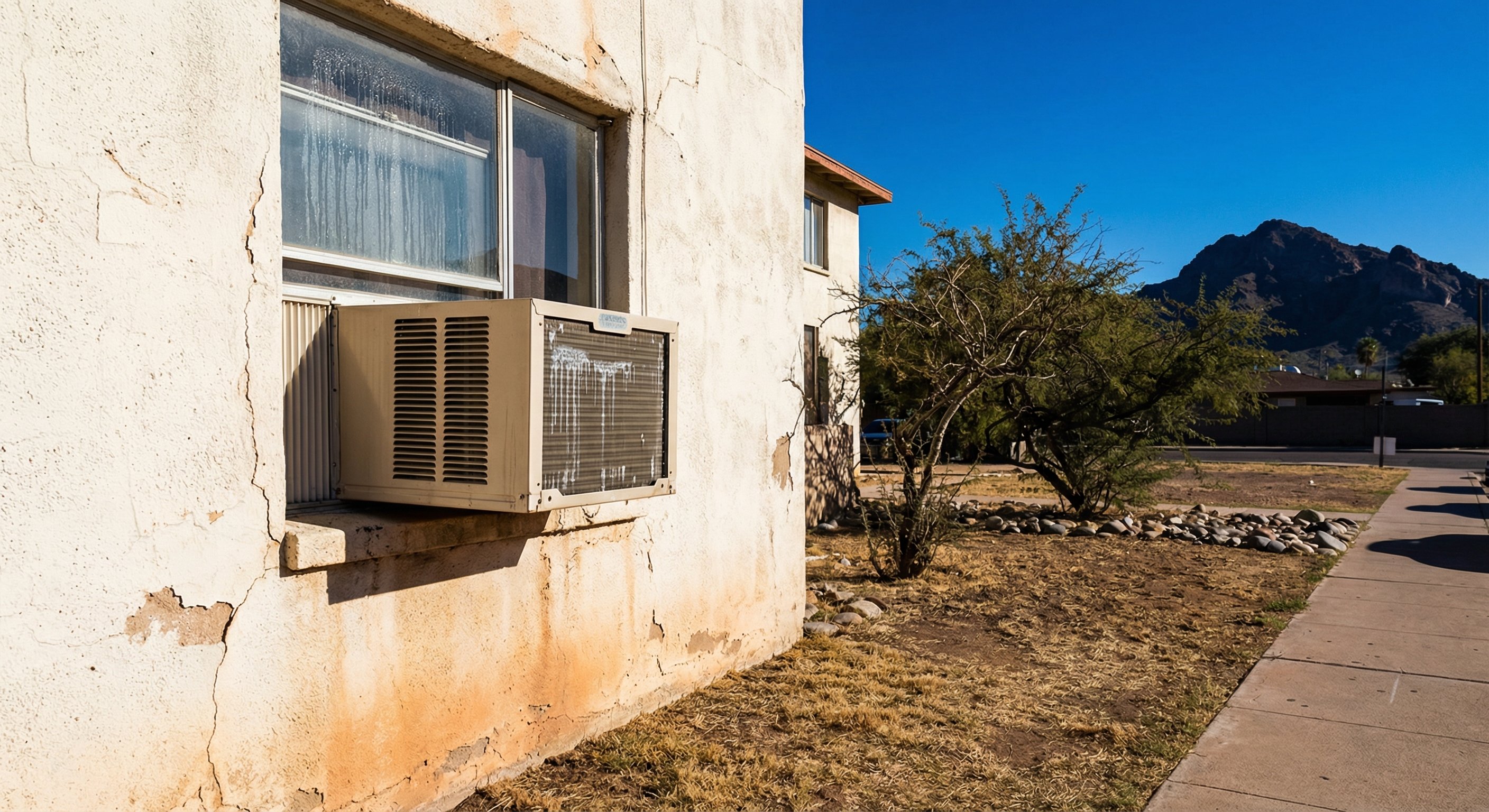
This is not a minor inefficiency. It is a fundamental mismatch between the product and the environment.
When a Window Unit Might Make Sense
I am not going to pretend window AC units never make sense in Phoenix, because that would be dishonest. There are legitimate scenarios where one is the right call.
A studio apartment under 400 square feet in a rental building where you cannot modify anything: a properly sized window unit with at least 10,000 BTUs can handle that space, especially if the unit gets some shade during the afternoon. A temporary situation, such as a home renovation that has your HVAC offline for a few weeks: window units bridge that gap without a full installation. A rental property where the landlord controls the cooling system and has decided that wall-mounted units are not permitted: in that case, you work with what you have.
Beyond those narrow situations, the math consistently points toward central AC as the better investment.
What to Look For If You Are Buying a Window Unit Anyway
If your situation fits one of the exceptions above and you are buying a window unit, here is what actually matters in a Phoenix context.
BTU rating matched to the room. Undersizing is the most common mistake. A 5,000 BTU unit is rated for about 150 square feet. In Phoenix heat, that same unit is effectively a 3,500 to 4,000 BTU unit. If your room is 250 square feet, buy the 8,000 BTU model, not the 5,000.
Inverter technology. Inverter-driven units vary their compressor speed based on cooling demand. They use less energy, run more quietly, and handle the temperature swings of a Phoenix summer more gracefully than older fixed-speed units.
Energy Star certification. The efficiency gains from Energy Star models are real. They cost more upfront but typically pay back the difference within two to three summers through lower electricity consumption.
One thing nobody tells you when you are shopping for a window unit: the rated BTU capacity assumes an indoor temperature of about 80 degrees. When the outdoor temperature hits 108 degrees and your window unit is exhausting into that heat while pulling room air across a coil that was designed for 80-degree ambients, you lose 20 to 30 percent of the unit's rated capacity. A unit rated for 500 square feet at 80 degrees is effectively rated for 350 square feet in a Phoenix summer. Plan accordingly.
Skip the dealer markup
See What a New AC Actually Costs in Phoenix, AZ
AC Rebel shows you the real equipment price — no sales pitch, no inflated quote. Get matched with a licensed installer and keep $3,000–$5,000 in your pocket.
Get My Direct Price →Why Central AC Is the Actual Phoenix System
Central air conditioning does not have this problem. The evaporator coil in a central system is designed to cool return air that is already inside your conditioned space, not air that is being pulled from a hot room through an open window. The system pulls hot air out of your home, runs it across a coil filled with refrigerant, and returns cool air through ducts. That process does not degrade when the outdoor temperature climbs because the coil is isolated from direct exposure to outside air.
For a typical Phoenix home between 1,600 and 2,200 square feet, a 3-ton central AC system is the standard sizing. That system produces 36,000 BTUs of cooling and handles the thermal load of a Valley home through anything July and August can throw at it.
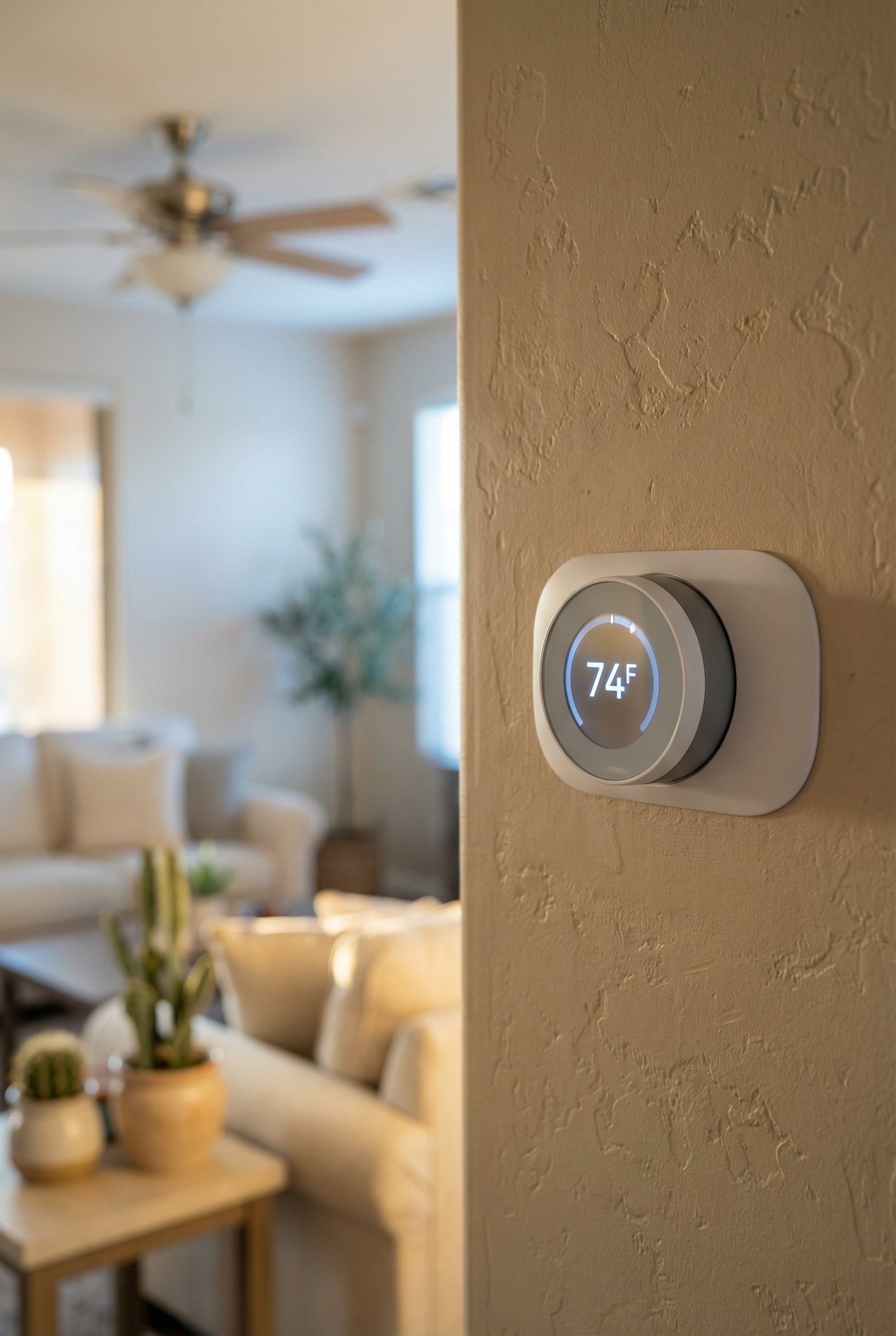
The monsoon humidity difference matters here too. Phoenix gets 40 to 60 percent humidity during monsoon season, from roughly mid-July through mid-September. Window units have small coils and limited dehumidification capacity. They tend to short-cycle, running for five or ten minutes, shutting off, and restarting repeatedly, which means they never actually remove moisture from the air effectively. Central AC runs longer cycles and pulls meaningful amounts of water vapor out of your indoor air. Walk from a central-cooled Phoenix home into a window-unit-cooled room during monsoon season and the difference is immediate: one feels dry and comfortable, the other feels sticky and warm.
The electricity cost difference is significant. Running a 5,000 BTU window unit in a Phoenix bedroom costs roughly $45 to $75 per month during peak summer. Running three or four window units to cool a multi-room home can easily hit $300 to $400 per month in July and August. A modern central AC system with a SEER 17 to 18 rating in a 2,000 square foot home typically runs $180 to $280 per month during the same period, according to APS and SRP rate data for tiered residential plans.
Beyond the operating cost, consider the other practical drawbacks of window units: they cool one room, they are loud enough to disrupt sleep, they block natural light and your ability to open windows, and they represent a meaningful security risk in ground-floor units.
How Long Each System Actually Lasts in Phoenix
Window AC units in Phoenix face two enemies that do not exist in milder climates: extreme heat and desert dust. The compressor in a window unit runs hardest when outdoor temperatures are highest, which means Phoenix summers put more wear on a window unit in four months than an equivalent unit would see in three years in San Diego. The coils also accumulate dust faster because the unit pulls outdoor air directly across them during the exhaust cycle.
Most window units last 8 to 12 years in a temperate climate. In Phoenix, expect 5 to 8 years before the compressor fails, the coils are too corroded to function effectively, or the chassis has rusted through at the window mount.
Central AC systems in Phoenix typically last 12 to 18 years with annual professional maintenance. Many Phoenix homeowners are still running units installed in the early 2000s, which is genuinely impressive given how hard the Valley summer works those systems. The difference comes down to sealed refrigerant systems, professional installation on a concrete pad away from direct sun exposure, and larger compressors designed for sustained operation.
A central AC system also adds real value to your home. In the Phoenix metro area, central air conditioning is not a luxury upgrade, it is a baseline expectation.
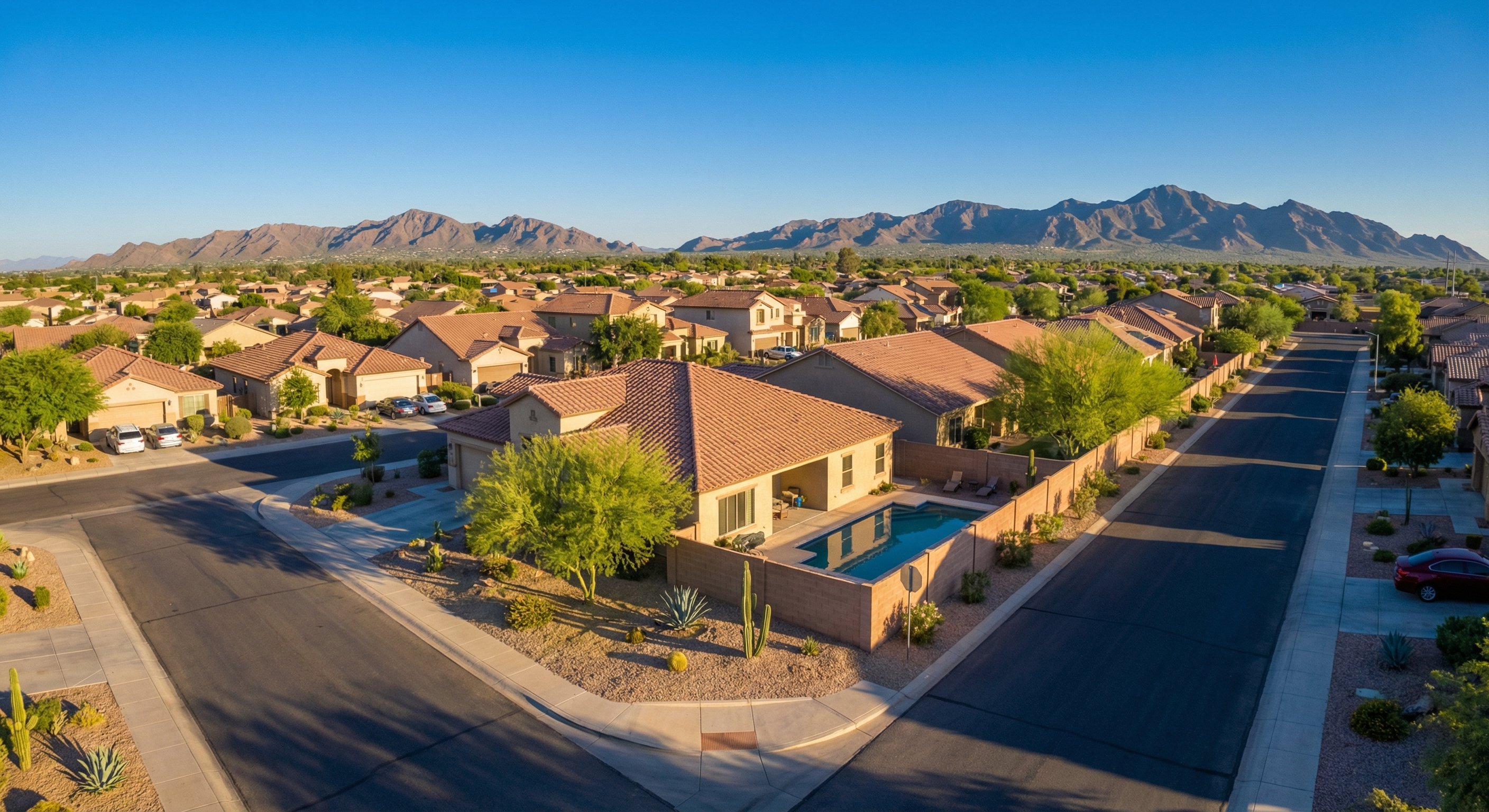 Homes without it sell for less and sit on the market longer. A window-unit-cooled home in Gilbert or Scottsdale will lose buyers who assume the worst about the property's condition and HVAC system.
What Central AC Actually Costs in Phoenix
Here is where AC Rebel changes the calculation. The traditional HVAC supply chain adds a distributor markup of about 10 percent, a supplier markup of about 15 percent, and a contractor markup of 40 percent or more between the supplier and the homeowner. A Goodman 3-ton central AC unit with a 17 SEER rating carries a manufacturer list price of roughly $2,800. That same unit, installed through the traditional contractor chain, typically lands on an invoice between $7,500 and $10,500 depending on ductwork condition and local permit costs.
On AC Rebel, you buy the unit at near-manufacturer pricing and separately contract with a vetted local installer for the installation. That means you see exactly what the equipment costs before any labor or markup is added. The installation is handled by licensed Arizona contractors who are quality-rated and reviewed by homeowners before you accept a bid. You choose the installer, not the other way around.
For financing, monthly payments through GreenSky typically run $87 to $127 per month on a 10-year term for a complete central AC installation in the Phoenix area, depending on the equipment tier you select and whether you need any ductwork repair.
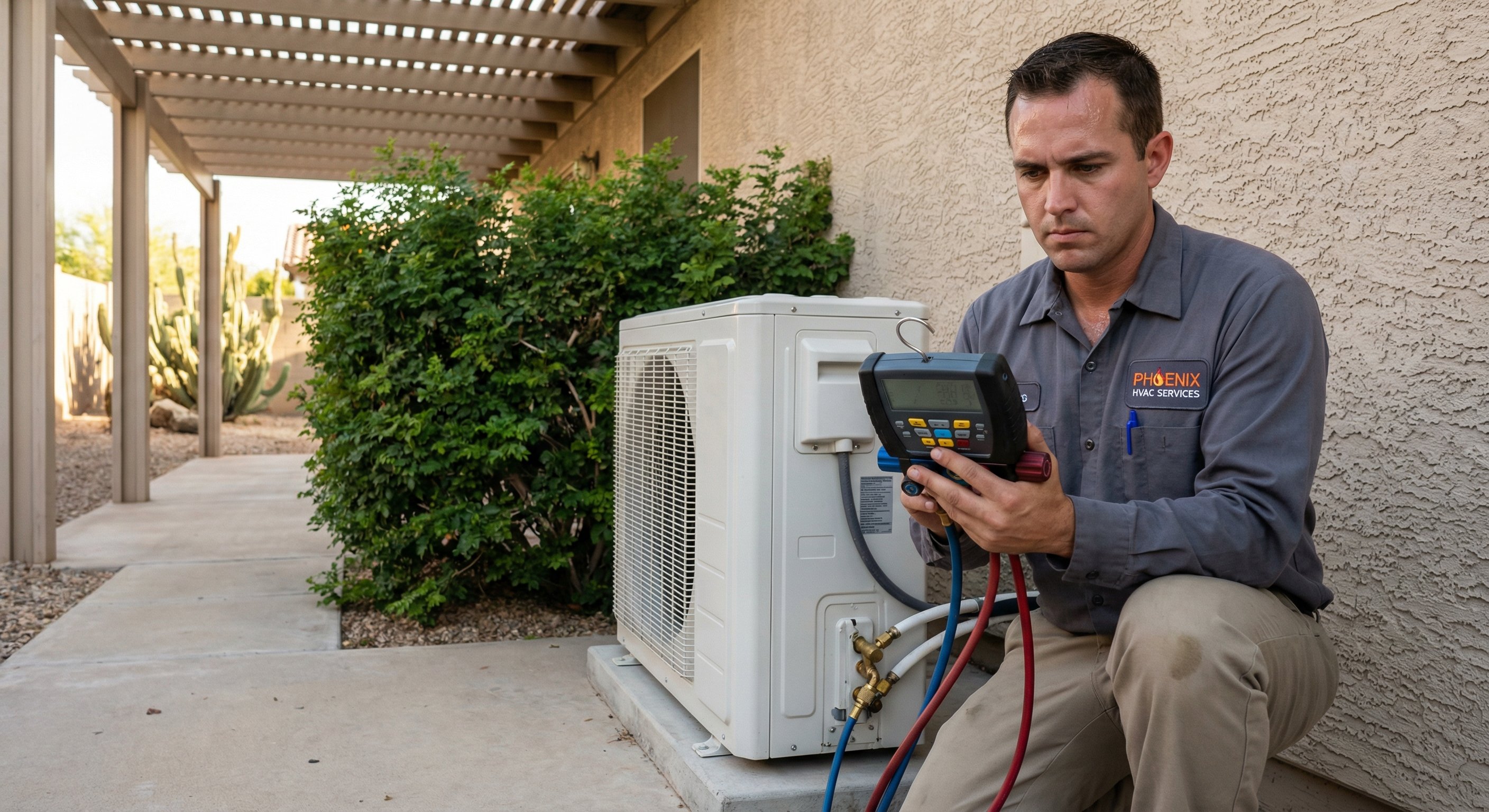
Head-to-Head: Window Unit vs Central AC in Phoenix
| Factor | Window AC Unit | Central AC |
|---|---|---|
| Effective cooling above 105F | Loses 20-30% capacity | Full rated capacity |
| Room size coverage | One room | Entire home |
| Monsoon humidity control | Minimal | Excellent |
| Monthly summer electric bill (2,000 sq ft) | $300-400 | $180-280 |
| Typical lifespan in Phoenix | 5-8 years | 12-18 years |
| Home resale value impact | Neutral or negative | Positive |
| Installation complexity | None | Requires licensed contractor |
| Upfront cost for 2,000 sq ft home | $200-800 per room | $7,500-10,500 installed |
Final Take
If your space is under 400 square feet, temporary, or in a rental where you cannot modify anything, a window AC unit is a legitimate answer. Buy the highest BTU unit that fits your window, get an inverter model, and expect to replace it in five to eight years.
For anything larger, central AC is not just the better option. In Phoenix, it is the only option that actually handles the climate without constant compromises. The upfront cost feels significant until you compare it to running multiple inefficient window units through four months of Arizona summers, watching your electric bill hit $400, and replacing those units every five years.
Get a free instant quote at acrebel.com to see what a central AC system actually costs with transparent, direct pricing.
Frequently Asked Questions
Do window AC units actually work in Phoenix?
Window AC units move air but lose significant cooling capacity when outdoor temperatures climb above 105 degrees, which is routine from June through September. A unit rated for 500 square feet at standard temperatures is effectively rated for 350 square feet on a 110-degree Phoenix afternoon. They can work in very small spaces under 400 square feet, but they are not a reliable primary cooling solution for most Phoenix homes.
How much does central AC cost in Phoenix?
A complete central AC installation in Phoenix, including equipment and labor, typically runs $7,500 to $10,500 depending on home size, ductwork condition, and the equipment tier you select. Through a traditional contractor, that price reflects multiple layers of markup. AC Rebel shows you the equipment cost separately from the installation cost, so you see exactly what you are paying for at each stage.
Can I cool my whole house with window units?
Technically yes, but practically it is expensive and ineffective. Cooling a 2,000 square foot Phoenix home with window units typically requires four to six units and runs $300 to $400 per month in electricity during peak summer. The units do not handle monsoon humidity well, and each one has a different noise profile and runs on its own thermostat. Most homeowners who try this approach replace it with central AC within two to three years.
What size window AC unit do I need for a bedroom in Phoenix?
For a Phoenix bedroom, add 20 to 30 percent more BTUs than you would in a temperate climate. A standard rule of thumb says 20 BTUs per square foot. In Phoenix, use 25 to 30 BTUs per square foot to account for heat gain through walls and windows. A 250-square-foot bedroom needs at least 7,500 BTUs, not the 5,000 you might see recommended in a generic sizing guide.
Are portable AC units better than window units in Phoenix?
Portable AC units are generally worse than window units in Phoenix because they exhaust hot air into your living space through the exhaust hose. That exhaust heat ends up inside your home, which is the opposite of what you want when it is 108 degrees outside. If you are considering a portable unit, make sure it is a dual-hose model that pulls outside air for the condenser, not a single-hose model that pulls from inside.
How long does central AC last in Phoenix?
Central AC systems in Phoenix typically last 12 to 18 years with annual professional maintenance. Units from the early 2000s that were properly maintained are still running in many Phoenix homes. The key maintenance item in a Phoenix context is keeping the condenser coil clean of desert dust and checking refrigerant charge at the start of each summer season.
Should I replace my window units with central AC?
If you own your home and are spending more than $200 per month running window units during summer, the math favors central AC within three to four years through energy savings alone, before accounting for comfort, convenience, and home resale value. If you are in a rental, talk to your landlord about upgrading the HVAC system before spending money on window units that are not your property.
Ready to stop overpaying?
See Your Direct AC Price in 2 Minutes
Skip the dealer. Buy your AC unit at direct pricing and pay a vetted local installer only for the installation. No sales calls. No hidden markup. Most homeowners save $3,000–$5,000+ compared to a traditional quote.
Get My Direct Price — No Credit Card2-minute quote · Licensed installers · 10-year warranty options