
Evaporative Cooling in Phoenix: What Every Arizona Homeowner Should Know
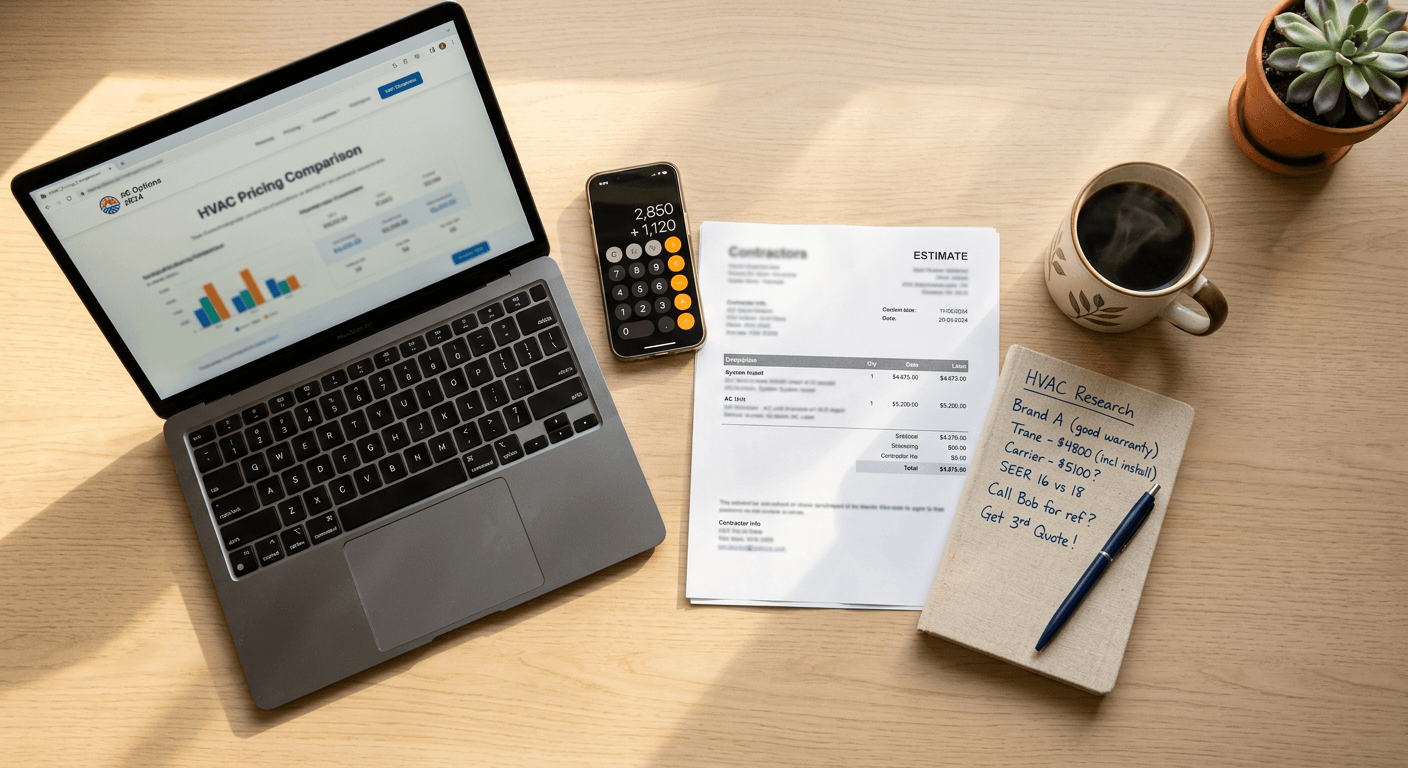
Evaporative Cooling in Phoenix: What Every Arizona Homeowner Should Know
TL;DR: Evaporative cooling works well in Phoenix's dry climate and cuts summer cooling costs by 50-75% compared to central AC. A typical Phoenix homeowner pays $30-$80 per month to run an evaporative cooler versus $200-$400 for central AC. The trade-offs are humidity during monsoon season, monthly maintenance, and water use. If your home lacks proper exhaust venting or you deal with high monsoon humidity, a standard swamp cooler will not be enough on its own.
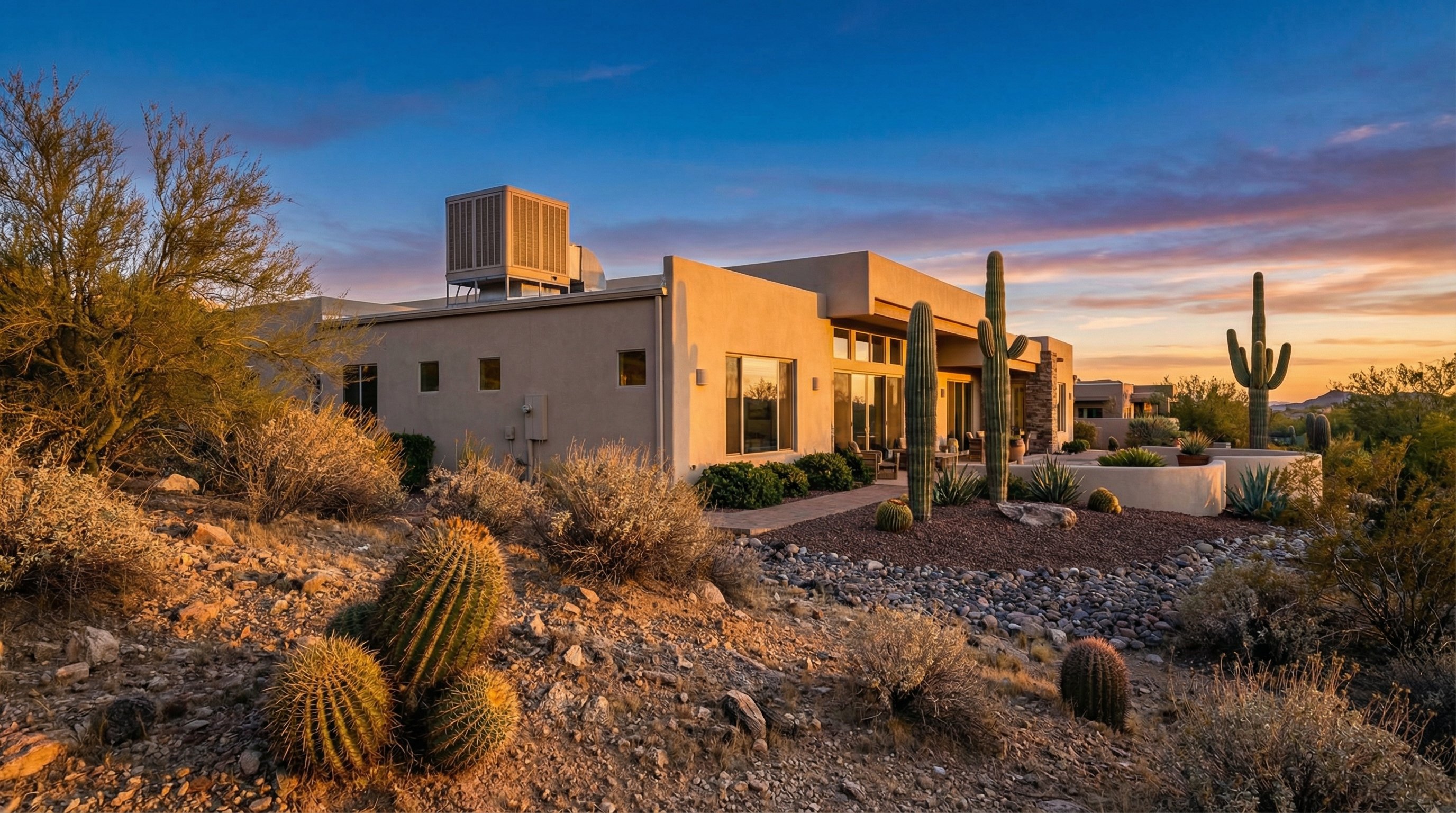
What Is Evaporative Cooling, Anyway
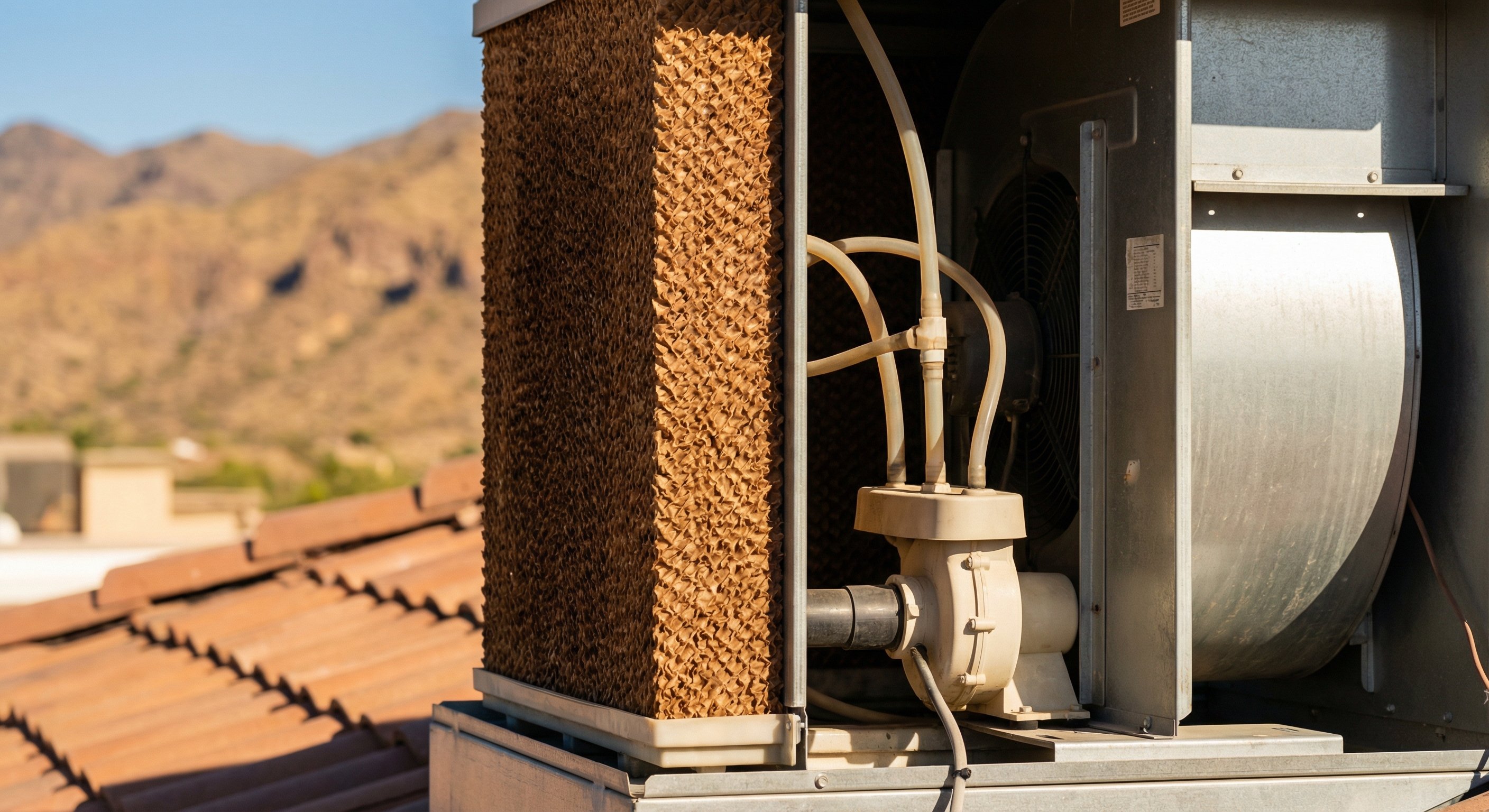
Most Phoenix homeowners have lived with some version of evaporative cooling. You might call it a swamp cooler. The terminology does not really matter. What matters is understanding the mechanism: these systems pull hot outside air through water-soaked cooling pads. As the air passes through, water evaporates and absorbs heat from that air. The cooled air gets pushed into your home while the hot, humid air vents outside.
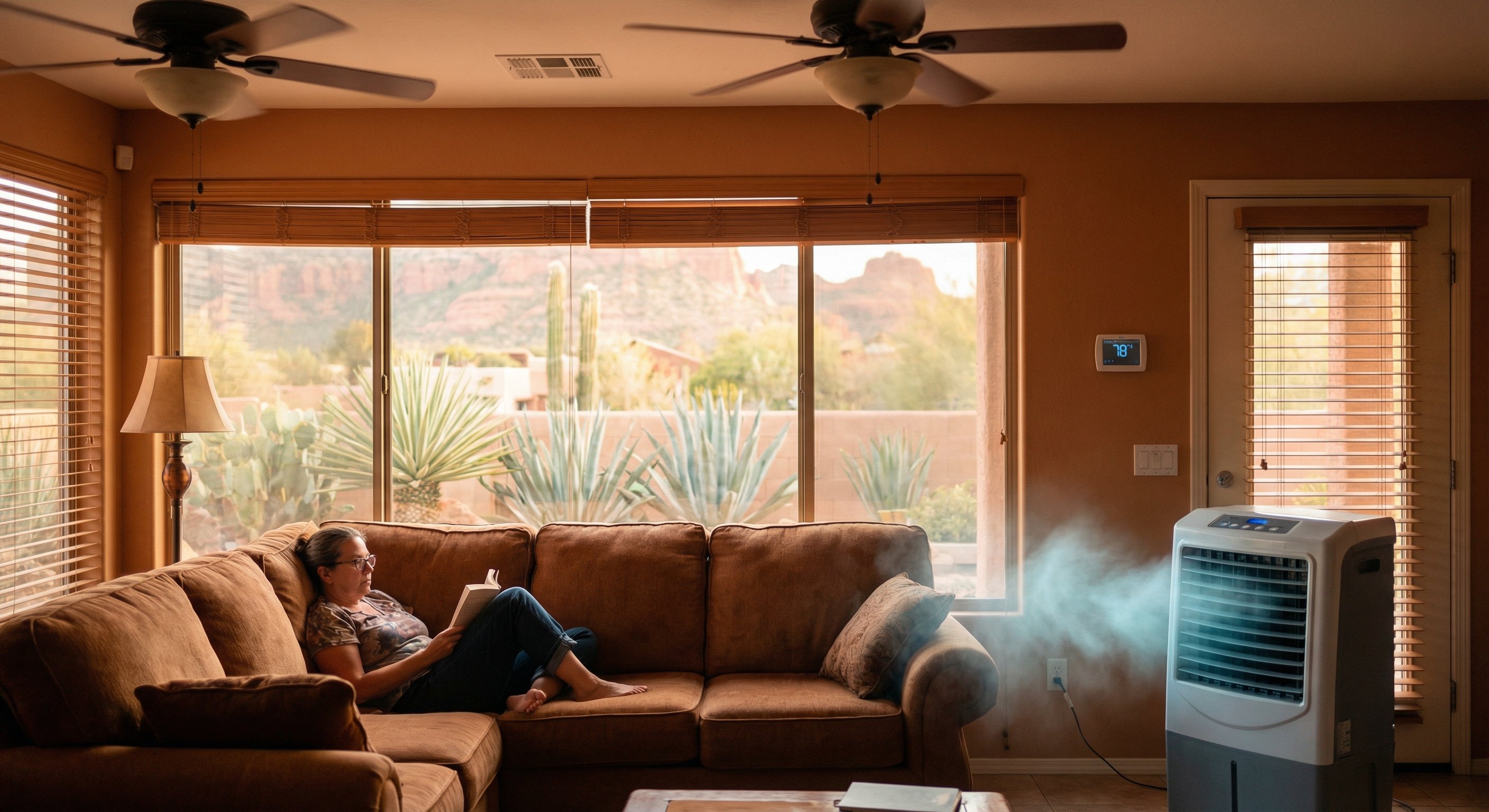
The physics are solid. Evaporation is a genuine cooling process. In Phoenix in July at 3 p.m., when the temperature is 111 degrees and the humidity is 12%, an evaporative cooler can bring your home down to the low 80s comfortably. That is not a sales pitch. That is just physics working in our favor.
Why Phoenix Is Uniquely Good for Evaporative Cooling
Phoenix is objectively one of the top markets for whole-house evaporative cooling in the United States. Our summer climate makes it work better here than just about anywhere else.
Average July afternoon humidity in the Phoenix metro runs 15-25%, with temperatures between 105 and 115°F. At those conditions, evaporative cooling effectiveness sits at 85-95%. Contrast that with Houston or Tampa, where humidity regularly climbs above 70% and evaporative cooling becomes nearly useless. Even Denver has more unpredictable humidity swings.
This is local knowledge. The Mesa homeowner who has been here since the 1990s probably has three generations of swamp cooler knowledge. The Scottsdale transplant from Chicago has probably never used one. If you are new to the Phoenix area, this is worth understanding before you dismiss evaporative cooling or commit to central AC without knowing the alternatives.
The Real Monthly Cost to Run an Evaporative Cooler in Phoenix
A typical 3,000-square-foot Phoenix home needs a 4,000 CFM evaporative cooler. Running that unit on high for 8-10 hours a day in peak summer:
- Water: 15-25 gallons per hour, roughly 150-200 gallons per day
- Electricity: about 1,500-2,000 watts at current APS or SRP rates
- Monthly cost: $30-$80 depending on utility rates and runtime
Compare that to central AC running the same hours in the same home: $200-$400 per month. The savings are real and they compound over a full summer. Phoenix homeowners on SRP or APS time-of-use plans see the biggest contrast. Running central AC during peak rate hours in July can spike your monthly bill by $150 or more compared to an evaporative cooler running at the same times.
Skip the dealer markup
See What a New AC Actually Costs
AC Rebel shows you the real equipment price — no sales pitch, no inflated quote. Get matched with a licensed installer and keep $3,000–$5,000 in your pocket.
Get My Direct Price →The Three Things Nobody Tells You About Evaporative Cooling in Arizona
These are facts that most Phoenix contractors will not tell you outright.
1. It Stops Working When You Need It Most
Monsoon season in Phoenix runs from mid-July through early September. During this period, moisture streams up from the Gulf of California. Humidity in the Phoenix metro climbs from 15-25% to 50-70%. Your evaporative cooler starts pushing hot, humid air into your home because the cooling pads cannot evaporate moisture into air that is already saturated.
On a 108°F monsoon day with 60% humidity, an evaporative cooler will make your home feel worse than doing nothing. You are essentially spraying water into humid air and blowing it inside.
If you live in Gilbert, Chandler, or Queen Creek, where monsoon humidity tends to be higher and lasts longer, you feel this effect more acutely. North Phoenix and Paradise Valley, where the desert air still dries out faster, fare better.
2. The Maintenance Is Real and It Is Monthly in Summer
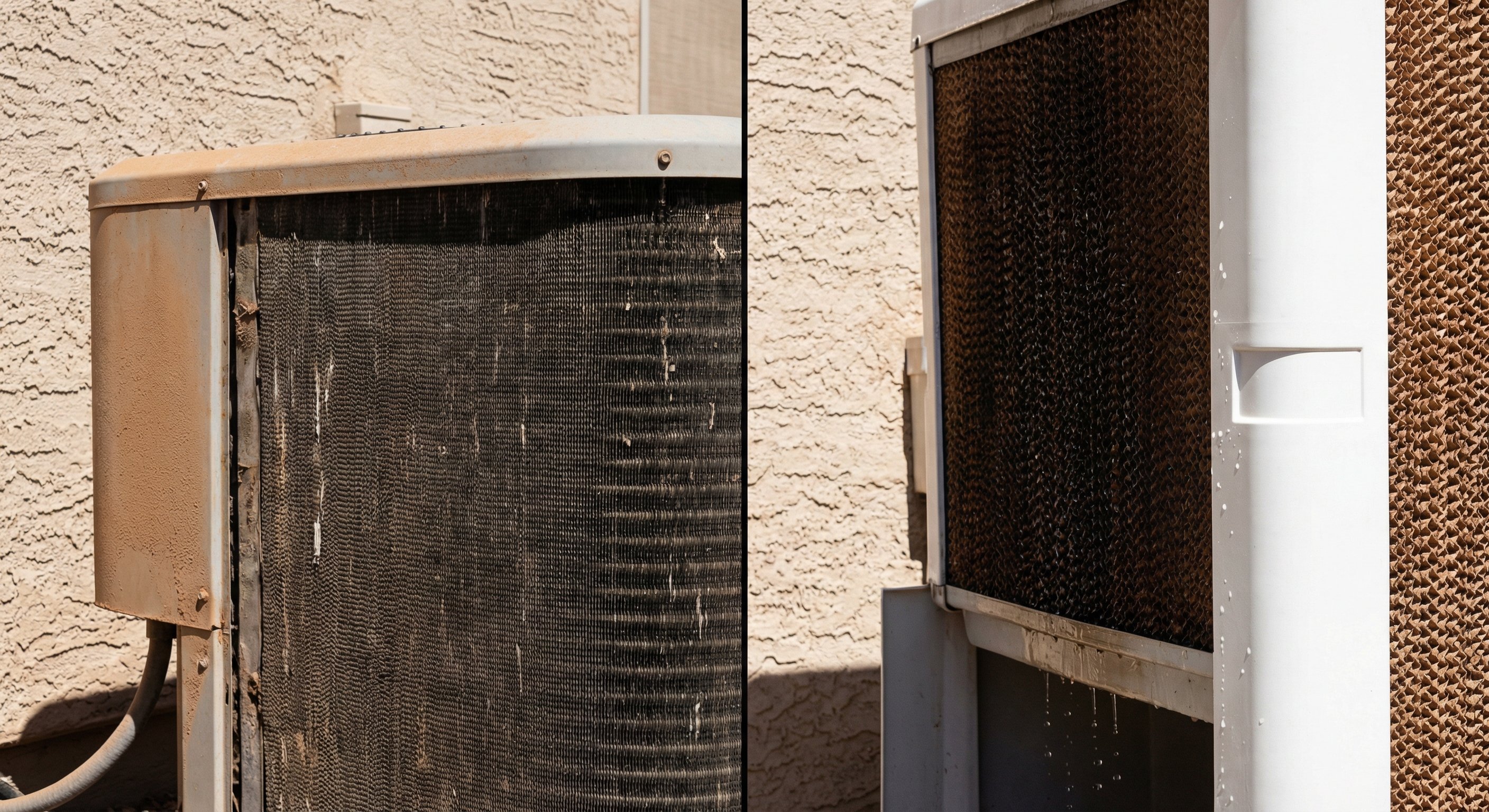
An evaporative cooler that is not maintained will make you sick. Standing water in the cooling pads and reservoir breeds mold, bacteria, and the organisms that cause Legionnaires disease. In Phoenix, where we run these systems for 4-6 months straight, the water sits and warms up. That is exactly what Legionella likes.
Here is the maintenance schedule that actually works for Phoenix homes:
- Every 2-3 weeks in peak summer: Flush cooling pads to remove mineral deposits. Phoenix has extremely hard water, and pads scale up fast.
- Every month: Drain and flush the reservoir. Add an algaecide tablet designed for evaporative coolers.
- Every 3-4 months: Pull and inspect the pads. Replace them if cracked, compacted, or heavily scaled. In a hard-water home, this might mean every season.
- Once a year, before summer: Full disassembly, reservoir cleaning, pad replacement, and pump inspection.
Pads cost $20-$60 each, and a whole-house unit typically has 2-4. Doing the seasonal service yourself takes about 45 minutes and runs $40 in materials. Having a contractor do it costs $150-$300 per visit.
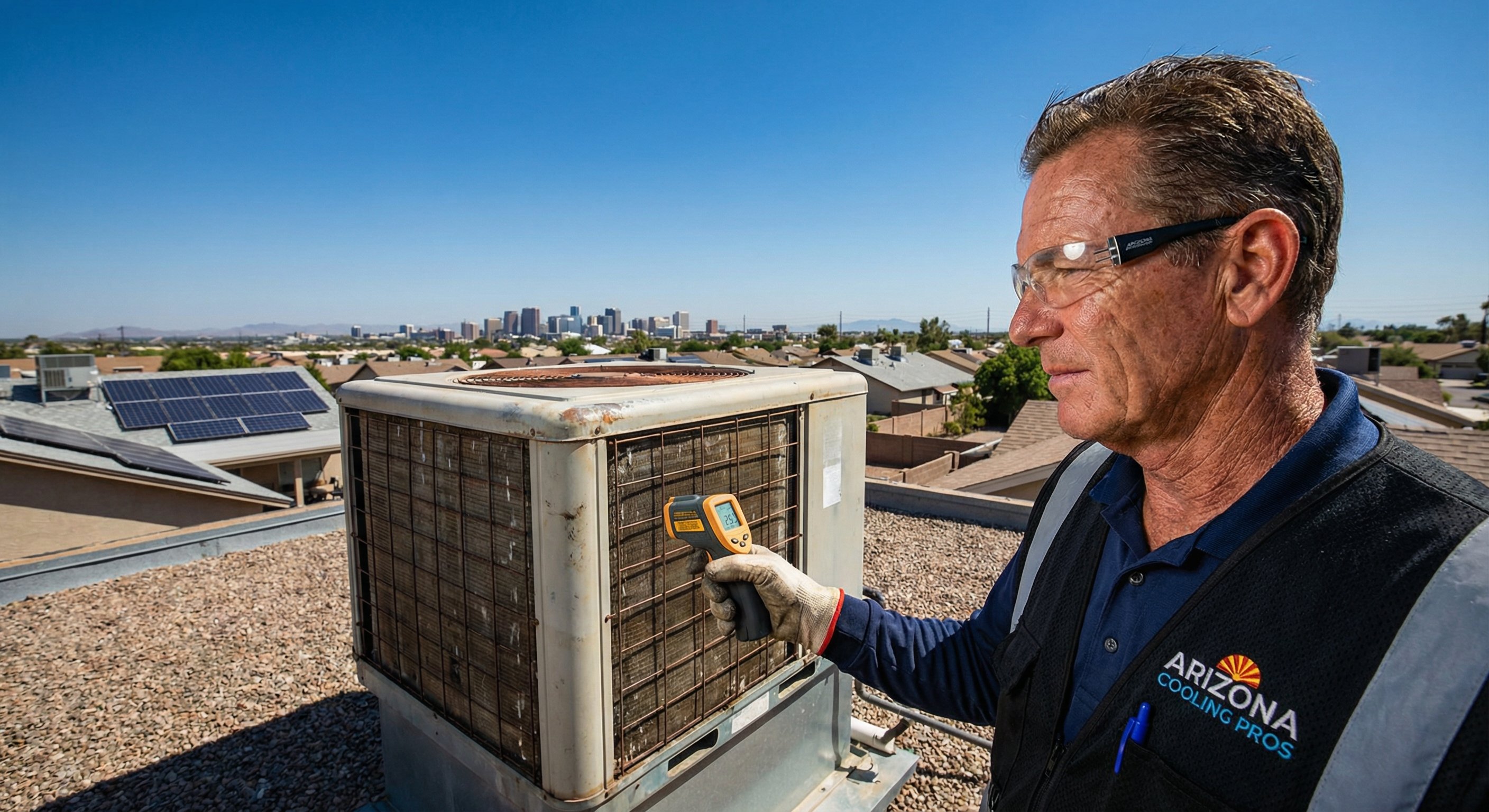
3. Your Home Construction Matters More Than the Cooler
An evaporative cooler pushes cooled air into your home and relies on positive pressure to push hot, humid air out through vents, windows, or exhaust ports. That system only works if your home has somewhere for the air to go.
Older Phoenix homes, especially those built before 1990 in areas like South Phoenix or central Mesa, were often built with swamp coolers in mind. They have window vents, roof venting that works with positive pressure, and relatively loose construction that allows air exchange.
Newer homes in Surprise, Goodyear, or north Peoria are built tighter, with central AC as the assumed cooling system. Putting a whole-house evaporative cooler in a tight, modern home without proper exhaust venting means positive pressure builds up with nowhere to go. The result: stale, humid indoor air that feels muggy rather than cool.
If your home does not have adequate exhaust venting, adding window exhaust fans or a whole-home exhaust system runs $200-$800. Worth knowing before you commit to evaporative cooling as your primary system.
Evaporative Cooler vs Central AC: The Honest Comparison for Phoenix Homes
| Factor | Evaporative Cooler | Central AC |
|---|---|---|
| Cooling in peak summer | Strong until monsoon arrives | Works year-round |
| Monthly operating cost (Phoenix) | $30-$80 | $200-$400 |
| Water usage | 150-200 gallons/day | Minimal |
| Maintenance | Monthly during summer | Seasonal, less involved |
| Indoor humidity | Adds some humidity | Removes humidity |
| Effectiveness during monsoon | Poor | Excellent |
| Installation cost | $3,000-$6,000 | $8,000-$14,000 installed |
For most Phoenix homeowners, evaporative cooling makes sense as a primary system for older, less tight homes, or as a supplemental system alongside central AC to cut summer electric bills during the dry months. Running a properly maintained evaporative cooler from May through early July, then switching to central AC during monsoon season, saves $400-$600 over the course of a summer. The math works if you stay on top of the maintenance.
Who Evaporative Cooling Is Right For in Phoenix
Evaporative cooling makes sense if:
- Your home has adequate exhaust venting or you are willing to add window exhaust fans
- You are comfortable with monthly maintenance during summer
- You want to cut summer electric bills by $200-$300/month during dry months
- You live in north Phoenix, Paradise Valley, or Fountain Hills where monsoon humidity is lower
- You want a supplemental cooling system to run alongside central AC
Central AC makes more sense if:
- Your home is tight construction with no easy exhaust path
- You want one system that handles everything, monsoon included
- You do not want to deal with monthly maintenance
- You are buying for a modern home where evaporative cooling was not in the original design
The Bottom Line on Evaporative Cooling in Phoenix
Phoenix is one of the best markets in America for evaporative cooling. The dry heat is exactly what these systems are designed for. The traps are real too. Monsoon humidity undermines effectiveness at exactly the wrong time. Hard water destroys cooling pads if you do not stay on top of maintenance. And newer, tighter homes need exhaust modifications that add cost and complexity.
Get a free instant quote at acrebel.com to see what a complete cooling system costs without the dealer markup.
Frequently Asked Questions
Q: Does evaporative cooling actually work in Phoenix summers?
Yes, it works very well during the dry months, typically May through mid-July. Once monsoon humidity arrives, evaporative cooling loses effectiveness and most homeowners switch to central AC. If you live in north Phoenix or the desert areas of Scottsdale, you get more dry weeks per summer than homeowners in Chandler or Gilbert.
Q: How much does it cost to run an evaporative cooler in Phoenix?
Running a whole-house evaporative cooler 8-10 hours per day costs between $30 and $80 per month in electricity, plus water. Compare that to central AC at $200-$400 per month during the same period. The savings are genuine during dry months.
Q: Is evaporative cooling healthy?
When properly maintained, yes. Flush the pads every 2-3 weeks to prevent mineral buildup and algae growth, add an algaecide tablet monthly, and replace the pads at the start of each season. Unmaintained units can develop mold and bacteria that affect indoor air quality. In Phoenix's hard water, mineral scaling on pads is the most common issue.
Q: Can I use an evaporative cooler in a modern, tight-construction home?
It requires modifications. Tight homes need dedicated exhaust venting or window fans to create the positive pressure change that makes evaporative cooling work. Without it, you get poor performance and potentially humid, stale indoor air. Budget $200-$800 for exhaust improvements if your home did not come with swamp cooler-ready venting.
Q: How long do evaporative cooling pads last in Phoenix?
In most Phoenix homes, cooling pads need replacement once per season due to hard water mineral buildup. Pads that are flushed and treated regularly might last two seasons. Cost is $20-$60 per pad, and a whole-house unit typically has 2-4 pads.
Q: Should I replace my old evaporative cooler with a new one?
If your current unit is more than 15 years old, the answer is probably yes. Newer units are more energy efficient, have better pump reliability, and include features like auto-water-level detection that older models lack. A new whole-house unit runs $3,000-$6,000 installed, and the efficiency gains on your electric bill will pay for the upgrade over several summers.
Q: Can I run an evaporative cooler and central AC at the same time?
Yes, and many Phoenix homeowners do exactly this. Run the evaporative cooler during dry months for savings, then switch to central AC when monsoon humidity arrives. Some homes are set up with both systems running simultaneously, using the evaporative cooler to pre-cool incoming air before it reaches the central AC system. That hybrid approach reduces central AC runtime and lowers your bill, but it requires a properly designed ductwork setup.
Ready to stop overpaying?
See Your Direct AC Price in 2 Minutes
Skip the dealer. Buy your AC unit at direct pricing and pay a vetted local installer only for the installation. No sales calls. No hidden markup. Most homeowners save $3,000–$5,000+ compared to a traditional quote.
Get My Direct Price — No Credit Card2-minute quote · Licensed installers · 10-year warranty options