
How to Calculate AC Tonnage for Your Phoenix Home (The Real Formula)

How to Calculate AC Tonnage for Your Phoenix Home (The Real Formula)
TL;DR: AC tonnage measures cooling capacity, not weight. One ton equals 12,000 BTU per hour. For most Phoenix homes, calculate tonnage using: (home sq ft × 30) ÷ 12,000, then adjust for ceiling height, insulation, sun exposure, and duct condition. A properly sized 2,000 sq ft Chandler home with average conditions needs a 3.5 to 4-ton unit. Undersizing by even half a ton forces your AC to run constantly in July heat, while oversizing short-cycles and leaves humidity stuck inside. Skip the contractor's guess and run the numbers yourself before you ever sign a quote.
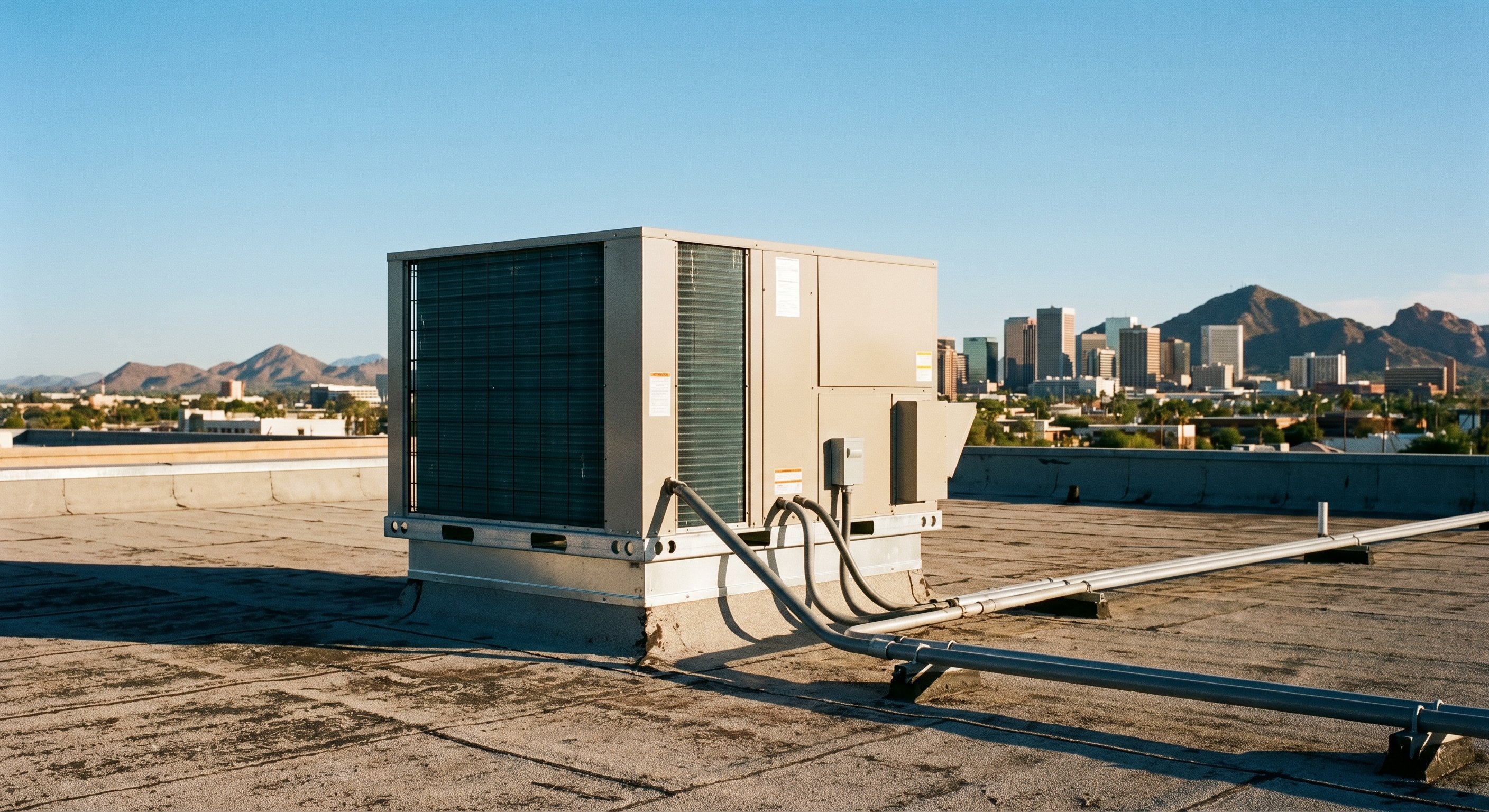
Your thermostat reads 81°F on a July afternoon even though it has been set to 74° since noon. You call three contractors for quotes. One says 3-ton. One says 4-ton. One says 3.5-ton but wants an extra $2,800 for ductwork upgrades. None of them explain how they landed on their number. That is when you need to calculate AC tonnage for your Phoenix home yourself. Not to replace the contractor. To know whether they are guessing or calculating.
What AC Tonnage Actually Means
The word "ton" comes from the amount of cooling needed to melt one ton of ice in 24 hours. That works out to 12,000 British Thermal Units per hour, or 12,000 BTU/hr. A 3-ton unit moves 36,000 BTU of heat per hour. A 4-ton unit moves 48,000 BTU per hour.
In Phoenix, that number matters more than almost anywhere else in the country. When outside temperatures hit 110°F for weeks at a stretch, your AC is not just cooling your home, it is fighting the entire Arizona summer on a marathon run. A unit that is one half-ton too small will never catch up. A unit that is one ton too large will short-cycle and leave your home feeling damp and sticky even when the thermostat says the right number.
The goal is not the biggest unit. The goal is the right unit for your specific home.
The Basic AC Tonnage Formula for Phoenix Homes
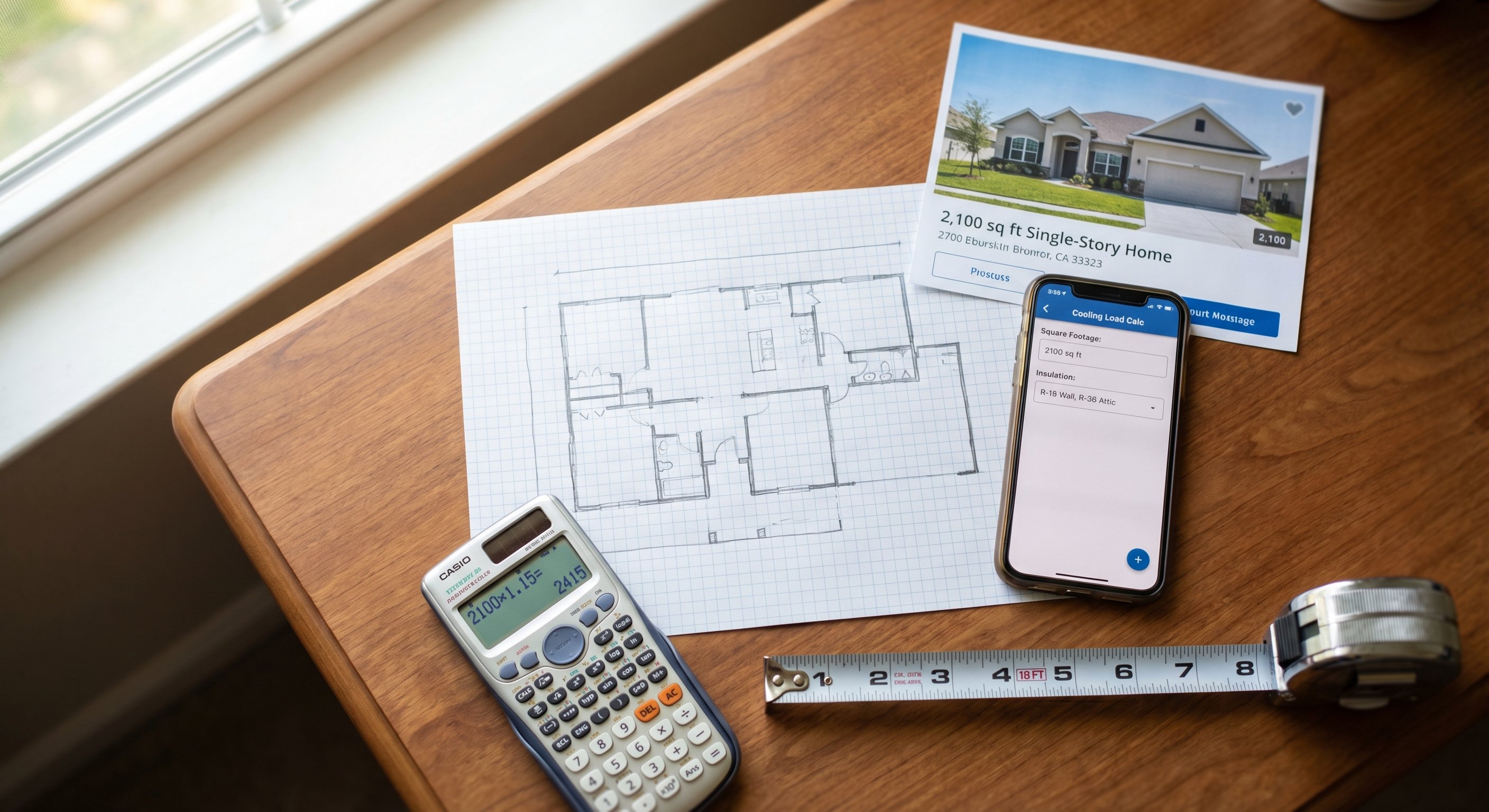
Here is the starting point before adjustments. This is the calculation HVAC professionals use as a baseline:
Step 1: Square footage of the area being cooled
Do not count your garage. Do not count covered porches. Only the conditioned living space inside your home. Grab a tape measure and get your home's actual footprint, or pull it from your appraisal or listing.
Step 2: Apply the Phoenix multiplier
Most of the country uses a multiplier between 500 and 600 sq ft per ton. Phoenix is different. Our summers are longer, hotter, and more relentless. Use 30 BTU per square foot as your baseline multiplier for a typical single-story home with moderate insulation.
Step 3: Do the math
(sq ft × 30 BTU/sq ft) ÷ 12,000 BTU per ton = baseline tons
A 2,000 sq ft home in Gilbert: (2,000 × 30) ÷ 12,000 = 5 tons baseline
That is your starting number. Now you adjust it.
Adjustments That Change the Answer for Phoenix Homes
The baseline formula gives you a rough number. These five factors will move it up or down, and in Phoenix at least three of them almost always push toward a larger unit.
1. Ceiling Height
Standard calculations assume 8-foot ceilings. If your home has 9-foot, 10-foot, or vaulted ceilings, add 10 to 25 percent more cooling capacity. High ceilings mean more volume to cool, and hot air rises, making upper floors hotter.
2. Insulation Quality
Phoenix homes built before 2000 often have R-19 or less in the attic, when R-38 or R-49 is right for this climate. Poor insulation means your AC cools the outside as much as the inside. If your attic has not been checked in five years, assume it is costing you capacity.
3. Sun Exposure and Orientation
West-facing windows take direct afternoon sun when outdoor temps are already at peak. Add 10 to 15 percent more capacity for heavy sun exposure, or install window film and shade structures instead of oversizing the unit.
4. Number of People and Heat-Generating Appliances
Every person generates 100 to 150 watts of heat. Home offices, kitchens during dinner prep, and home gyms all add to the cooling load. Account for this if your household runs warm or you work from home full-time.
5. Ductwork Condition and Layout
Leaky, undersized, or poorly routed ductwork can lose 20 to 30 percent of your cooled air before it reaches your living spaces. If your ducts run through a hot attic, the loss is worse. A home that needs a 3-ton unit with sealed ducts might need 3.5 or 4 tons with 1980s ductwork in a Glendale ranch. The ACCA estimates that duct leakage alone accounts for a significant portion of efficiency loss in existing homes.
Skip the dealer markup
See What a New AC Actually Costs
AC Rebel shows you the real equipment price — no sales pitch, no inflated quote. Get matched with a licensed installer and keep $3,000–$5,000 in your pocket.
Get My Direct Price →The Adjusted Calculation: Putting It All Together
Let us run a full example for a real Phoenix scenario.
Your home: 2,200 sq ft, 9-foot ceilings, west-facing back patio with large windows, built 1998 in Peoria, attic insulation R-22, moderate ductwork.
Baseline: (2,200 × 30) ÷ 12,000 = 5.5 tons
Adjustments:
- Ceiling height (+10%): 5.5 × 1.10 = 6.05
- Sun exposure (+15%): 6.05 × 1.15 = 6.96
- Insulation (+10%): 6.96 × 1.10 = 7.66
- Ductwork (+15%): 7.66 × 1.15 = 8.81
That would suggest an 8 to 9-ton unit, which is unrealistic. At this point, the better answer is not to keep adding capacity, it is to fix the insulation and ductwork first. Improve attic insulation to R-38, seal ducts, and add window film. Most homes in this situation land at 3 to 5 tons when the envelope is fixed. Use the formula to know whether your problem is the unit or the home.
The Shortcut Table for Phoenix Homeowners
A rough sizing guide for single-story Phoenix homes with average insulation and moderate sun exposure.
| Home Size (sq ft) | Estimated AC Tonnage |
|---|---|
| 1,200 to 1,500 | 2.5 to 3 tons |
| 1,500 to 1,800 | 3 to 3.5 tons |
| 1,800 to 2,200 | 3.5 to 4 tons |
| 2,200 to 2,700 | 4 to 5 tons |
| 2,700 to 3,200 | 5 to 6 tons |
What to Do With Your Number
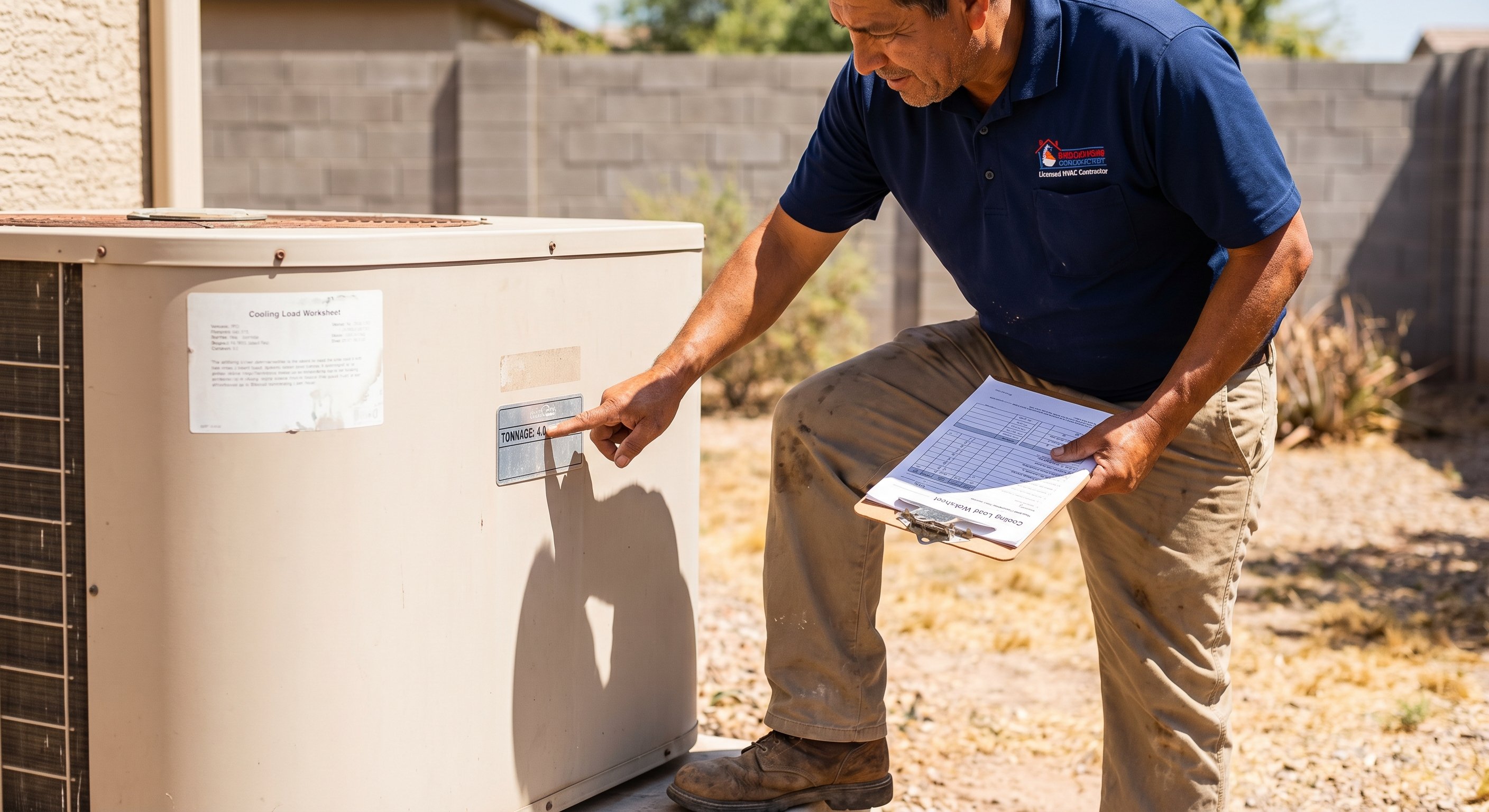
Once you have calculated your estimated tonnage, the next step is verification. No online formula replaces a proper Manual J load calculation performed by a qualified HVAC contractor using ACCA-approved software.
Ask any contractor who gives you a quote whether they ran a Manual J calculation. If they say they did, ask to see the output. A written load calculation with actual numbers is the baseline of professional work. A contractor who says "I just look at the house and know" is guessing, and in the Phoenix summer guessing costs you money either upfront or every month for years.
Common Mistakes Phoenix Homeowners Make With AC Sizing
Guessing by price instead of size. Contractors sometimes upsize a unit because it costs more, not because you need it. A 4-ton unit in a 1,800 sq ft home is almost always wrong.
Following the old "500 sq ft per ton" rule. That rule was designed for the Midwest and East Coast. Phoenix summers are 15 to 20°F hotter for longer. You need more cooling capacity per square foot.
Ignoring the attic. In Phoenix, attics regularly hit 140°F in summer. If your unit is pulling air from a hot attic, or if your ducts run through an unconditioned attic, your actual cooling effectiveness is significantly lower than the rated capacity.
Replacing like for like without reassessing. When an old 3-ton unit dies, homeowners often assume they need exactly 3 tons again. But the old unit might have been wrong from day one, or the home has changed since it was installed.
Assuming bigger is always better. An oversized unit short-cycles. It turns on, cools the air quickly, shuts off, and repeats. Each cycle is less efficient than a longer run, and the short cycles never run long enough to remove humidity properly. Phoenix humidity from monsoon season gets trapped inside when your unit is short-cycling.
How AC Rebel's Pricing Makes This Easier
Once you know your tonnage, you can shop with real knowledge instead of blind trust. AC Rebel shows you direct pricing on units by tier and size so you know what the equipment actually costs before installation is added. A 4-ton Goodman unit at direct pricing versus a 4-ton Trane unit at dealer markup are not the same number, and knowing your tonnage lets you compare apples to apples.
If you are ready to see what the right-sized unit costs for your specific home, run the quote wizard and enter your actual square footage. No sales call required.
Frequently Asked Questions
Q: Can I calculate AC tonnage myself without a contractor?
Yes. The formula (home sq ft × 30) ÷ 12,000 gives you a solid baseline. Adjust for ceiling height, insulation quality, sun exposure, and ductwork condition using the multipliers in this article. This will get you within half a ton in most cases. For a full Manual J load calculation with official software, you still need a qualified contractor.
Q: What size AC unit do I need for a 2,000 sq ft home in Phoenix?
Most 2,000 sq ft single-story homes need 3.5 to 4 tons with average conditions. Add 0.5 to 1 ton if you have high ceilings, poor attic insulation, or heavy west-facing sun exposure. If your ducts run through a hot attic, fix the ductwork before buying a larger unit.
Q: Is a higher SEER rating more important than getting the right tonnage?
No. A perfectly efficient 2.5-ton unit in a home that needs 4 tons will never keep up and will burn out early. Get the tonnage right first, then choose the highest SEER rating your budget allows. In Phoenix, SEER 18 or higher pays back faster than in cooler climates because your system runs more hours per year. ENERGY STAR certified heat pumps and air conditioners must meet minimum SEER 15 and 16 standards respectively, and Arizona utilities including APS and SRP offer rebates for higher-efficiency units that qualify.
Q: How do I know if my current AC unit is the wrong size?
Undersized signs: thermostat never reaches setpoint on hot days, unit runs 18-plus hours daily, cooled air feels lukewarm at distant vents. Oversized signs: humidity feels stuck in the home despite thermostat showing 74°F, unit cycles on and off every 10 to 15 minutes, rooms cool unevenly from one to the next.
Q: Does adding window film or shade reduce the tonnage I need?
Yes. West and south-facing windows are a major cooling load in Phoenix. Adding low-emissivity window film, exterior shade screens, or a covered patio reduces solar heat gain and can meaningfully reduce the tonnage you need, potentially saving you thousands on a smaller unit. The DOE's guide on window performance explains how solar heat gain coefficient (SHGC) ratings work and which upgrades have the biggest impact in hot climates.

Run the numbers before you sign a quote. A Phoenix summer is not the time to find out your contractor guessed wrong on tonnage.
Get a free instant quote at acrebel.com and see what the right-sized unit costs for your home.
Ready to stop overpaying?
See Your Direct AC Price in 2 Minutes
Skip the dealer. Buy your AC unit at direct pricing and pay a vetted local installer only for the installation. No sales calls. No hidden markup. Most homeowners save $3,000–$5,000+ compared to a traditional quote.
Get My Direct Price — No Credit Card2-minute quote · Licensed installers · 10-year warranty options