
Why Attic Heat Is Killing Your AC in Phoenix (And What Actually Fixes It)

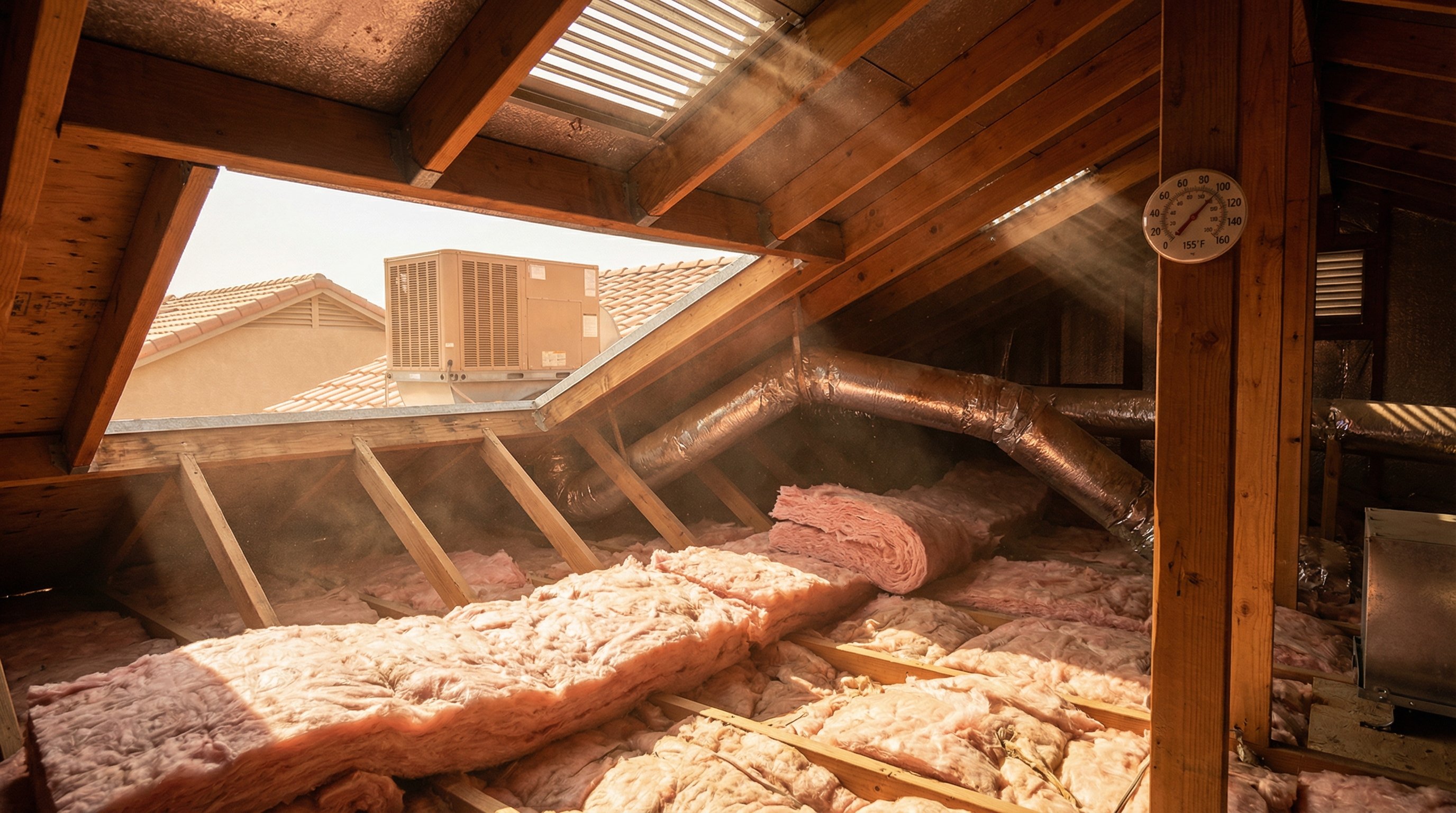
TL;DR: Phoenix attics routinely hit 140 to 155 degrees Fahrenheit in summer, turning your ductwork into a passive heating system that fights your AC around the clock. The fixes that work are sealing and insulating duct joints ($150 to $600), adding attic insulation to R-38 or higher ($800 to $2,500 for an average Phoenix home), improving soffit and ridge ventilation ($300 to $800), and installing a radiant barrier ($400 to $1,500). These interventions reduce attic air temperature by 30 to 50 degrees, cut AC runtime significantly, and lower your summer electric bill without replacing your system.
The Problem Is Not Your AC Unit
When your system runs constantly and your house still feels warm in a Phoenix July, the instinct is to blame the AC. And HVAC companies are happy to let you reach that conclusion because it leads to a $10,000 replacement quote.
But in most Phoenix homes, the AC itself is not the primary problem. The problem is your attic.
Attics in the Phoenix metro regularly measure 140 to 155 degrees Fahrenheit on a summer afternoon. Your ductwork runs through that space. Every joint, every connection, every inch of uninsulated duct is radiating heat into the air around it, and that hot air is warming the conditioned air inside the ducts before it ever reaches your vents. Your system is not just cooling your home. It is also cooling your attic.
This is called thermal gain, and it is the single largest source of wasted AC capacity in Arizona homes.
Why Phoenix Attics Are Worse Than Almost Anywhere Else
A home in Houston or Dallas has hot attics too. But Phoenix has a specific combination of conditions that makes ours categorically more punishing.
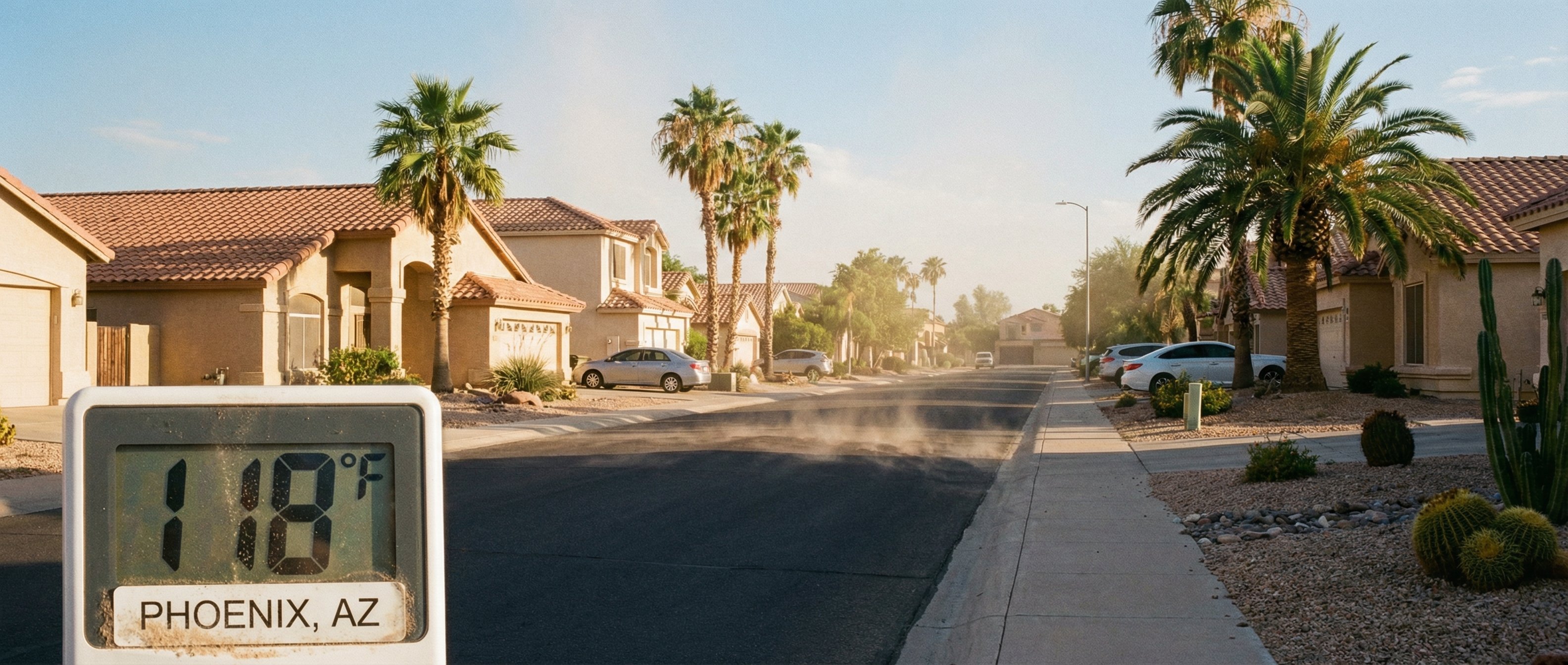
The direct sun exposure is the start. Summer days hit 108 to 118 degrees Fahrenheit regularly, and the roof surface of a typical stucco or tile-roof Phoenix home can reach 180 degrees in direct sun. That heat radiates downward into the attic cavity all day long.
Then there is the monsoon season. July through September brings humidity that makes the air feel heavier, but the rain itself is almost irrelevant to attic temps. What the monsoon does is reduce the overnight cooling that other climates rely on. In dry climates, an attic can shed much of its heat overnight through ventilation. When humidity spikes, that overnight cooling slows down. The attic starts each morning already warmer than it should be.
Desert dust is the third factor most people never consider. Dust accumulates on the underside of roof sheathing and reduces the roof's reflectivity. A dusty Phoenix roof absorbs more heat than a clean one. Over a flat roof or a tile roof with exposed underlayment, this effect is measurable.
What Thermal Gain Is Actually Costing You
This is not theoretical. Thermal gain in an uninsulated or poorly insulated Phoenix attic costs you in three specific ways.
Higher electric bills. APS and SRP both charge tiered rates that spike in summer months. A system that runs 30 to 40 percent more than it should will push you into higher billing tiers faster. Many homeowners in the Phoenix metro see summer bills of $350 to $500 with older systems in poorly insulated homes.
Shortened AC lifespan. An AC compressor in a Phoenix summer is already working near its design limits. When you add thermal gain from the attic, the suction-side temperature rises, the system has to work harder to achieve the same cooling, and wear on the compressor accelerates. A system that should last 12 to 15 years in a well-maintained Arizona home may give you 8 to 10 years in a home with a 150-degree attic.
Uneven cooling. As ductwork in the attic heats up between cycles, the air reaching different rooms changes temperature. Rooms directly under long duct runs or near the end of an uninsulated duct run will be noticeably warmer. Homeowners in two-story homes in neighborhoods like Arcadia, McCormick Ranch, or Gainey Ranch in Scottsdale frequently describe this pattern.
Skip the dealer markup
See What a New AC Actually Costs
AC Rebel shows you the real equipment price — no sales pitch, no inflated quote. Get matched with a licensed installer and keep $3,000–$5,000 in your pocket.
Get My Direct Price →The Four Fixes That Actually Work
There is a standard set of interventions for attic heat, and not all of them are worth doing in every situation. Here is an honest breakdown.
Fix 1: Seal and Insulate Your Ductwork
This is the single highest-return intervention for most Phoenix homes. Ductwork in attics is almost never perfectly sealed. Every joint that leaks hot attic air into the supply plenum is a direct loss of cooling capacity.
The fix is mastic sealant applied to all duct joints, plus wrapping uninsulated ducts with insulation sleeves. This is not expensive work. A handyman or HVAC tech can seal and insulate the average Phoenix home attic ductwork in half a day for $300 to $800, depending on how much ductwork is exposed.
The ENERGY STAR website has a searchable database for certified contractors who do this work. Expect to pay more if you have a large two-story home with extensive duct runs.
Fix 2: Add or Upgrade Attic Insulation
Most Phoenix homes built before 2005 have R-19 to R-30 insulation in the attic floor. Current code and best practice for this climate is R-38 to R-49. The upgrade cost for a 1,800 to 2,200 square foot home is typically $800 to $2,200, depending on whether you are adding blown-in cellulose or laying batts.
This is where Phoenix homeowners often get bad advice. Some contractors will recommend spray foam insulation on the roof deck. That can work, but it is $4,000 to $10,000 for an average home and it seals the attic completely, which creates problems with moisture and any gas appliances in the home. For most situations, attic floor insulation with proper ventilation is the better call.
Fix 3: Improve Attic Ventilation
Ventilation moves hot air out of the attic instead of letting it accumulate. In a Phoenix summer, this can lower attic temperatures by 20 to 40 degrees, depending on how much ventilation you add.
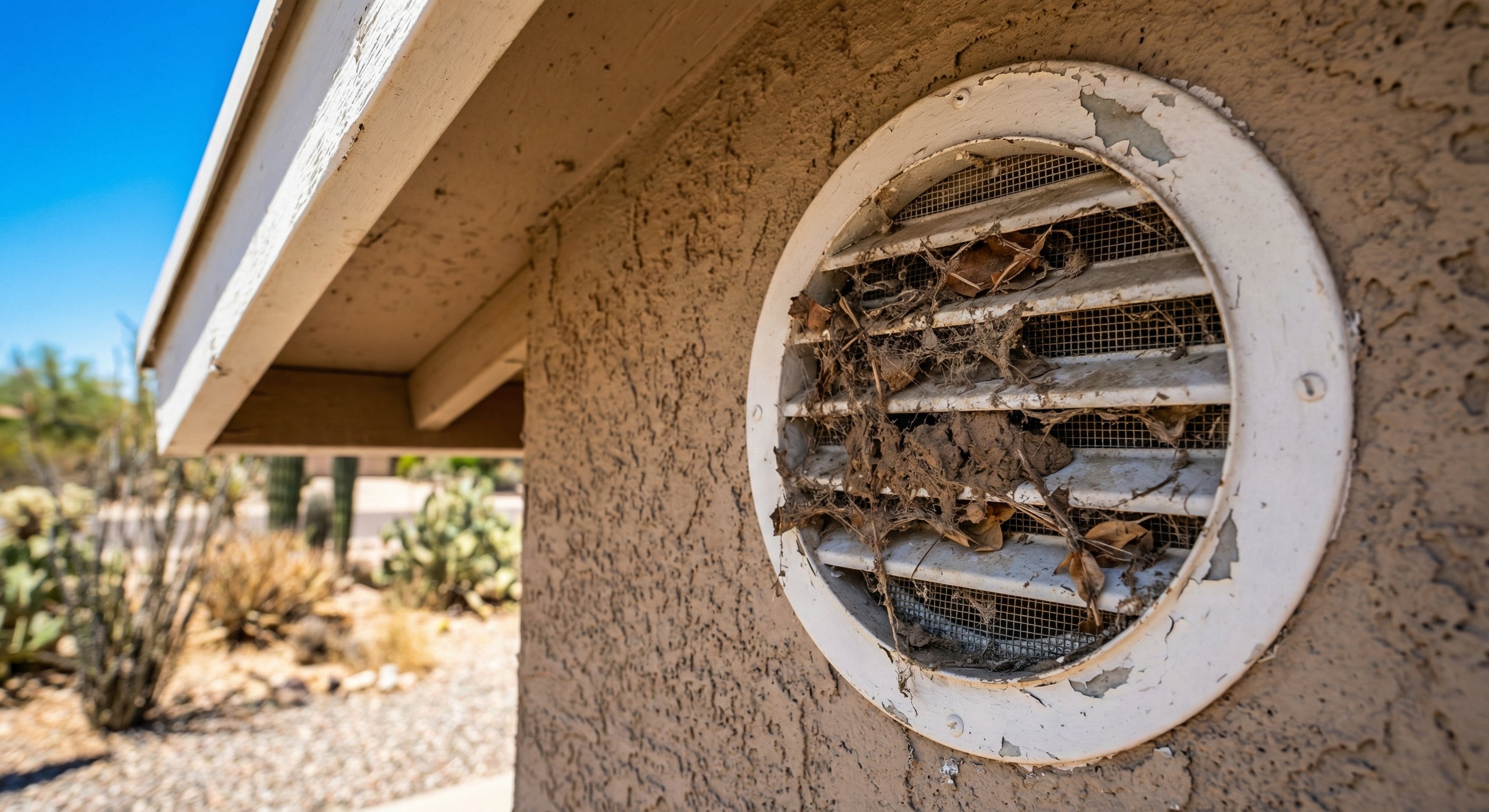
The most effective approach is a combination of soffit vents and ridge vents. Hot air rises and exits through the ridge, and cool air enters through the soffits. This is passive ventilation that requires no electricity and runs constantly.
If your home has gable vents but no soffit or ridge vents, you are mostly circulating air within the attic rather than replacing it. The upgrade cost for adding soffit and ridge ventilation on an average Phoenix home is $400 to $1,200.
Fix 4: Install a Radiant Barrier
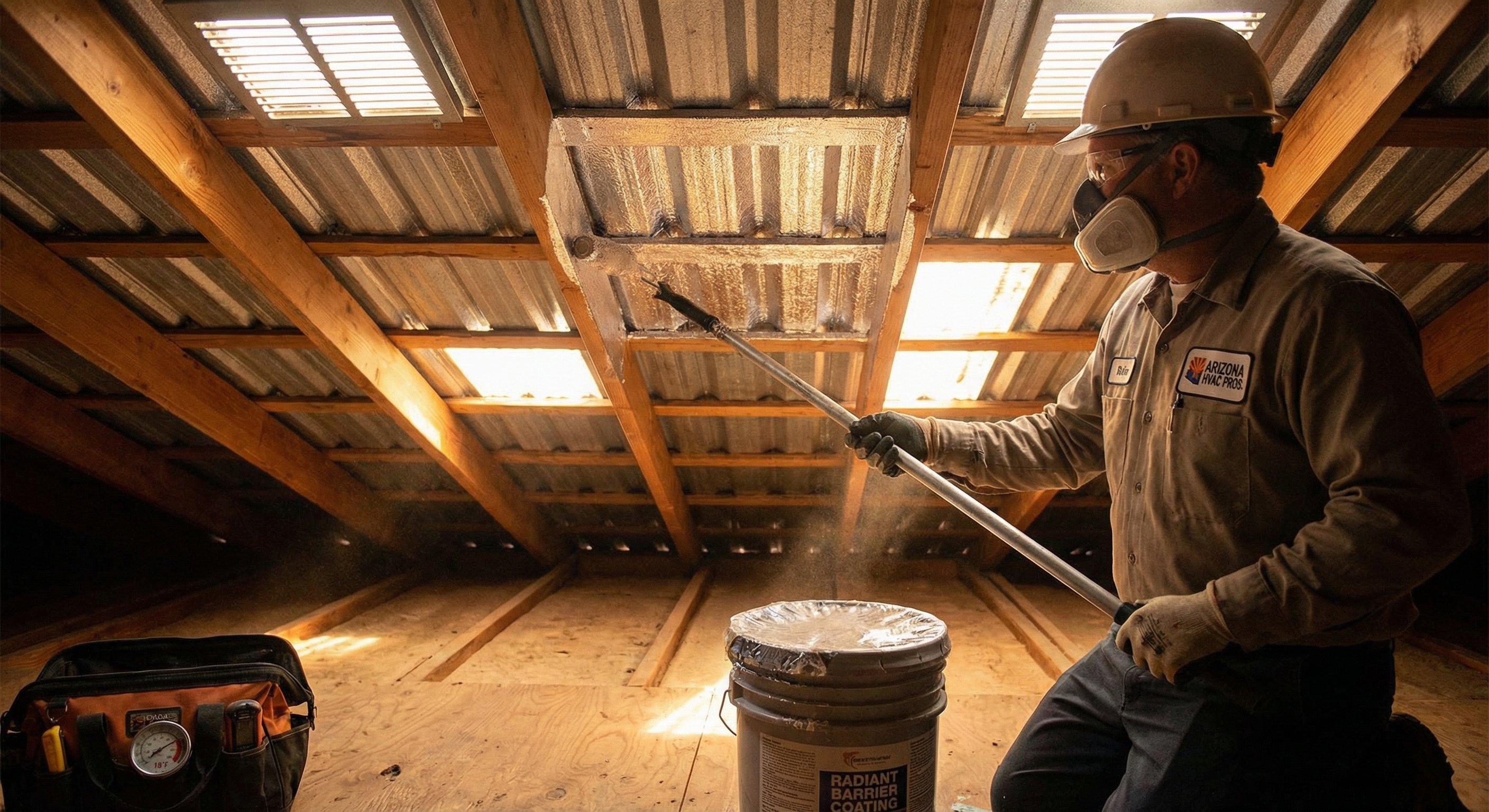
A radiant barrier is a reflective coating or sheeting applied to the underside of the roof deck. It reflects radiant heat from the sun rather than allowing it to conduct through the roof sheathing into the attic.
This works well in Phoenix because our solar radiation is extreme. A properly installed radiant barrier can reduce attic heat gain by 25 to 35 percent, which translates to 15 to 25 degrees lower attic temperatures on the hottest days.
The cost is $400 to $1,500 for an average-sized attic, depending on whether you use a spray-on coating or reflective sheeting. Radiant barrier sheeting is a valid DIY project for a handy homeowner, which keeps costs down.
What About Sealing the Attic Completely?
Some newer construction in the Phoenix area uses a sealed attic approach, where the ductwork and air handler are located in a conditioned space rather than the attic. This is sometimes called a "conditioned attic" or "indirect gain" approach.
For new construction or major renovation, this is worth discussing with your builder or architect. The benefit is eliminating thermal gain entirely for the ductwork. The cost premium is typically $1,500 to $4,000 depending on the system design.
For an existing home, converting to a conditioned attic is expensive and usually impractical. The sealing and insulation interventions above will address 80 to 90 percent of the problem at a fraction of the cost.
The Monsoon Season Complication
Once monsoon season arrives in July, Phoenix homeowners face an additional attic challenge that does not get enough attention. The spike in humidity means that the moisture content of the air entering your attic increases. Combined with still-hot attic temperatures, this creates conditions where mold can establish in insulation and wood sheathing becomes damp in ways it was not during the dry spring.
If your attic insulation has been sitting damp from a previous monsoon season, its R-value is significantly reduced. You may be able to identify this by looking for dark discoloration or a musty smell when you open the attic hatch.
When the Attic Fixes Are Not Enough
If you have sealed and insulated your ductwork, added attic floor insulation, improved ventilation, and installed a radiant barrier, and your system is still struggling, then you have a real AC capacity problem. At that point, it is worth getting a professional load calculation done before you accept any replacement quote.
The calculation is called a Manual J load calculation, and it determines exactly how much cooling capacity your specific home requires based on square footage, orientation, insulation levels, window efficiency, and ductwork condition. Any contractor who gives you a quote without doing a load calculation is guessing.
A properly sized new AC system for a typical 1,800 to 2,400 square foot Phoenix home will be in the $7,500 to $11,500 range for the unit and installation, depending on brand tier and efficiency rating. That is the number that should be in your comparison shopping, not the $14,000 to $18,000 that a dealer with a large markup would quote.

The Honest Take on What to Do First
If you have not touched your attic insulation or ductwork in the last 10 years, start there. The interventions above cost a fraction of a new AC system and they make your existing system work significantly better. In most Phoenix homes, sealing and insulating the ductwork alone produces a noticeable difference within a few days.
If you have already done those interventions and your system is still running constantly in July and August, get a load calculation done and compare it against your current system's capacity. At that point you have real data and you can make a real decision about replacement.
The markup you would pay a traditional dealer on a new system would fund all four attic interventions three times over. That is the math worth doing before you sign any replacement contract.
Get a free instant quote at acrebel.com to see what direct pricing looks like for a new system, and use that as a reference point when evaluating any contractor quote you receive.
Frequently Asked Questions
Q: How hot does a Phoenix attic actually get in summer?
Phoenix attics routinely reach 140 to 155 degrees Fahrenheit on summer afternoons, and on extreme heat days with direct sun exposure, temperatures at the roof deck can exceed 160 degrees. By comparison, an attic in a northern climate might reach 110 to 120 degrees on the hottest day of the year.
Q: Does closing attic vents in summer help or hurt?
Closing attic vents generally hurts. Vents are what allow hot air to escape the attic. Closing them traps heat. The one exception is during monsoon season when very high humidity is entering the attic through vents, in which case temporary sealing during the wettest weeks can reduce moisture problems.
Q: How much does sealing ductwork in the attic save?
Most Phoenix homes lose 15 to 30 percent of their cooling capacity through leaky ductwork in the attic. Sealing duct joints with mastic can reduce that loss significantly, typically paying for itself in one to three summers through lower electric bills.
Q: Is radiant barrier worth it in Phoenix?
Yes, for most Phoenix homeowners with unconditioned attics, a radiant barrier is worth the investment. The reduction in attic heat gain during peak summer months typically ranges from 25 to 35 percent, which meaningfully reduces AC runtime. Cost ranges from $400 to $1,500 depending on attic size and whether you use sheeting or spray coating.
Q: When should you replace your AC instead of fixing attic issues?
If your AC is over 12 years old, has required multiple repairs in the last three years, and is running constantly even in a well-insulated attic with sealed ducts, replacement is likely the better economic decision. Get a Manual J load calculation before committing to any replacement quote.
Ready to stop overpaying?
See Your Direct AC Price in 2 Minutes
Skip the dealer. Buy your AC unit at direct pricing and pay a vetted local installer only for the installation. No sales calls. No hidden markup. Most homeowners save $3,000–$5,000+ compared to a traditional quote.
Get My Direct Price — No Credit Card2-minute quote · Licensed installers · 10-year warranty options