
Why Is My AC Running All Night in Phoenix? Here's What's Driving Your Bill

Why Is My AC Running All Night in Phoenix? Here's What's Driving Your Bill
TL;DR: If your AC runs all night in Phoenix instead of cycling off, your system is working harder than it should be and adding real money to your electric bill. The most common cause is a dirty air filter, followed by leaky ductwork, low refrigerant, and oversized units that short-cycle without ever shutting off. A typical Phoenix homeowner pays $6-$12 extra per night during peak summer when their system does not cycle properly, which adds up to $540-$1,080 over a 90-night cooling season. Fix the filter first. If that does not solve it, get a professional inspection before your next bill arrives.
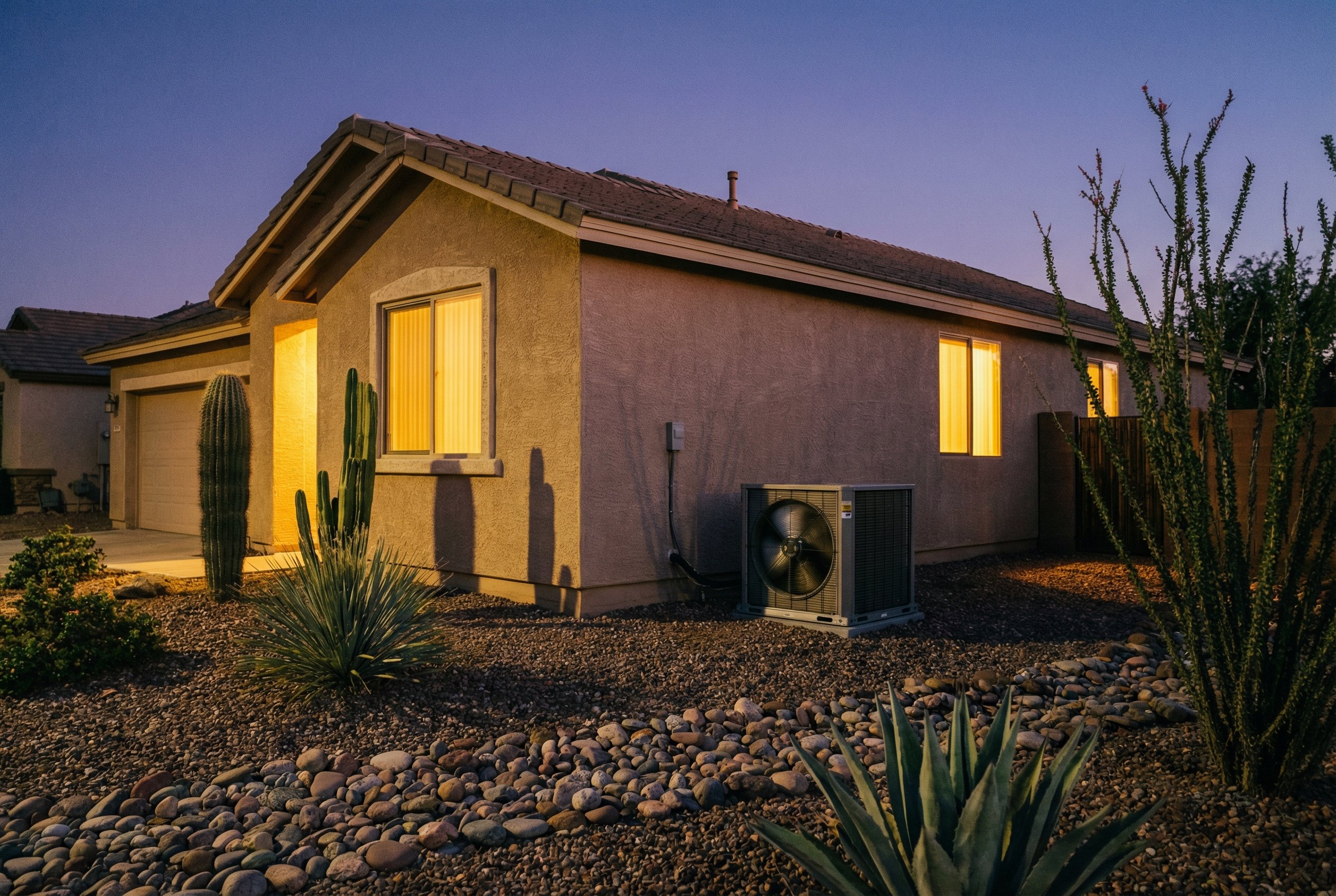
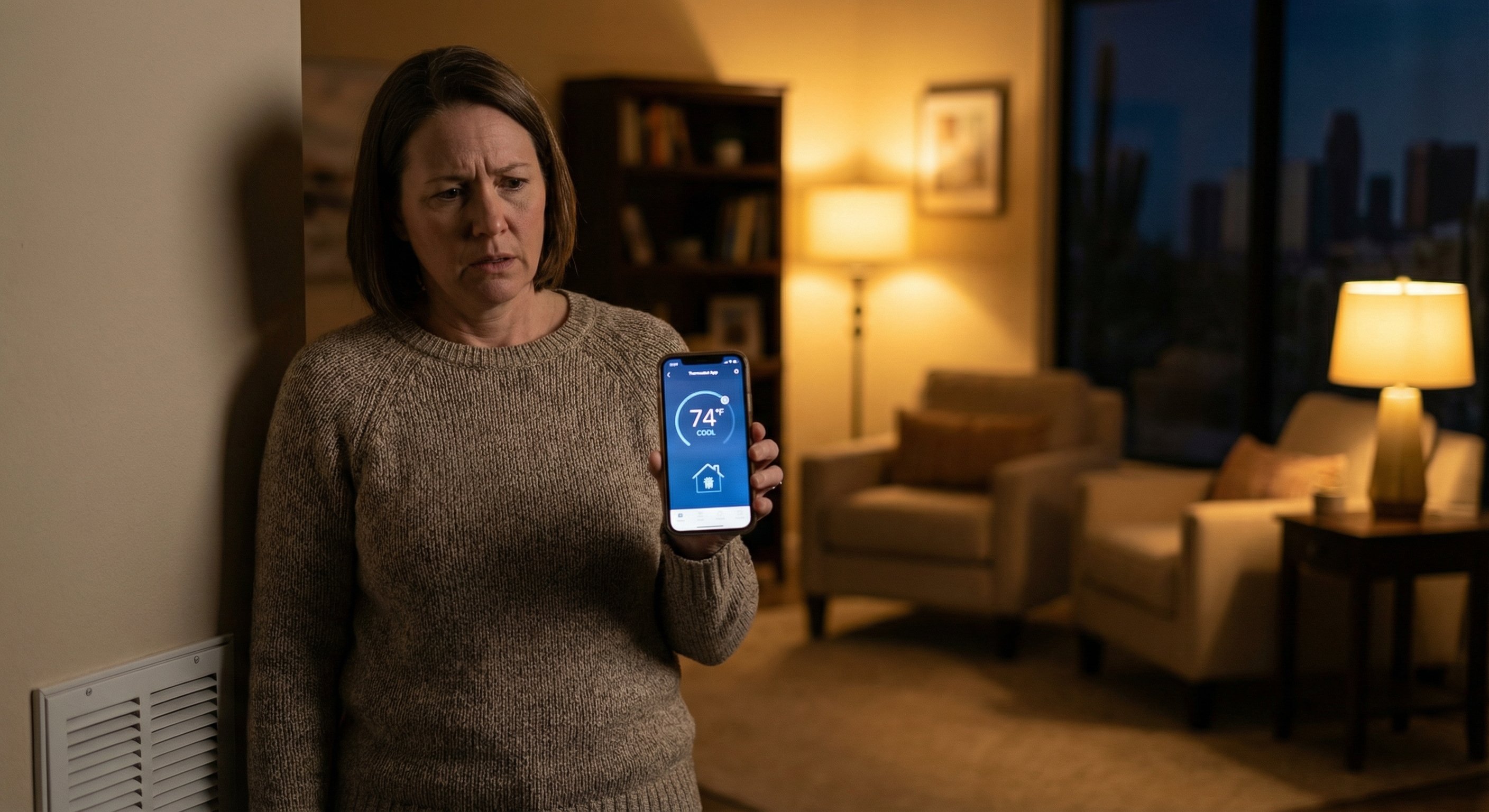
It is 11:47 PM on a Thursday in August. Your thermostat reads 76. Your AC has not shut off since 6 PM.
You set it to 76 every night. You have curtains. You even turned off the lights in rooms you are not using. And still, somewhere in your house, the air handler is growling, the outdoor unit is humming, and the compressor is doing the one thing you desperately wish it would stop doing: running.
You are not alone. Phoenix homeowners ask this exact question every summer, and the answer almost always comes down to a handful of identifiable, fixable problems. This is the guide that tells you what is actually going on.
What Normal AC Runtime Looks Like in Phoenix
A properly functioning air conditioner in Phoenix runs in cycles. On a 108-degree day, your system might cycle on at 2 PM, run for 15 to 20 minutes, hit your target temperature, cycle off, and then run again 10 to 15 minutes later. That is normal. Your system is doing exactly what it should.
When you set your thermostat to 76 at 10 PM and it is still running at midnight, something is preventing it from reaching that temperature. The unit is not broken. It is compensating. And compensation always costs you money.
Here is the test: go to your thermostat at midnight. Is your home at or near your set temperature? If yes, your system is running for a reason, possibly humidity control. If no, if it reads 78 or 79 despite running for three hours straight, your system is working against a problem it cannot solve on its own.
The Five Most Common Reasons Your AC Runs All Night
1. A Dirty Air Filter Is Suffocating Your System
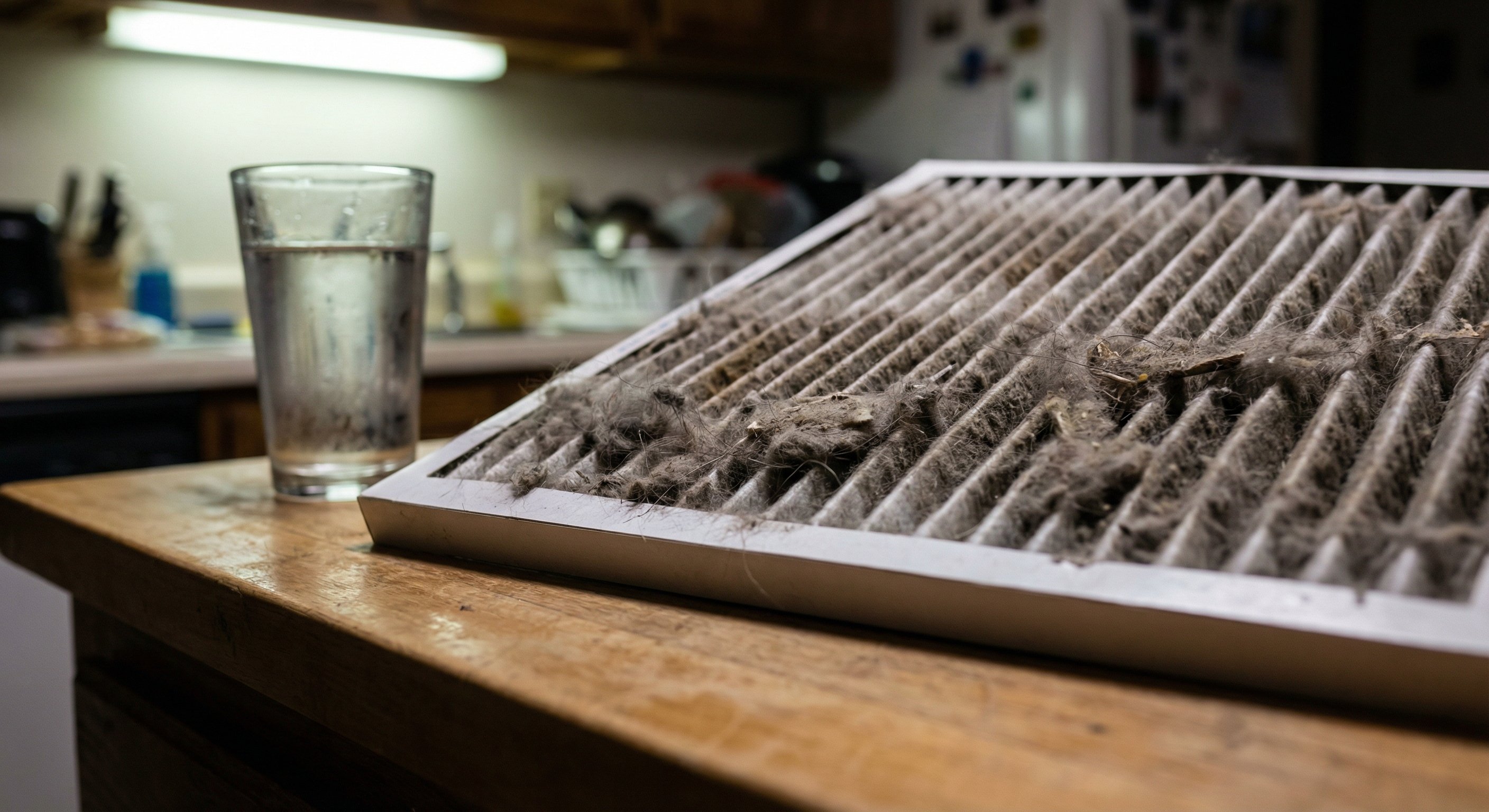
This is the number one cause, and it is also the cheapest to fix. When your air filter is clogged with dust and debris, airflow through your evaporator coil slows down. The system cannot move enough cool air through your home, so it runs longer to compensate.
Phoenix makes this worse than almost any other market in the country. Our desert air carries fine particulate dust that builds up on filters fast. If you have not checked your filter in two months during summer, it is probably dirty enough to restrict airflow noticeably.
The fix is simple. Turn off your system, pull the filter, hold it up to a light. If you cannot see light through it clearly, replace it. A 1-inch standard filter costs $8 to $15. A thicker 4-inch media filter runs $30 to $60 but lasts longer and filters better. Either one is less expensive than a single night of overpaying your electric bill.
2. Leaky Ductwork Is Stealing Your Cool Air Before It Reaches Your Rooms
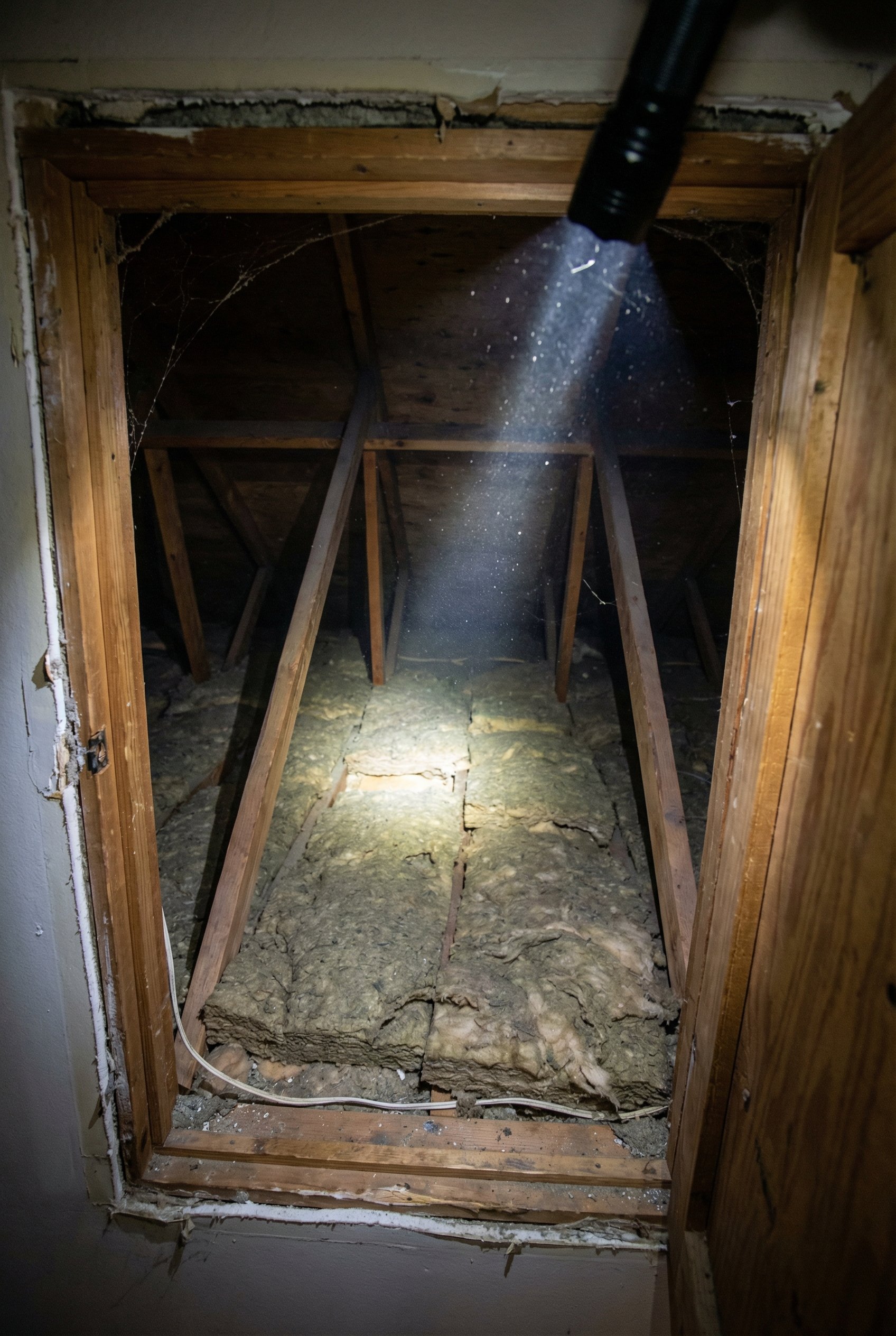
This one is especially common in Phoenix because so many of our homes were built before 1990, when builders routinely used ductwork with connection points sealed with cheap foil tape or even just mastic caulk that has long since cracked. When ducts leak, the cool air your system produces escapes into your attic, crawl space, or wall cavities before it ever reaches your living spaces.
A system that should cool your 1,800-square-foot home in Chandler runs and runs because half its output is disappearing into the attic. You pay to cool air you never feel.
You can check this yourself in about ten minutes. Go to your attic during the day. Look at the connections where ductwork meets vents, boots, and the air handler. Look for visible gaps, disconnected sections, or tape that is peeling. Even small leaks add up fast. A 1-foot gap in your ductwork can reduce your system efficiency by 20% or more, according to ENERGY STAR.
If you see obvious problems, call an HVAC contractor to do a full duct inspection and sealing. The cost runs $300 to $800 for a typical Phoenix home and typically pays for itself in lower bills within two to three months during summer.
3. Low Refrigerant Means Your System Cannot Cool Efficiently
When your system has lost refrigerant due to a slow leak, its ability to absorb heat from your home drops. The result is a unit that runs and runs, blows lukewarm air, and never quite gets your home to temperature. Unlike a dirty filter or leaky ducts, this one does not fix itself, and it tends to get worse as the leak continues.
Signs you have a refrigerant problem include ice buildup on your outdoor coil, hissing or bubbling sounds near the indoor unit, and your home taking hours to cool down even when the system runs continuously. If you notice any of these, do not wait. Call a licensed HVAC contractor to check your system.
Refrigerant recharge costs $150 to $400 depending on the size of your system and the amount of refrigerant needed. Keep in mind that if your system is over 10 years old and requires frequent recharges, you are likely approaching the point where replacement makes more financial sense than another repair.
4. An Oversized System That Short-Cycles
Here is a problem most homeowners never think about: a system that is too big for your home. An oversized AC does not run continuously. It does the opposite. It turns on, cools the house in 8 to 10 minutes, hits the thermostat temperature, and shuts off. Then 15 minutes later it turns on again. And again. And again.
That sounds fine, except that short-cycling does not allow the system to remove humidity properly. Your home feels clammy even when the thermostat says 76. The thermostat reads the right temperature but your home feels sticky. So you turn it down, which makes the system work harder, and the cycle repeats.
Oversizing is surprisingly common in Phoenix because builders and contractors often install the next-size-up unit as a safety margin. A home that needs a 3-ton system might have a 4-ton unit installed, especially in newer construction where the cooling load was miscalculated.
5. Your Home Is Actually Heat Gain
Sometimes the AC is doing its job fine, but the pace of heat entering your home at night in Phoenix outpaces what the system can remove. This is especially true in older homes with poor attic insulation, single-pane windows, or west-facing rooms that absorbed eight hours of direct summer sun.
Phoenix nighttime temperatures have risen steadily over the past 20 years. Many homeowners who moved here 15 or 20 years ago remember cool desert nights where opening the windows was comfortable. That is no longer reliable in July and August. Even after midnight, outdoor temperatures in the high 90s or low 100s mean your home is constantly gaining heat through its envelope.
If your home is the problem, no amount of AC repair fixes it permanently. This is where improvements like better attic insulation, window film or cellular shades, and sealing gaps around doors and windows deliver real returns.
What All-Night Runtime Actually Costs You
Here is the number that tends to get homeowners' attention.
A typical 3-ton AC unit in Phoenix draws about 3 to 5 kilowatts per hour while running. If it should cycle off for three to four hours overnight but instead runs all night, you are burning through an extra 15 to 30 kilowatt-hours per night.
APS residential rates during summer run roughly $0.12 to $0.15 per kWh. That means one night of overrunning costs you about $7 to $12 extra. SRP residential rates average around $0.11 to $0.14 per kWh, which puts your extra nightly cost closer to $6 to $10. Multiply that by 90 nights in a typical Phoenix summer cooling season, and you are looking at $540 to $1,080 in additional energy costs over a single summer.
Over three years, that is $1,600 to $3,200 in extra electricity bills that you did not need to pay.
Now add the wear and tear on your system. An AC that runs constantly in Phoenix summer heat has a shorter lifespan than one that cycles normally. You are accelerating the wear on your compressor, your fan motor, and your contactor every night it runs unnecessarily. A compressor that should last 15 years in normal conditions might give you 10 years if it runs overload nights all summer.
Skip the dealer markup
See What a New AC Actually Costs
AC Rebel shows you the real equipment price — no sales pitch, no inflated quote. Get matched with a licensed installer and keep $3,000–$5,000 in your pocket.
Get My Direct Price →Quick Checklist: What to Do Tonight
Before you call anyone, spend ten minutes on these:
Check your air filter. If it looks at all restricted, replace it now. This is the most common cause and the cheapest fix.
Check your thermostat. Make sure it is set to Cool, not Auto Fan. Make sure it is reading correctly. If the thermostat is in direct sunlight or near a heat source like a lamp or television, it can misread your home temperature and keep the system running.
Check your outdoor unit. Make sure there is at least two feet of clearance around the condenser. Brush, landscaping debris, and even accumulated dust can restrict airflow and make your system work harder than necessary.
Walk your home. Feel for hot spots in different rooms. If one or two rooms are always warmer, you might have duct problems or insulation issues in specific areas rather than a whole-system failure.
Check your attic. If you can access it safely and briefly, look for obvious duct disconnections or insulation gaps around the air handler. This takes five minutes and can reveal problems that are costing you money right now.
If after these checks your system is still running all night, you have a problem that requires a licensed HVAC contractor. Problems like refrigerant leaks, electrical issues, and compressor failures are not do-it-yourself repairs. Get a professional to diagnose the issue before it becomes an emergency on the worst day of summer.
When Repair Makes Sense vs. When to Replace
Not every problem is worth throwing money at. Here is the decision framework most honest contractors use:
Repair if: Your system is less than 10 years old, the problem is a single identified issue (bad capacitor, refrigerant top-off, filter replacement), and the repair cost is less than $1,000.
Replace if: Your system is more than 12 years old, you have paid for two or more repairs in the past three years, or your system is running so inefficiently that your summer electric bills have become genuinely painful.
In Phoenix, where we run our AC six to seven months per year, the math on replacement tilts toward new equipment faster than in other markets. A new 16 SEER system running in a well-insulated Chandler home will cost roughly 30% to 40% less to operate than a 12-year-old unit at 10 SEER. That difference shows up every single month.
When you are ready to explore replacement, AC Rebel offers a way to buy your new AC unit at direct pricing without the dealer markup that adds $3,000 to $5,000 to every traditional installation quote. You choose your own licensed contractor from verified local installers and pay for the unit at transparent, wholesale-level pricing.
Frequently Asked Questions
Should my AC run all night in Phoenix?
No. A properly functioning AC should cycle off periodically overnight, even on hot nights. If your system is running continuously from dusk until dawn without reaching your set temperature, something is wrong. Normal runtime means the unit cycles on and off several times overnight, not that it runs constantly for eight hours straight.
What causes an AC to run all night?
The most common causes in Phoenix are a dirty air filter restricting airflow, leaky ductwork allowing cool air to escape into the attic before it reaches your rooms, low refrigerant from an unaddressed leak, an oversized system that short-cycles without removing humidity, and excessive heat gain in older homes with poor insulation. A dirty air filter is responsible for the majority of cases and is the first thing to check.
How much does it cost when your AC runs all night?
Running an AC all night instead of cycling normally adds roughly 15 to 30 extra kilowatt-hours per night in Phoenix summer conditions. At APS rates of $0.12 to $0.15 per kWh, that is approximately $7 to $12 per night in additional electric costs. Over a 90-night cooling season, that is $630 to $1,080 in added summer electricity bills from a system that does not cycle properly. SRP customers on demand-based pricing may see even higher increases.
How do I get my AC to stop running at night?
Start with your air filter. Replace it if it looks at all restricted. Then check your thermostat placement and settings. Make sure supply vents are not blocked by furniture and that return vents are open and unobstructed. If those steps do not solve it, inspect your attic for obvious duct leaks and clearance around your outdoor unit. Persistent overnight runtime that does not respond to these steps requires a licensed HVAC contractor to diagnose the root cause.
When should I replace my AC instead of repairing it?
Replace your AC if it is more than 12 years old, has required two or more repairs in the past three years, or is operating so inefficiently that your summer electric bills have become significantly higher than your neighbors'. In Phoenix, where cooling season lasts six to seven months, the efficiency gains from a new 16 SEER or higher unit pay back faster than in milder climates. If your repair quote is more than $1,000 on a system over 10 years old, get a second opinion on whether replacement makes more long-term financial sense.
Can a dirty filter really cause all-night runtime?
Yes. A clogged air filter is the single most common cause of excessive runtime and the cheapest problem to fix. Phoenix summer dust loads filters faster than most other markets in the country. If you have not checked your filter in more than four to six weeks during summer, it is almost certainly restricting airflow enough to affect your system's efficiency. Replace it with a quality 1-inch or 4-inch filter and monitor your runtime for 24 hours before assuming there is a deeper problem.
Does AC Rebel sell AC units directly to Phoenix homeowners?
Yes. AC Rebel is a direct-to-consumer AC marketplace where Phoenix homeowners buy their AC unit at direct pricing and get matched with vetted, licensed local contractors for installation. The model cuts out the traditional dealer markup, which typically adds $3,000 to $5,000 to the installed cost of a new system. You browse the unit catalog, select your configuration, and choose your own installer based on ratings and license information. Get a free instant quote at AC Rebel to see direct pricing without the dealer margin.
All cost figures in this article are based on publicly available APS and SRP rate data, ENERGY STAR efficiency calculations, and standard HVAC industry metrics as of early 2026. Actual costs vary based on system size, home configuration, usage patterns, and utility plan. Consult a licensed HVAC contractor for a diagnosis specific to your home.
Ready to stop overpaying?
See Your Direct AC Price in 2 Minutes
Skip the dealer. Buy your AC unit at direct pricing and pay a vetted local installer only for the installation. No sales calls. No hidden markup. Most homeowners save $3,000–$5,000+ compared to a traditional quote.
Get My Direct Price — No Credit Card2-minute quote · Licensed installers · 10-year warranty options