
Swamp Cooler vs Central AC in Phoenix: Which Actually Makes Sense?

Swamp Cooler vs Central AC in Phoenix: Which Actually Makes Sense?
TL;DR: Swamp coolers cost $2,000 to $5,000 installed and use 75% less electricity, but they stop working effectively when Phoenix humidity rises above 50%, which happens every monsoon season from July through September. Central AC runs $5,500 to $14,000 installed but cools your home regardless of outdoor humidity. For most Phoenix homeowners, central AC is the right call unless you are in a pre-1980 home without ductwork, live at higher elevation in north Phoenix, or are not home during the monsoon weeks.
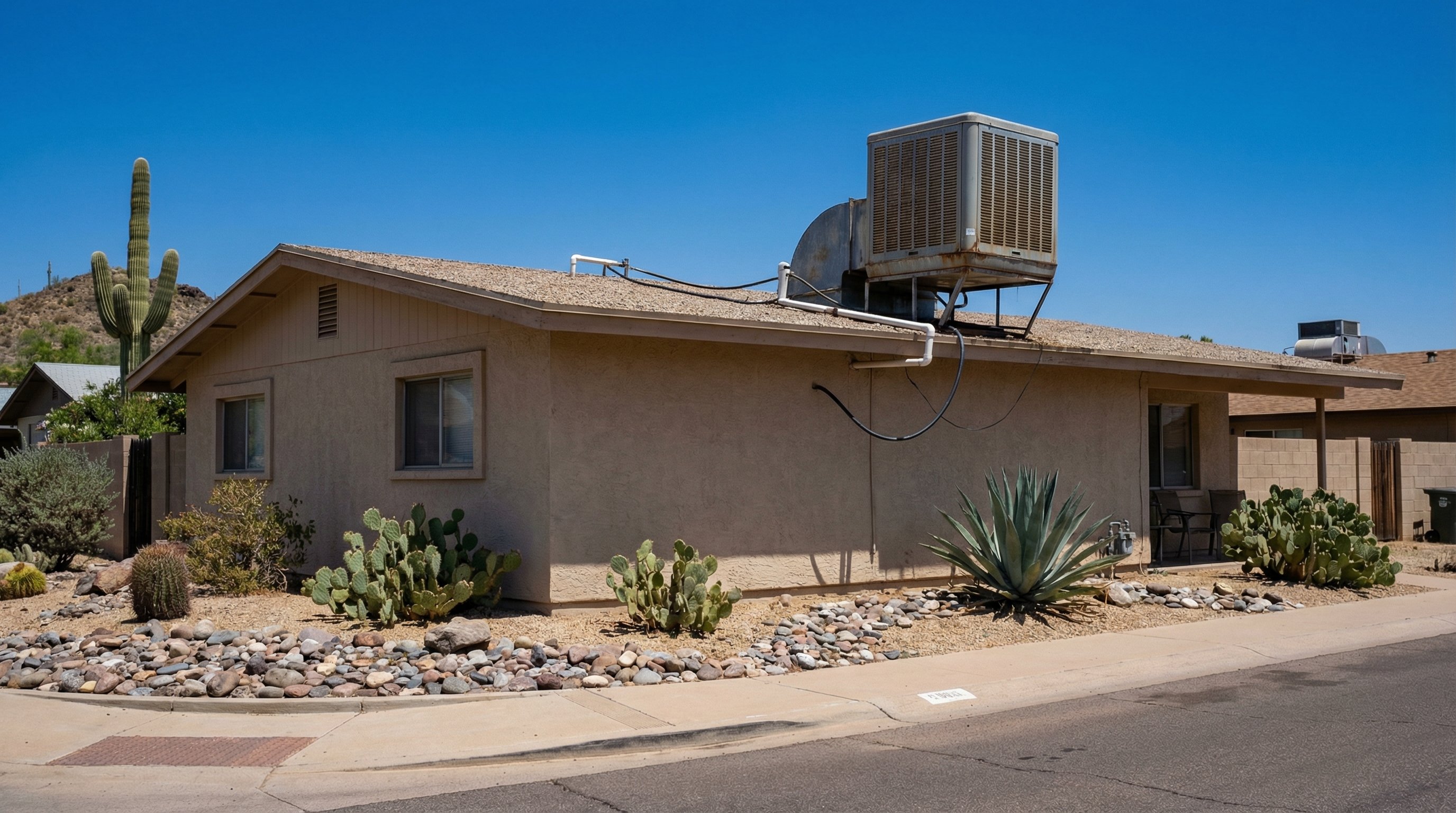
Your neighbor in Arcadia runs a swamp cooler and swears by it. Your coworker in Gilbert says hers turned her house into a greenhouse last August. Both are telling the truth, which is exactly why this question is harder than it looks.
What a Swamp Cooler Actually Does
An evaporative cooler pulls hot air through water-soaked pads. The water evaporates and the air temperature drops. That cooled air gets blown through your ductwork into your home.
The key thing most people miss: evaporative cooling is not air conditioning. It does not use refrigerant and it does not remove humidity. It adds humidity while it cools. During dry Phoenix spring and early summer, that trade-off works. When monsoon moisture arrives, the math falls apart.
A professionally installed swamp cooler in Phoenix runs $2,000 to $5,000. Operating cost is where the savings live: $30 to $80 per month in summer versus $150 to $400 per month for central AC running hard during a Phoenix heat wave.
The maintenance is real. Pads need replacing at season start and sometimes mid-season. The pump needs checking. If pads dry out, you are pushing hot air through your ductwork for no reason.
What Central AC Does Differently
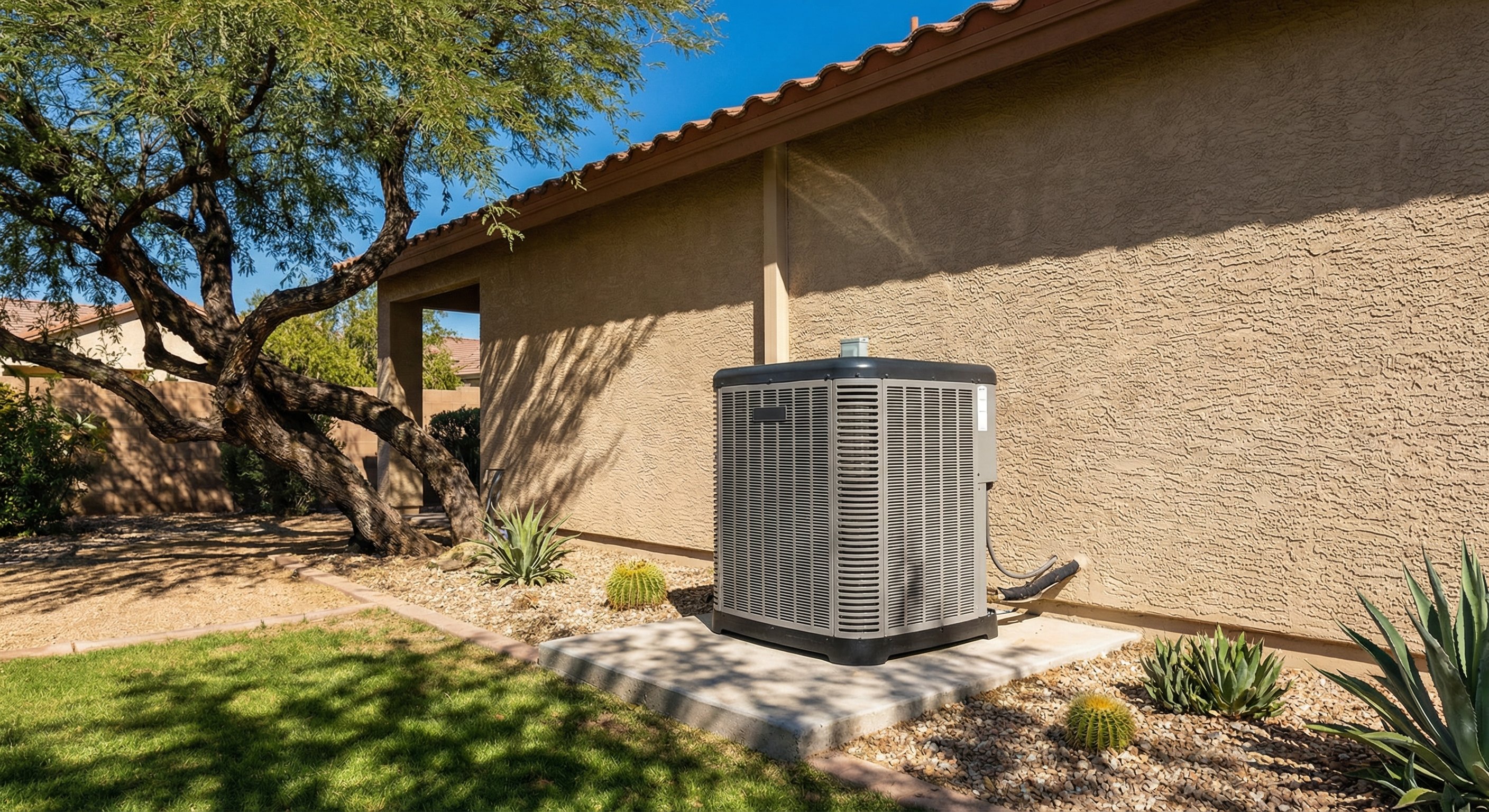
Central AC uses a refrigerant compression cycle to remove heat and push it outside. It dehumidifies as it cools, which matters more in Phoenix than most people realize until they have lived through their first August.
A new 3-ton central AC installed in Phoenix runs $5,500 to $12,000 with existing ductwork. Add a new gas furnace if you need one, and you are at $7,000 to $14,000.
The efficiency number to know is SEER (Seasonal Energy Efficiency Ratio). For Phoenix summers, 16 SEER minimum makes sense. Going to 18 to 20 SEER noticeably cuts your APS or SRP bill. Units rated 25 SEER exist (ENERGY STAR most efficient: energystar.gov) but rarely pay back the premium before you sell.
Central AC runs without seasonal drama. Filter changes and one annual tune-up. It handles 115 degree July days and humid August afternoons the same way.
The Phoenix Monsoon Changes Everything
Phoenix is technically ideal for evaporative cooling: arid desert climate, low ambient humidity for most of the year. The problem is the monsoon.
Starting early July, moisture streams in from the Gulf of California. July through September brings humidity levels of 50% to 80% on any given day, sometimes higher.
When outdoor humidity exceeds 50%, a swamp cooler stops cooling effectively. At 60%+, it can make your home feel worse than doing nothing, because it is adding moisture to air that is already humid. You end up with a hot, muggy house and no relief.
This monsoon window is roughly six to eight weeks where a swamp cooler significantly underperforms. If those are the weeks you are home most, or if you work from home in an upstairs room during July and August, that is a genuine quality-of-life problem.
North Phoenix neighborhoods at higher elevation can run a few degrees cooler, which slightly extends swamp cooler effectiveness. But once monsoon moisture arrives, geography stops mattering.
Skip the dealer markup
See What a New AC Actually Costs
AC Rebel shows you the real equipment price — no sales pitch, no inflated quote. Get matched with a licensed installer and keep $3,000–$5,000 in your pocket.
Get My Direct Price →Five-Year Cost Comparison
Here is a realistic five-year cost picture for cooling a 2,000 square foot Phoenix home.
Mid-range swamp cooler installed: $3,500 upfront. Operating cost at $60 per month for four months: $2,880. Pad replacement twice a season at $80 per set: $800. Annual service call at $150: $750. Total five years: approximately $7,930.
New 3-ton central AC at $7,500 installed. Operating cost at $175 per month average over five years: $4,200. Filters and tune-ups: $1,250. Total five years: approximately $12,950.
Central AC costs roughly $5,000 more over five years. The question is what you are buying: consistent cooling on the days that make Phoenix summers dangerous, and a system that performs during the monsoon instead of wheezing through it.
When Swamp Coolers Make Sense in Phoenix
Swamp coolers genuinely make sense for specific situations.
Pre-1980 homes with floor furnaces and no existing ductwork: you are not retrofitting ductwork for central AC, which adds $4,000 to $8,000 to the project. The installation cost advantage is real.
North Phoenix and higher-elevation areas like Paradise Valley or Cave Creek: summer temperatures run 3 to 5 degrees cooler than the central valley, and humidity tends to stay lower longer into the season.
Seasonal residents not here during monsoon months: if you leave before July, a swamp cooler covers your spring and early summer cooling at a fraction of the operating cost.
Homes with excellent cross-ventilation: older ranch-style homes with high ceilings, ceiling fans, and windows that catch cross-breezes let a swamp cooler work effectively because the system relies on air movement, not just cooling.
When to Skip the Swamp Cooler
Most Phoenix homes should go central AC from the start.
East Valley humidity: Gilbert, Chandler, and Queen Creek see some of the highest monsoon humidity in the Phoenix metro. A swamp cooler in Gilbert during a typical August afternoon is fighting a losing battle.
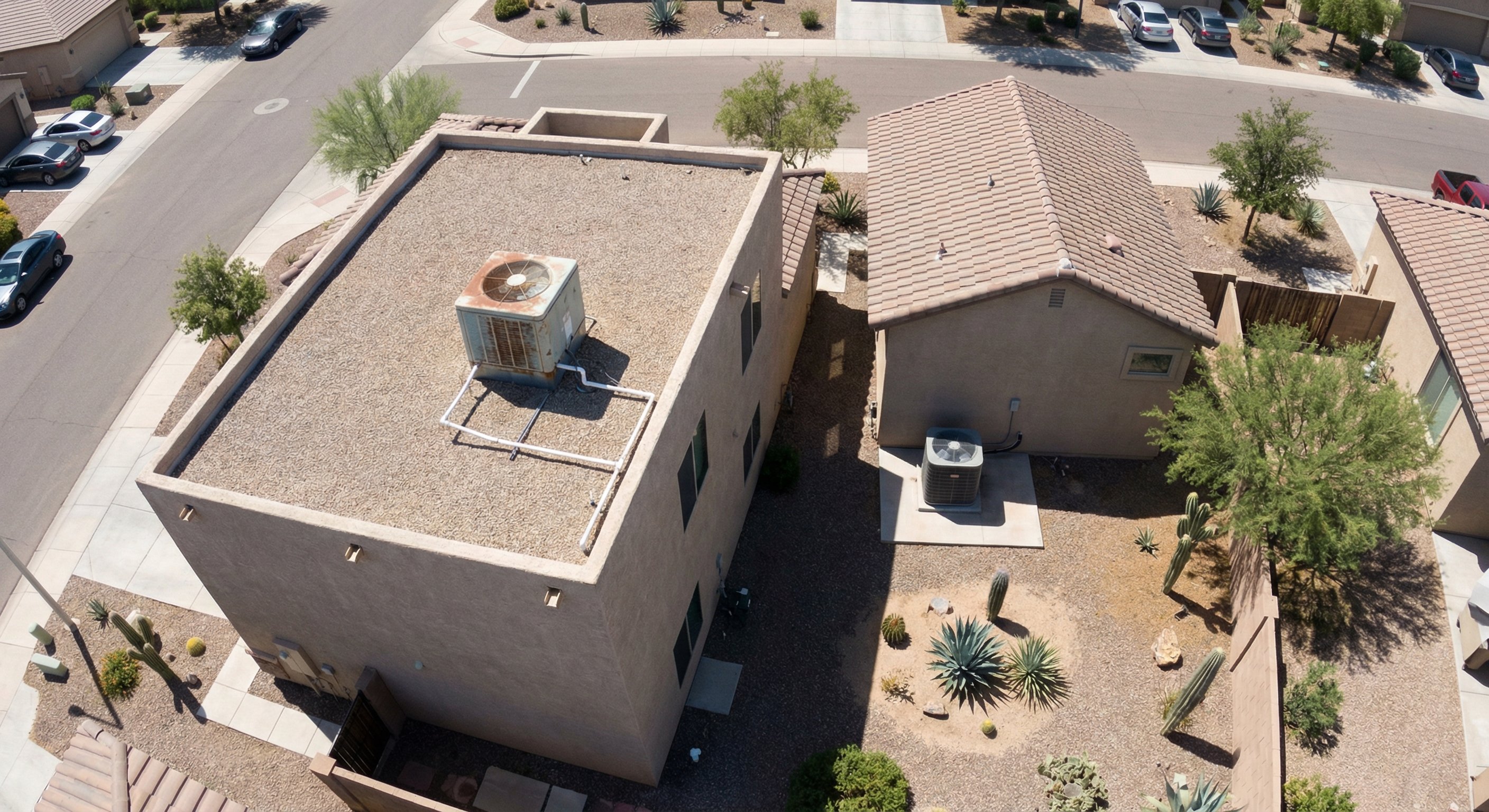
Multi-story homes: cool air settles. A swamp cooler pushing through ductwork in a two-story home will cool the first floor and leave the second floor hot. Central AC with properly designed ductwork handles multi-story homes much better.
Poor or aging ductwork: older ductwork that has not been sealed loses significant cooling to attic leakage. Central AC with new or sealed ductwork outperforms a swamp cooler running through the same leaky system, humidity factor aside.
Mold or respiratory concerns: adding humidity to a Phoenix home is not always a good thing, especially in older homes where trapped moisture in ductwork can create mold problems.
The Hybrid Approach
Some Phoenix homeowners run both systems: a primary swamp cooler for dry-season cooling with a supplemental window AC unit or mini-split for the worst monsoon weeks. It is not common, but it is not unheard of.
In practice, most homeowners who try this end up relying on the supplemental AC once monsoon humidity arrives. Eventually they phase out the swamp cooler entirely and go all-in on central AC. If you are staying in the home five or more years, going central AC from the start usually makes more long-term sense.
Factors That Can Tip the Decision
SRP and APS both offer rebates for high-efficiency central AC installation. As of 2026, qualifying 16 SEER and above systems can earn rebates of $300 to $600 depending on the utility and model (see srp.net and aps.com for current programs). That does not close the full gap with a swamp cooler, but it helps.
HOA restrictions prohibit swamp coolers in some Phoenix communities for aesthetic reasons, specifically their roofline appearance and water runoff. Check your CC&Rs before committing to a swamp cooler in any master-planned community in Scottsdale, Gilbert, or Chandler.
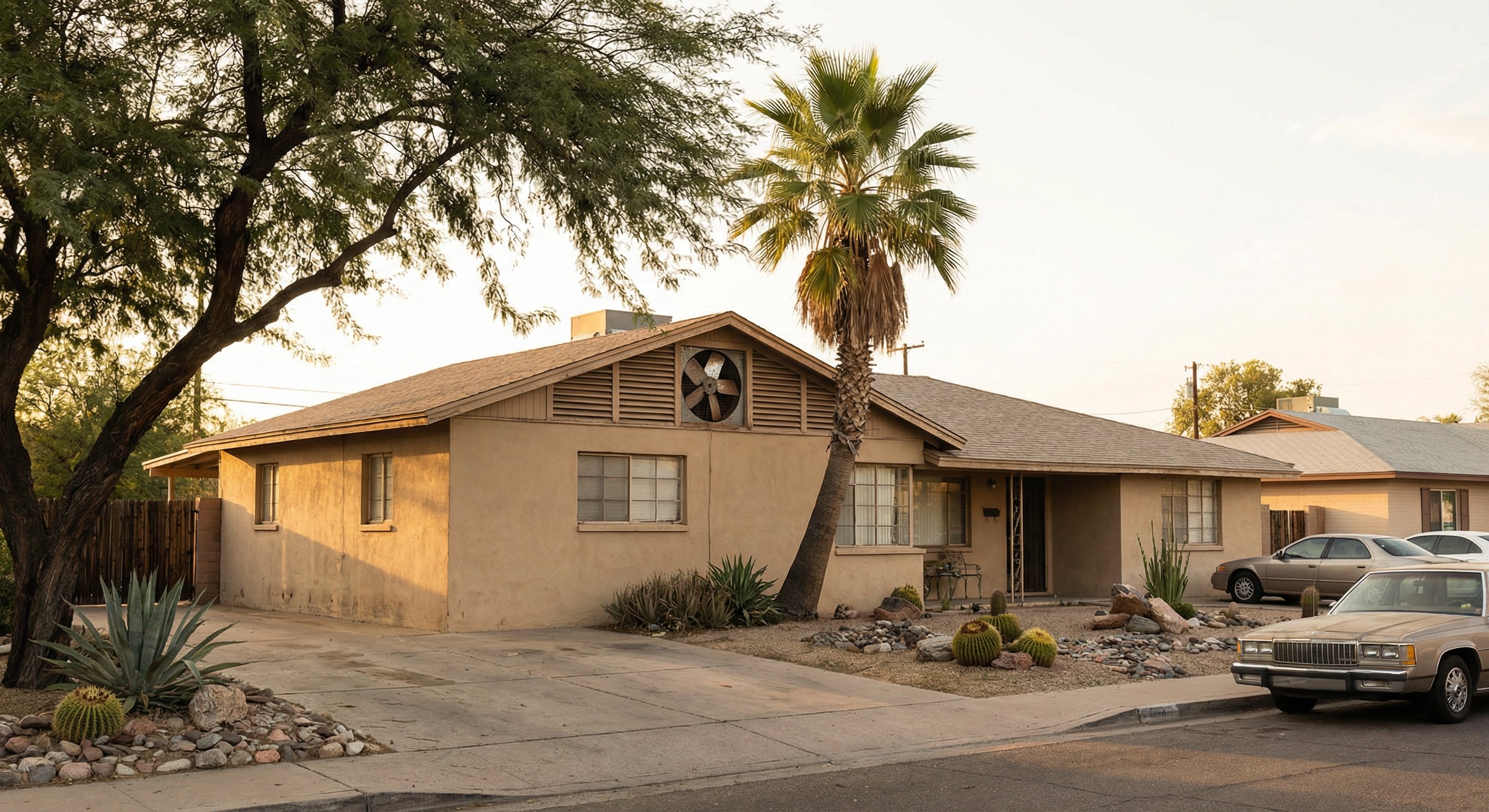
Whole-house fans are a related option worth knowing about. An older Phoenix home with a whole-house fan can pre-cool the interior by pulling in cool morning air before the day heats up, reducing AC runtime during peak afternoon hours. If your home already has one, running it in early morning can meaningfully cut your cooling costs regardless of which system you choose.
How to Decide If You Are Weighing Options Right Now
Choose a swamp cooler if your home was built before 1980 without existing ductwork, you live in a higher-elevation Phoenix neighborhood, you will not be here through the full monsoon season, and the full installation cost of central AC would strain your budget.
Choose central AC in almost every other situation, particularly if your home is 2,000+ square feet, you are here through the full summer, and you want reliable cooling regardless of what the outdoor humidity is doing.
Getting a professional load calculation before committing to either system is worth the $150 to $300 it typically costs. An HVAC contractor can tell you exactly how many tons of cooling your home requires, which removes a lot of the guesswork.
Frequently Asked Questions
Q: Does a swamp cooler actually work in Phoenix summers?
A swamp cooler works well from May through late June when Phoenix humidity is typically below 40%. During the monsoon from early July through mid-September, humidity routinely exceeds 50% and swamp cooler effectiveness drops significantly. On days above 60% humidity, a swamp cooler may make your home feel warmer and more uncomfortable than doing nothing.
Q: How much does it cost to install a swamp cooler in Phoenix?
A professionally installed swamp cooler in Phoenix typically costs $2,000 to $5,000 depending on unit size and installation complexity. This is substantially less than central AC, which runs $5,500 to $14,000 installed, because swamp coolers do not require refrigerant handling or a full compressor-and-coil system.
Q: Can I run a swamp cooler and central AC in the same home?
Some Phoenix homes have both systems installed. In practice, most homeowners with this setup end up relying primarily on the central AC once monsoon humidity arrives and eventually replace the swamp cooler. If you are staying in the home five or more years, going central AC from the start typically makes more long-term financial and comfort sense.
Q: What SEER rating should I get for my Phoenix home?
A minimum of 16 SEER makes sense for Phoenix summers. Going from an older 10 SEER unit to an 18 to 20 SEER system will meaningfully reduce your summer utility bills (per AHRI certified ratings at ahrinet.org). Models rated 25 SEER exist but the price premium over an 18 to 20 SEER unit rarely pays back through electricity savings before you sell the home.
Q: Are swamp coolers allowed in Phoenix HOA communities?
Some HOA communities prohibit swamp coolers for aesthetic reasons, specifically their roofline appearance and water runoff lines. Check your CC&Rs before installing one. Many communities require removal at the owner is expense if it violates community standards, even after installation.
If you are leaning toward central AC, run the AC Rebel quote wizard to see what direct pricing looks like without the dealer markup. You will see the actual unit cost versus what a traditional contractor would charge for the same equipment.
Ready to see what central AC should actually cost for your home? Get a free instant quote at acrebel.com
Ready to stop overpaying?
See Your Direct AC Price in 2 Minutes
Skip the dealer. Buy your AC unit at direct pricing and pay a vetted local installer only for the installation. No sales calls. No hidden markup. Most homeowners save $3,000–$5,000+ compared to a traditional quote.
Get My Direct Price — No Credit Card2-minute quote · Licensed installers · 10-year warranty options