
HVAC Quote Too High in Phoenix? Here's How to Know If You're Getting Gouged

HVAC Quote Too High in Phoenix? Here's How to Know If You're Getting Gouged
TL;DR: Phoenix HVAC quotes above $10,000-$12,000 for a standard 3-ton central AC replacement are almost certainly inflated, often by $3,000-$5,000 or more. The culprit is almost always dealer markup on equipment, not actual installation quality. Use this framework: estimate your fair price as $3,500-$6,000 for the unit (depending on SEER rating and brand) plus $2,500-$4,500 for installation labor, permit, and misc fees. If your quote is significantly above that range, ask for a line-by-line breakdown before signing anything.
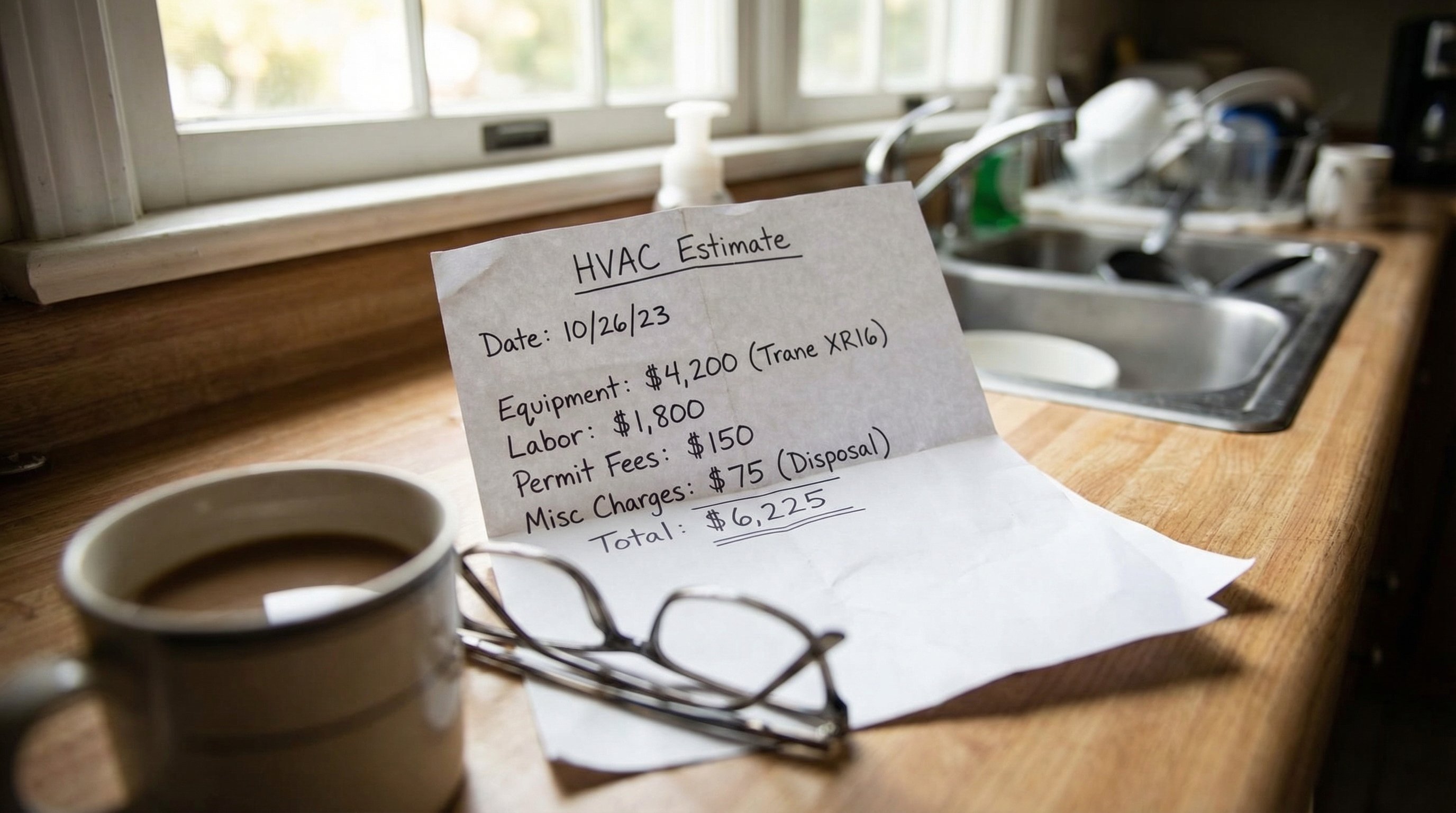
You just got an HVAC quote for $16,500. The contractor was professional. He wore a polo shirt and used an iPad. He explained things confidently and gave you a price that sounded reasonable given how important AC is in Phoenix.
But something felt off. Maybe it was the pressure to sign today. Maybe it was the vague line items. Maybe a neighbor mentioned they paid less.
Here is the truth nobody in the HVAC industry wants you to know: that $16,500 quote probably includes $4,000-$7,000 in pure dealer markup on the equipment alone. The same exact unit you can buy online for $3,500 is being marked up to $7,000-$9,000 on your quote.
Phoenix homeowners are getting systematically overcharged on HVAC replacements. And most of them never know it because they have no reference point for what fair pricing actually looks like.
This article changes that. By the end, you will know exactly what a fair HVAC quote looks like for your home, how to spot the markup, and what to do if your quote is too high.
Why Phoenix HVAC Quotes Are Especially Inflated
Phoenix is different from other markets in ways that directly impact what you pay for a new AC.
Summer urgency is exploited. When your AC dies in July at 112°F, you need it fixed immediately. Contractors know this. Emergency pricing, same-day premiums, and "I can be there Thursday" pressure are all designed to catch you when you are hot, frustrated, and willing to sign anything.
The markup chain is longer here. The standard HVAC supply chain runs: Manufacturer to Distributor to Supplier to Contractor. Each step adds 10-20%. By the time a contractor buys a unit to install in your home, they have already paid 30-50% above manufacturer list price.
But then most contractors add their own margin on top. Some charge 40-60% markup on the equipment itself. That $4,000 unit becomes $6,400 on your quote before labor is even calculated.
Older homes have weird ductwork. Many Phoenix homes, especially those built before 2000 in neighborhoods like Arcadia, Encanto, and central Phoenix, have ductwork that was sized for smaller systems. When you replace, you often need duct modifications that add $500-$2,000 to the job. Contractors sometimes use this as cover to pad the entire quote.
Codes vary by city. Phoenix, Scottsdale, Mesa, and Chandler each have different permit fees and inspection requirements. A contractor who knows the local codes can navigate efficiently. One who works across multiple municipalities may overestimate permit costs and build in a buffer that goes into their margin.
What Fair HVAC Pricing Looks Like in Phoenix (2026)
Here are real numbers you can use as benchmarks. These are based on actual retail pricing for equipment plus typical installation labor ranges in the Phoenix metro. All prices assume a single-family home with existing ductwork in decent condition.
Tier 1: Good (SEER 14-16)
- Equipment cost: $3,000-$4,500
- Installation labor: $2,500-$3,500
- Permit and misc: $300-$600
- Total fair range: $5,800-$8,600
Tier 2: Better (SEER 17-19)
- Equipment cost: $4,000-$5,500
- Installation labor: $2,500-$3,500
- Permit and misc: $300-$600
- Total fair range: $6,800-$9,600
Tier 3: Best (SEER 20-22)
- Equipment cost: $5,500-$7,500
- Installation labor: $3,000-$4,500
- Permit and misc: $300-$600
- Total fair range: $8,800-$12,600
These are for standard 3-ton split systems. Adjust 10-15% down for smaller 2-ton units, 10-15% up for 4-5 ton units.
If your quote is under these ranges, something may be missing (permit fees deferred, old refrigerant handled improperly, shortcuts on labor). If your quote is above these ranges by $2,000 or more, you are likely looking at excessive dealer markup.
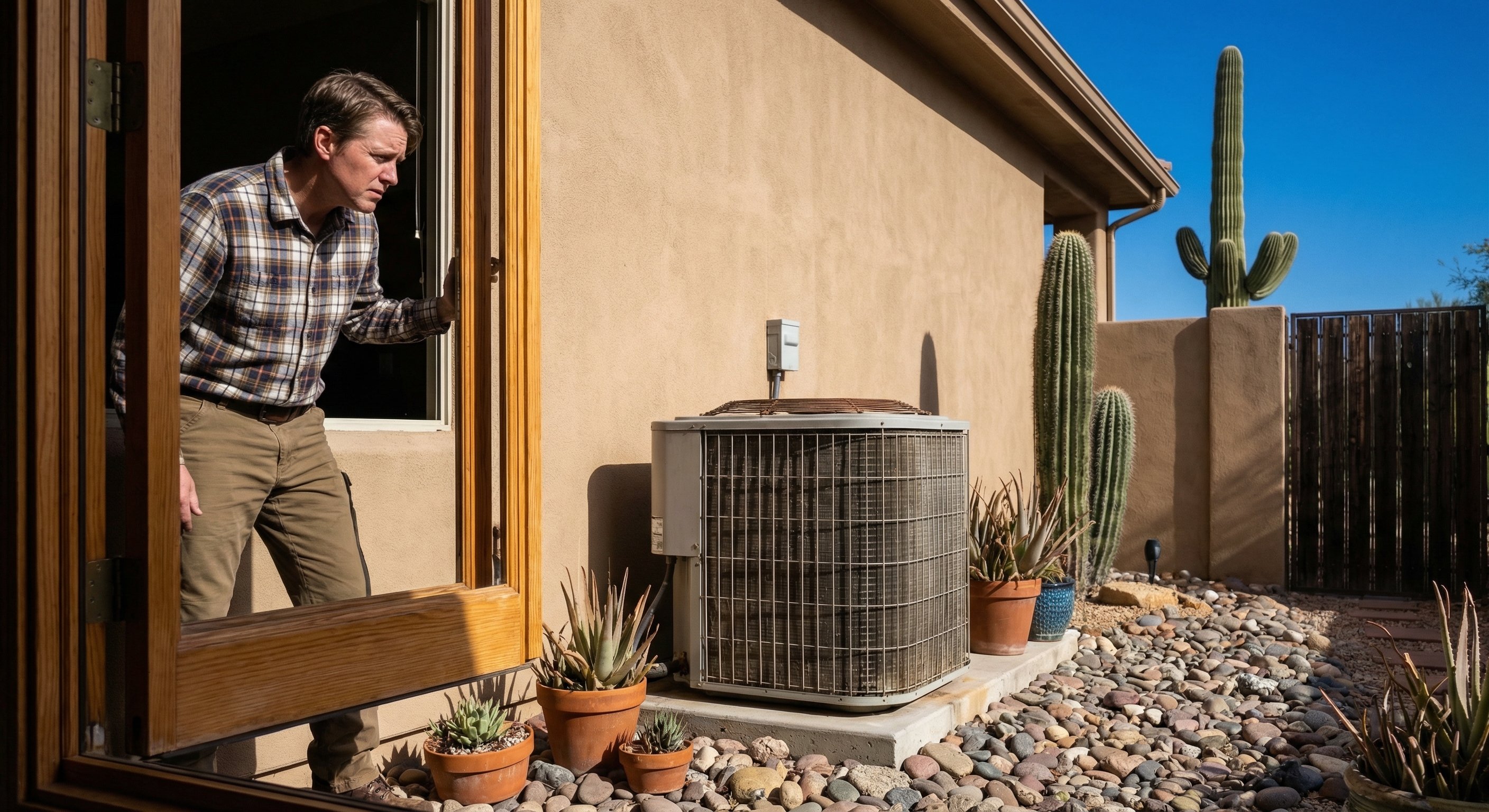
How to Calculate Your Fair Price in 60 Seconds
Do not do math in your head at the kitchen table with a contractor watching. Use this framework after they leave.
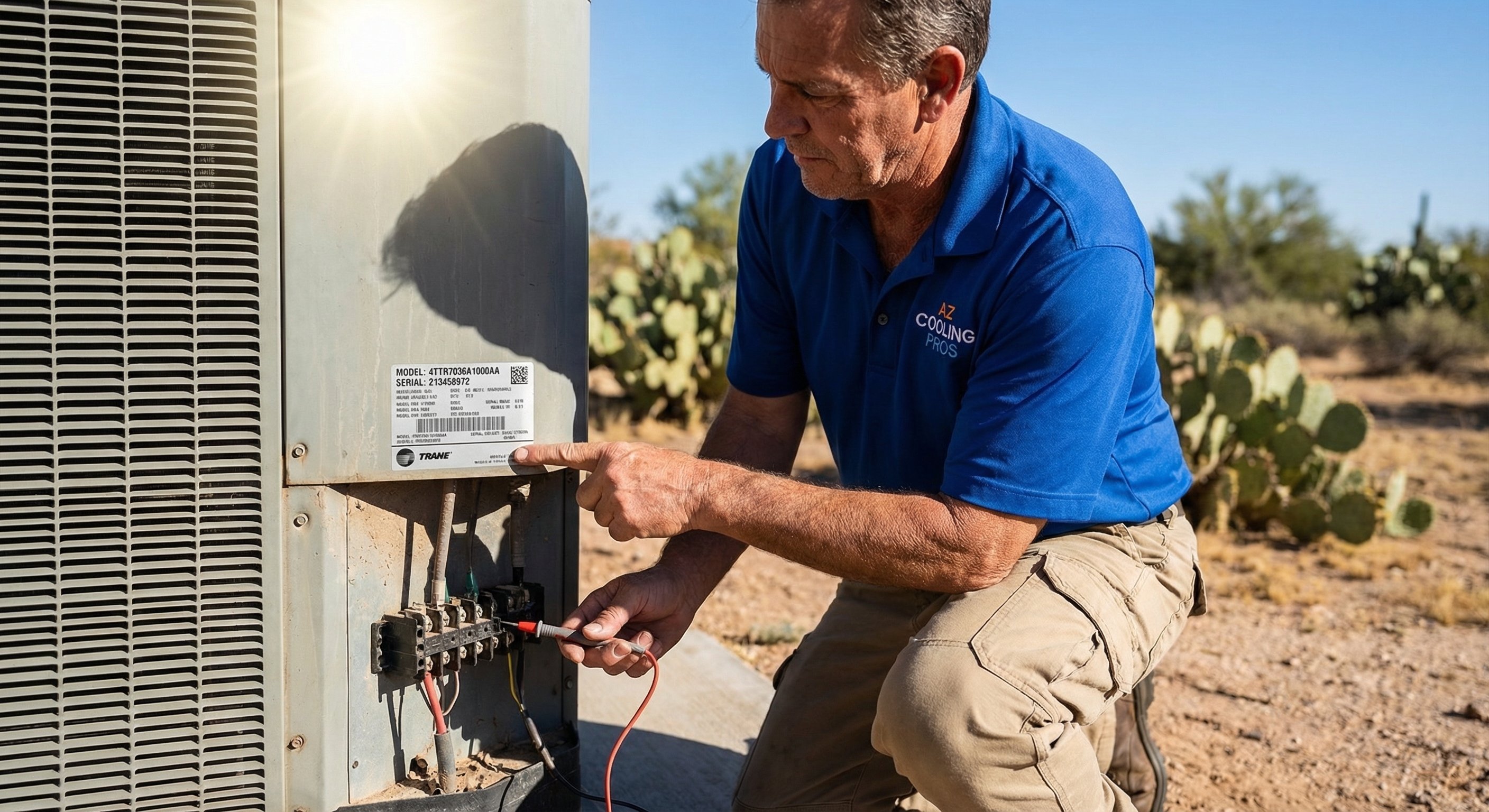
Step 1: Identify the unit. Ask for the exact model number. Look it up on the manufacturer website or a retailer like SupplyHouse. Write down the list price. The contractor paid somewhere between list and list minus 20%. That is their equipment cost.
Step 2: Add known labor components. In the Phoenix metro, a standard replacement labor runs $2,500-$4,500 depending on complexity. If the contractor is not specifying labor line items, ask for them broken out. Permits in Phoenix run $250-$400. Scottsdale can be $350-$500. Mesa and Chandler fall in between.
Step 3: Calculate the markup percentage. (Total Quote minus Equipment Cost minus Labor minus Permit) divided by Equipment Cost.
If that number is above 50%, you are paying excessive markup. Most fair contractors run 20-40% markup on the full job. Some run less.
Example from a real Phoenix homeowner on Reddit:
A homeowner in the East Valley got a quote for $16,500. He asked to see the unit model number. He looked it up. The unit listed for $4,800 at the manufacturer website. The contractor was billing the equipment at $11,500 on the quote. That is a 140% markup on the unit alone.
The actual fair price for that job: approximately $8,500-$9,500 installed. The quote was nearly double.
Skip the dealer markup
See What a New AC Actually Costs in Phoenix Metro, AZ
AC Rebel shows you the real equipment price — no sales pitch, no inflated quote. Get matched with a licensed installer and keep $3,000–$5,000 in your pocket.
Get My Direct Price →The HVAC Quote Line-by-Line Breakdown
Most homeowners never read their HVAC quote carefully. Contractors count on that. Here is what each line should actually represent.
Equipment Line
This is the cost of the outdoor condenser and indoor air handler (or coil). The contractor purchased this from a supplier at some price and is marking it up to you.
Red flag: If the equipment line is more than 60% of your total quote, the contractor is over-marking the unit. A fair split is roughly 45-55% equipment, 45-55% labor and misc.
What to do: Ask for the model number. Look it up. If the contractor will not provide it, that is a red flag. You have a right to know what you are buying.
Labor Line
This covers the actual installation work: removing the old unit, installing the new one, connecting refrigerant lines, wiring, and testing.
Red flag: Labor above $5,000 for a standard replacement is suspicious unless there are documented complications (attic work, duct modification, difficult access).
What to ask: "What specifically does this labor include? Is refrigerant recovery included? Old unit disposal?" Get answers in writing.
Permit Fees
Every city in Maricopa County requires an HVAC permit for replacement. Permit fees are set by the city, not the contractor. These should be pass-through costs with no markup.
Phoenix: $250-$350 for a replacement permit Scottsdale: $350-$500 (they have higher admin fees) Mesa: $275-$375 Chandler: $250-$350
If your quote shows permit fees above $500 for a simple replacement, ask why. Some contractors charge an "expediting fee" or "admin fee" on top of the actual permit. That is padding.
Refrigerant Handling
R-410A is the standard refrigerant for most systems made after 2010. The EPA regulates handling but does not set prices. Contractors charge $50-$200 for refrigerant recovery and charging on a standard job.
Red flag: Charges above $300 for normal refrigerant handling on a replacement. R-410A runs roughly $75-$150 per pound, and most systems hold 5-10 pounds. Anything above $200 in materials plus $150 in labor is high.
Older systems: If you have an R-22 system (made before 2010), refrigerant costs are much higher. R-22 is no longer manufactured and runs $150-$300 per pound. A full recharge can cost $800-$1,500. This is one reason replacing older R-22 systems is often more economical than repairing them.
Electrical Work
If the new unit requires electrical modifications beyond a simple disconnect swap, this should be a separate line. Basic electrical work (adding a disconnect, upgrading wiring to code) typically runs $200-$600.
Red flag: Electrical charges above $800 for a standard replacement. Unless you have documented electrical issues in the panel, this should be minimal.
Miscellaneous / Startup
Contractors often add a "startup fee," "system flush," or "condensate line installation" as miscellaneous charges. These range $100-$300 combined for reasonable items.
Red flag: Miscellaneous charges above $500 on a standard replacement. Ask for itemization.

The Three Most Common Quote Manipulation Tactics
These are not illegal. They are standard industry practices that padding-friendly contractors use to increase your total.
The Bundled Package Deal
Contractor presents a "package" price that sounds like a discount. But the bundle includes items you do not need or prices that are already inflated.
Example: "I'll give you a great deal on this Trane system. It's $12,500 for everything."
Everything includes a new thermostat (worth $150), UV light (worth $300), and extended warranty (worth $200) that you may not have asked for or need. The $11,800 equipment cost on the quote reflects a $7,000+ markup on the unit.
What to do: Ask for itemized pricing. If they refuse to break it down, walk away.
The Rush Premium
Contractor tells you they can start next week but it will cost extra because of "material availability" or "scheduling priority." This is usually invented margin.
What to do: Get quotes from two other companies. If both can start in two weeks at lower prices, the rush premium was padding.
The Upsell Close
Contractor presents a fair base price, then adds high-margin items at the end: "For just $800 more, I'll upgrade you to this better compressor." Or "For $1,200, I'll add a surge protector and extended warranty."
Some upsells are legitimate. Many are marked up 100-200% above actual cost.
What to do: Ask what each upsell actually costs the contractor. "What do you pay for the surge protector?" If they will not answer, you do not need it from them.
What to Do If Your Quote Is Too High
Getting a high quote is not the end of the process. It is the beginning of negotiating or starting over.
Step 1: Ask for a full itemized quote. Not a package price. Itemized. Every line. If they will not provide one, that tells you something.
Step 2: Get two more quotes. This is standard practice and any reputable contractor expects it. Do not feel bad about it. You are making a $8,000-$12,000 decision. Three quotes is the minimum.
Step 3: Research the unit independently. Model number. Manufacturer website. SupplyHouse. Wholesale Supply. These are real distributor websites where contractors buy. You will find the unit listed. You will see what it actually costs.
Step 4: Calculate the fair range using the framework above. If your quote is within 15% of the fair range, you are probably dealing with a reasonable contractor and the difference is account for legitimate variation in labor quality, brand, or home-specific complexity.
If your quote is 30%+ above the fair range, you are being marked up and it is worth pushing back or walking away.
Step 5: Confront with data. Call the contractor. "I researched this unit. It retails for $X. My estimate of fair installation cost is $Y. Your quote is $Z. Can you walk me through why this is higher?" A legitimate contractor will explain. A padding-heavy contractor will get defensive or stall.
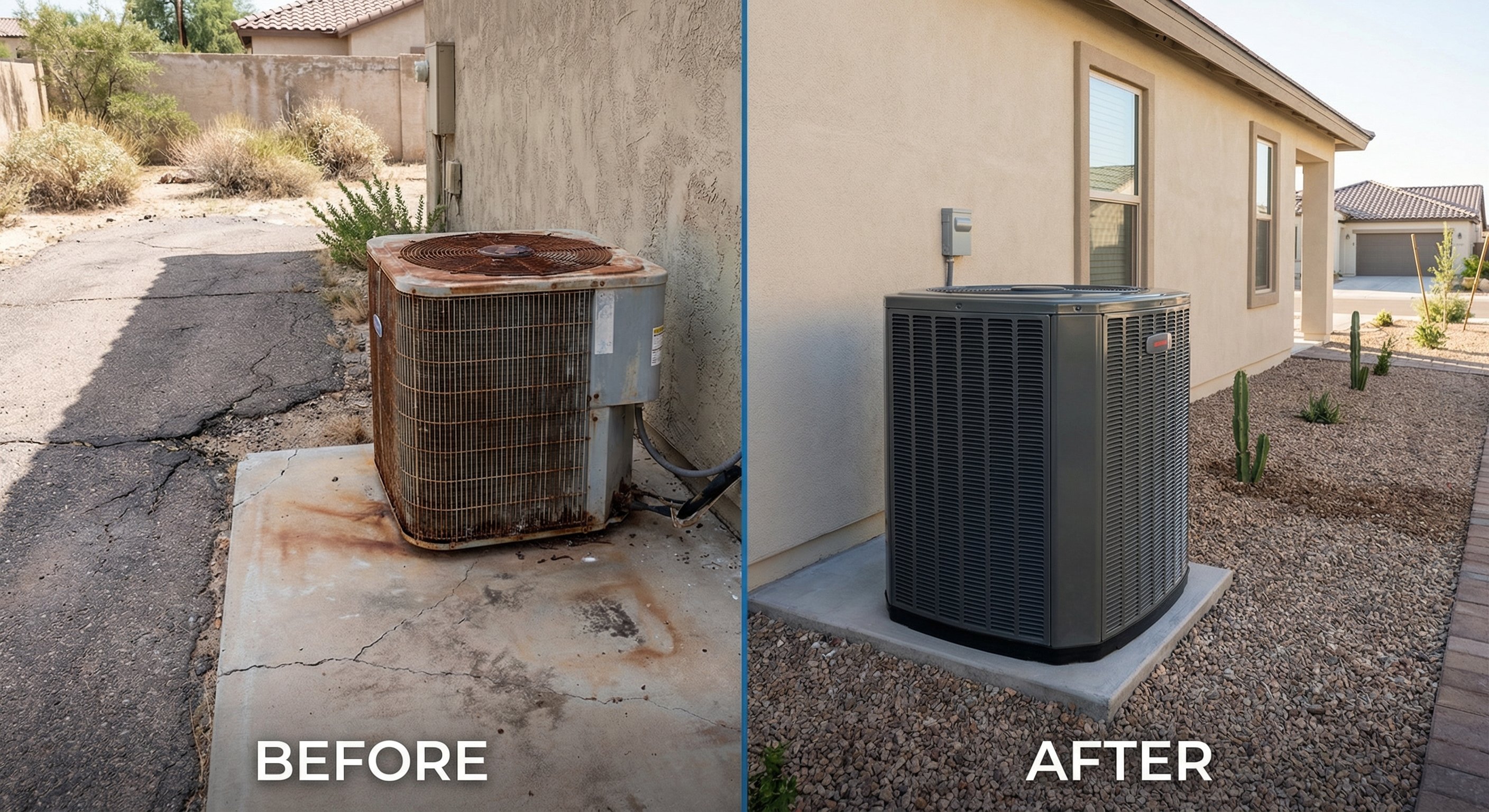
Step 6: Consider buying the unit yourself. This is where AC Rebel comes in. We let you buy the unit at direct pricing, see exactly what the equipment costs without any markup, and then get matched with a vetted local contractor for installation only. You control the unit price. You control who installs it.
This model eliminates the main source of quote inflation: the equipment markup. A $4,500 unit on AC Rebel is $4,500. Not $7,500. Not $8,200.
Most Phoenix homeowners who use AC Rebel save $2,000-$4,000 compared to traditional contractor quotes for the same installation. The difference is not in labor quality. It is in the markup removed from the equation.
Get a free quote at acrebel.com and see what the equipment actually costs before you sign anything.
How to Spot a Contractor Worth Hiring
Not all high quotes come from bad contractors. Sometimes a higher quote reflects genuinely better work. Here is how to tell the difference.
Licensed and bonded: Verify the contractor's Arizona ROC license number at azroc.gov. Any contractor working in Phoenix must be licensed. Unlicensed contractors are cheaper but leave you with no recourse if something goes wrong.
Insurance: Ask for a certificate of insurance. Minimum $1 million liability. If they do not have it, they are not worth the risk regardless of price.
No pressure tactics: A contractor who needs you to sign today is not confident in their pricing. Legitimate urgency exists (summer is busy), but pressure to decide on the spot is a red flag.
Warranty clarity: The equipment warranty comes from the manufacturer. The labor warranty comes from the contractor. Ask what each covers. Standard is 1-year labor, 10-year parts (for the equipment). If a contractor offers "lifetime labor," ask what that actually means in writing.
Communication quality: Did they answer your questions clearly? Did they explain the quote in terms you understood? Contractors who explain their pricing earn trust. Contractors who deflect questions hide something.
The Monsoon Season Consideration
Phoenix homeowners who need AC replacement face a timing pressure that homeowners in milder climates do not. You cannot always wait three months to get multiple quotes.
If your system fails in June, July, or August, you are in emergency mode. The normal process of getting three quotes and negotiating feels impossible when it is 112°F inside your house.
The practical solution: Get your quote process started before you need it. If your system is 12-15 years old, get estimates now in March, April, or May. Lock in pricing before monsoon season. HVAC companies are less busy in spring, more competitive on price, and you have time to think clearly.
If your system fails in summer and you must replace immediately, use the framework above to quickly assess whether a quote is fair. A 10-minute review of the line items can save you $3,000-$5,000.
Frequently Asked Questions
Q: What is a fair price for a new AC in Phoenix?
For a standard 3-ton central AC replacement with a SEER 16-18 unit, expect to pay $6,800-$9,600 installed in the Phoenix metro. This includes equipment, labor, permit, and basic miscellaneous items. Prices above $11,000-$12,000 for this tier of system typically reflect excessive dealer markup rather than superior quality.
Q: How do I know if my HVAC quote is itemized enough?
Ask for a quote that breaks out at minimum: equipment model and cost, labor cost, permit fees, refrigerant handling, electrical work, and miscellaneous charges. If a contractor refuses to itemize, do not hire them. You cannot assess whether pricing is fair without line items.
Q: Is it worth getting multiple HVAC quotes?
Absolutely. Getting three quotes is standard practice for any major home investment. Price differences of $2,000-$5,000 between competing quotes for the same work are common in Phoenix. The contractor with the highest quote is not always the most qualified, and the lowest quote may be cutting corners. Compare line items, not just totals.
Q: Should I negotiate with my HVAC contractor?
Yes. Many homeowners feel awkward about it, but negotiating is expected in a $8,000-$12,000 transaction. Use the data you gather from other quotes and your own research into equipment costs. "I found this unit listed at $X online. Can you explain your equipment line?" is a completely reasonable question. Contractors who cannot explain their pricing are the ones you should walk away from.
Q: Why do HVAC contractors charge so much for the same unit?
The markup chain is the primary reason. Equipment goes from manufacturer to distributor (10-15% markup) to supplier (15-20% markup) to contractor (40-60% markup in some cases). By the time it reaches your quote, a $4,000 unit may be billed at $7,000 or more. AC Rebel eliminates the contractor markup step entirely by selling direct.
Q: Does a higher HVAC quote mean better quality?
Not necessarily. In many cases, a higher quote means higher markup, not better work. Installation quality depends on the contractor's skill, licensing, and attention to detail. Equipment quality depends on the brand and SEER rating, not the contractor's pricing. Compare equipment models and contractor credentials, not just the total price.
Q: How long should an HVAC installation take?
A standard single-family home AC replacement takes one to two days for a competent crew. Day one covers old unit removal and new unit installation. Day two covers electrical connections, refrigerant charging, thermostat wiring, and system testing. If your quote says five days, ask why. Extended timelines often reflect inefficiency rather than thoroughness.
AC Rebel is a direct-to-consumer HVAC marketplace that shows Phoenix homeowners exactly what equipment costs before any markup. Skip the dealer middleman and see real pricing at acrebel.com.
Ready to stop overpaying?
See Your Direct AC Price in 2 Minutes
Skip the dealer. Buy your AC unit at direct pricing and pay a vetted local installer only for the installation. No sales calls. No hidden markup. Most homeowners save $3,000–$5,000+ compared to a traditional quote.
Get My Direct Price — No Credit Card2-minute quote · Licensed installers · 10-year warranty options