
Ductwork Problems in Phoenix: What's Draining Your AC Efficiency

Ductwork Problems in Phoenix: What's Draining Your AC Efficiency
TL;DR: Leaky ductwork is one of the most common and overlooked causes of poor cooling performance in Phoenix homes. Most Phoenix-area residences lose 20 to 30 percent of their conditioned air through gaps and disconnections before it reaches living spaces. The five most common problems are leaking flex connections, disconnected runs in attics, undersized ducts from room additions, uninsulated supply runs through hot attics, and crushed flex duct. Repairing leaks costs $500 to $2,500. Full duct replacement runs $5,000 to $12,000.
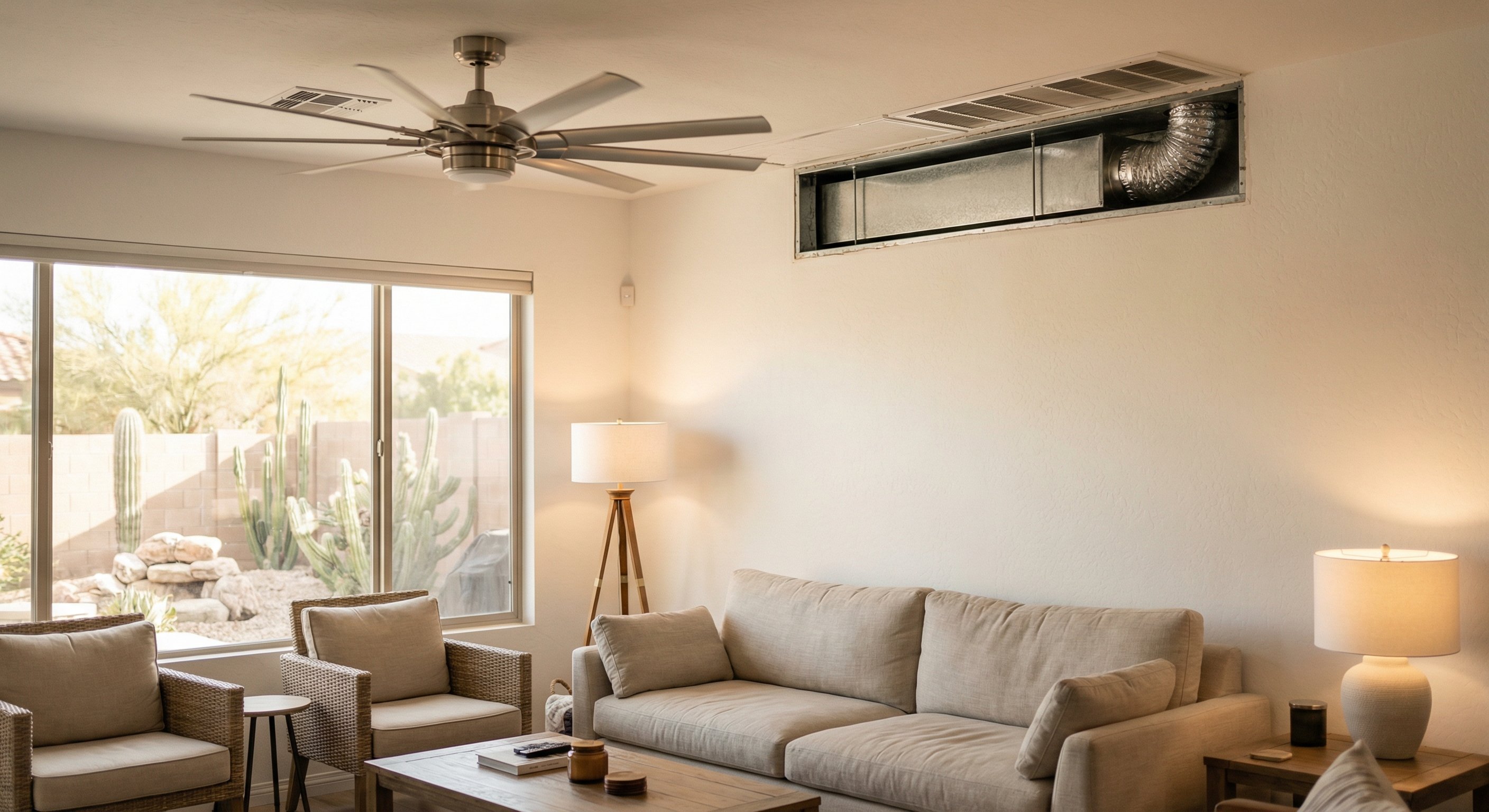
Your thermostat reads 78 degrees. Your AC unit is running hard. The air coming out of your vents feels vaguely cool at best, and some rooms are noticeably warmer than others. You call a contractor, they inspect the outdoor unit, check the refrigerant, clean the coils, and tell you everything looks fine.
The problem is not your AC. It is your ductwork.
Duct problems are the silent efficiency killer in Phoenix homes. The average Phoenix residence loses 20 to 30 percent of its cooled air through duct leakage according to Energy Star research, and in older homes with original ductwork that number can climb even higher. You are paying to cool air that is disappearing into your attic or crawl space before it ever reaches your living room.
Here is what to look for and what it costs to fix.
Why Duct Problems Are Worse in Phoenix Than Anywhere Else
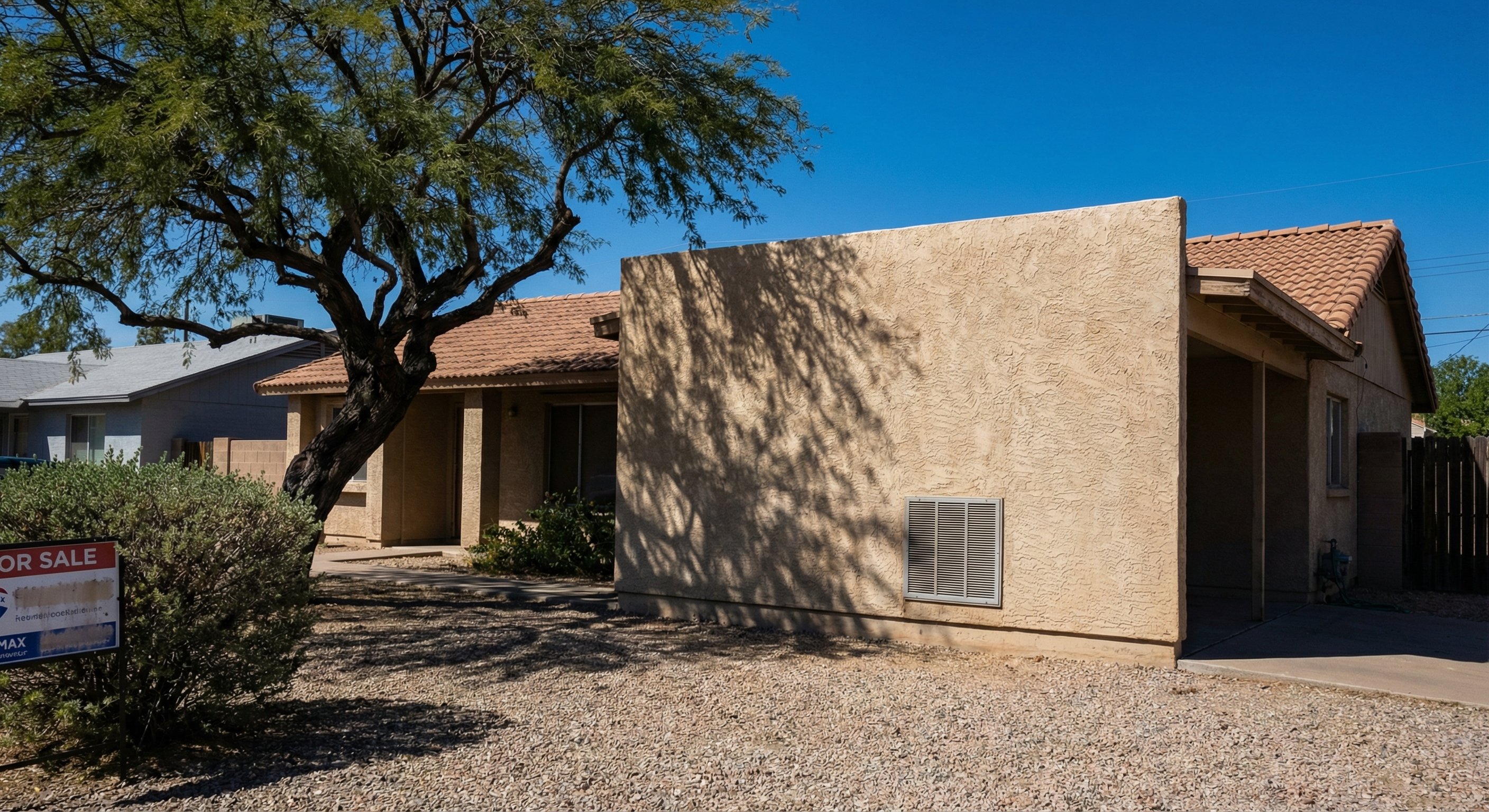
Phoenix presents a uniquely harsh environment for ductwork in ways that most other markets do not face.
First, our attics are not just hot, they are extreme. During a typical Phoenix summer, attic temperatures routinely exceed 140 degrees Fahrenheit. Supply ducts running through an unconditioned attic in this climate experience massive thermal gain. Air that leaves your AC unit at 55 degrees might arrive at your bedroom register at 70 degrees or higher purely because of heat soaking through uninsulated duct walls.
Second, Phoenix homes are disproportionately built with flex duct, which is lightweight, inexpensive, and extremely vulnerable to installation defects. Flex duct is the duct type found in the vast majority of tract homes built in the Phoenix metro from the 1970s through the 1990s. It is acceptable when properly installed and supported, but it degrades faster than hard duct in our climate because the inner lining dries out and cracks under constant thermal stress.
Third, the combination of hard water and dry air accelerates corrosion at metal duct connections. Joints that were sealed with mastic or tape 20 years ago are now brittle, cracked, and leaking.
Fourth, the dust that characterizes Phoenix summers gets pulled into gaps in the duct system, coating evaporator coils and reducing airflow over time.
Problem One: Leaking Flex Duct Connections
The most common duct problem in Phoenix homes is leaking connections at the point where flex duct attaches to the air handler or branches into individual supply runs.
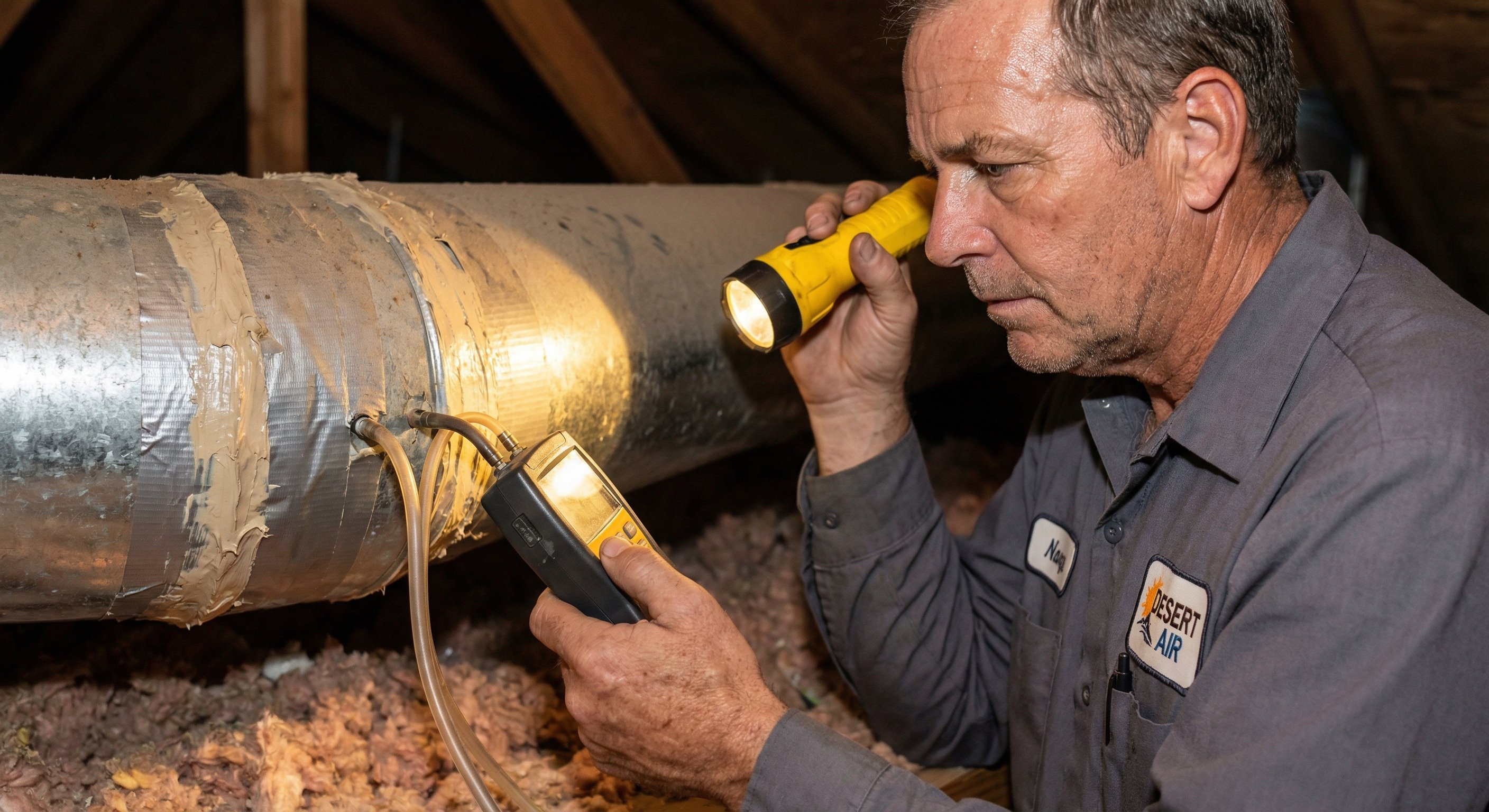
Flex duct connects to metal junction boxes using a nylon strap cinch and either duct tape or, in proper installations, zip ties with mastic over them. What you often find in Phoenix homes is duct tape alone. Duct tape fails in attics within 5 to 10 years because the adhesive dries out and releases under thermal cycling. The result is a connection that looks sealed but has significant gaps invisible under a glance.
How to spot it: Hold a piece of tissue or a lightweight cloth near the connection points of your ductwork while the system is running at high fan speed. You will feel air escaping at the gaps. Another tell is dust buildup along the visible sections of duct, which indicates air movement and potential leakage along that run.
Cost to fix: $400 to $1,200 for professional sealing of multiple connection points. Contractors use UL-listed fiber mesh mastic tape for this work, not standard duct tape. If someone shows up with a roll of standard gray duct tape, send them away.
Problem Two: Disconnected Duct Runs in Unconditioned Spaces
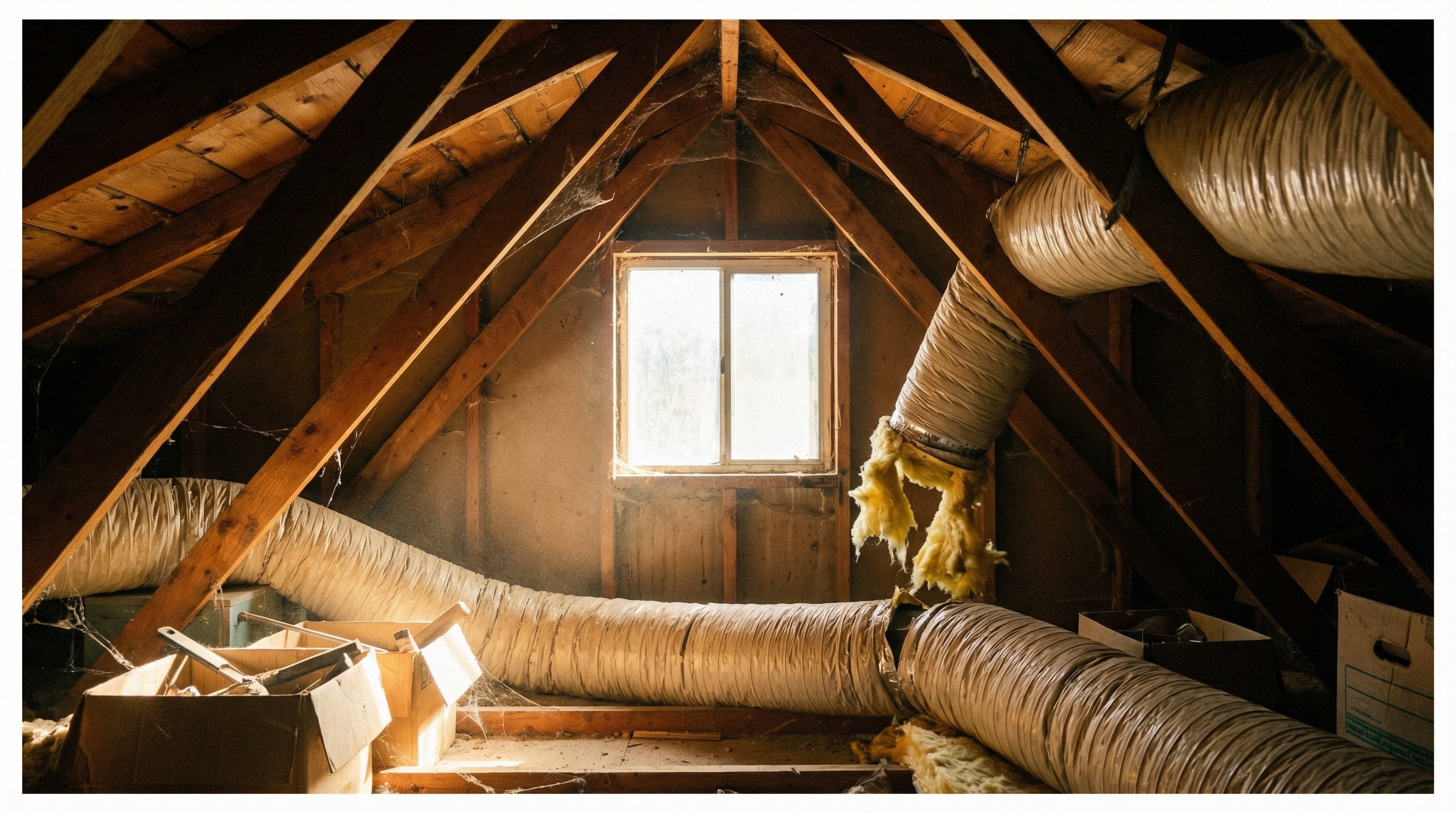
The second most common issue in Phoenix homes is duct runs that have simply come apart in unconditioned spaces, particularly in the attic.
This happens because flex duct is lightweight and the attics of Phoenix homes experience dramatic temperature swings between summer and winter. The thermal expansion and contraction of the sheet metal plenum and the flex duct itself causes connections to work loose over seasons. A duct that was firmly attached in January may be hanging loose by July.
This is different from a leaky connection. A disconnected duct means 100 percent of the air in that run is being dumped into the attic. If you have a disconnected run serving your guest bedroom, that room is not getting cooled because none of the conditioned air is reaching it.
How to spot it: Walk your attic (on the attic floor, not the ceiling joists) and look for flex duct runs that are hanging loose from their attachment points. Any duct that is not firmly connected to its junction box or has visible gaps is leaking all of its air into the attic.
Cost to fix: $300 to $800 per disconnected run if it is a simple reconnection. If the duct run itself has been damaged or is too short to reach after pulling away, a section replacement may be needed at $500 to $1,500 depending on length.
Skip the dealer markup
See What a New AC Actually Costs in Phoenix, Arizona
AC Rebel shows you the real equipment price — no sales pitch, no inflated quote. Get matched with a licensed installer and keep $3,000–$5,000 in your pocket.
Get My Direct Price →Problem Three: Undersized Ductwork From Room Additions
This is the problem that gets missed most often, and it is endemic to Phoenix because our suburbs grew so fast.
When a Phoenix home was built in the 1980s and a room addition was added in the 1990s, the original HVAC contractor sized the system for the original footprint. The addition got a supply register tapped into an existing run, and no one recalculated the total airflow requirement. The result is an AC system that was properly sized for 1,600 square feet now trying to cool 2,200 square feet, with the ductwork to match.
This problem shows up as certain rooms being warm while others are fine. The rooms closest to the air handler get good airflow. The rooms at the end of long duct runs or in additions get minimal airflow. The AC itself runs constantly trying to reach the thermostat temperature and never quite gets there.
How to spot it: Hold a piece of tissue at each supply register in your home with the AC running on high fan. Compare the airflow between registers. Significant differences between registers, particularly between original rooms and additions, point to undersized or restricted ductwork to that area.
Cost to fix: This depends on scope. Rerouting or extending ductwork to an addition typically runs $1,500 to $4,000. A full duct modification to address undersized runs throughout a home can run $5,000 to $10,000 if it involves replacing sections of flex with hard duct or adding additional returns.
Problem Four: Uninsulated Supply Ducts in Hot Attics
Phoenix attics hit temperatures that would be considered dangerous in other climates. A supply duct carrying 55-degree air through a 140-degree attic loses significant cooling capacity before it reaches your home.
The fix is simple and should have been done at installation, but in a shockingly high percentage of Phoenix homes it was not: supply ducts in unconditioned attics should be insulated to R-8 or higher. Many of the original flex duct installations in Phoenix homes have no exterior insulation at all. The flex duct itself provides minimal thermal resistance.
How to spot it: Go into your attic during a hot summer afternoon and touch the visible supply ducts. If they feel warm to the touch, they are gaining heat. Properly insulated ducts should feel roughly ambient temperature in an attic, not hot.
Cost to fix: Having your entire attic duct system wrapped with R-8 insulation typically costs $1,500 to $3,500 depending on the linear footage of ductwork. This is one of the highest-ROI duct improvements available for Phoenix homeowners because it addresses the problem at its root.
Problem Five: Crushed or Kinked Flex Duct
Flex duct is lightweight and relatively fragile. It gets crushed by stored items in attics, kinked when installed around obstacles without proper sizing, and compressed where it passes through wall openings or floor penetrations.
A crushed flex duct section can reduce airflow by 50 percent or more, which is enough to make a room feel warm even though the AC is working normally. This is one of the easiest problems to fix and one of the most commonly overlooked.
How to spot it: Visually inspect all visible flex duct runs in your attic. Look for sections that are flattened, kinked, or compressed against building structures. Any visible deformity in the duct shape indicates a flow restriction.
Cost to fix: Damaged sections of flex duct can be cut out and replaced with new flex duct for $200 to $600 depending on length and accessibility. This is a straightforward repair that any licensed HVAC contractor can handle in under an hour.
How to Know if Ductwork Is Your Problem
Here is a practical diagnostic you can do before calling anyone.
Turn your AC on and set the thermostat to call for cooling. Go to the furthest supply register from your air handler, hold a piece of tissue or lightweight cloth in front of it. Note the airflow strength. Then go to the register closest to your air handler and compare. If the closest register has noticeably stronger airflow, you have a duct problem either in the run to the distant room or at the junction serving that branch.
Another test: Check your return air grille. If it feels like it is pulling significant air, that is normal. If you can feel cold air leaking from seams in the return ductwork in your attic, your return side is leaking too.

If your AC is running but your house does not cool, and a contractor has confirmed the unit itself is working properly, ductwork is almost certainly the culprit. Do not pay for a new AC unit until you have ruled out duct problems.
What Duct Repair Costs in Phoenix
| Repair Type | Typical Phoenix Cost |
|---|---|
| Seal leaking connection points | $400 to $1,200 |
| Reconnect disconnected duct run | $300 to $800 |
| Replace damaged duct section | $500 to $1,500 |
| Insulate full attic ductwork | $1,500 to $3,500 |
| Extend ductwork to room addition | $1,500 to $4,000 |
| Full duct replacement | $5,000 to $12,000 |
These costs assume a typical single-family Phoenix home with 1,400 to 2,200 square feet. Homes with multiple floors, hard-to-access crawl spaces, or custom hard-duct systems will run higher.
A note on pricing: you will get wildly different quotes from different contractors because ductwork access and scope varies enormously. One contractor may quote $800 to seal your attic ducts. Another may quote $2,200 because they are planning to open ceilings and replace runs that a cheaper contractor would seal in place. Get at least two quotes and ask specifically what they are sealing and how.
When to Repair vs. Replace Your Ductwork
Here is the honest guidance most contractors will not give you.
If your ductwork is less than 15 years old and the problems are primarily at connections, sealing is almost always the right call. Full replacement on relatively new ductwork is unnecessary.
If your ductwork is 20 to 30 years old and you are experiencing multiple problems across different runs, replacement is worth seriously considering. Older flex duct in Phoenix has typically experienced enough thermal degradation that patching one problem simply reveals another within a year or two.
If you are replacing your AC unit anyway, that is the ideal time to evaluate ductwork. Doing both together avoids duplicate labor costs and allows a contractor to right-size the ductwork to match the new equipment.
Protecting Your AC Investment With Good Ducts
The air conditioning unit you buy is only half the equation. If your ductwork is leaking 25 percent of your cooled air into the attic, you are essentially paying for a larger AC than you need just to make up for the losses. Sealing and insulating your ductwork is often a higher-ROI improvement than upgrading to a higher-efficiency air conditioner.
Most Phoenix homeowners discover duct problems when their AC is struggling in a heat wave. If your system is running constantly and some rooms never seem to cool, check your ducts before you check your refrigerant levels. The problem is more likely to be in your attic than in your outdoor unit.
See how AC Rebel handles ductwork issues as part of a full system replacement, or get a free quote to evaluate what your cooling setup is actually costing you.
Frequently Asked Questions
How do I know if my ducts are leaking?
Turn your AC on high fan and hold a piece of tissue or lightweight cloth in front of each supply register. Weak airflow from any register, especially compared to registers near your air handler, is a sign of duct leakage or restriction. Walk your attic if accessible and look for disconnected or crushed flex duct sections.
Can ductwork cause some rooms to be hot while others are cool?
Yes. This is one of the most common signs of duct problems. If rooms near your air handler are fine but distant rooms or additions are consistently warmer, your duct runs to those areas are likely leaking, disconnected, or undersized for the airflow required.
Does duct sealing really make a difference in Phoenix?
Yes. Most Phoenix homes lose 20 to 30 percent of conditioned air through duct leakage according to Energy Star. In a 115-degree summer, that loss translates directly into higher bills and worse comfort. Sealing attic duct connections is one of the fastest-payback improvements available for Phoenix homeowners.
What is the difference between duct sealing and duct replacement?
Duct sealing uses mastic and fiber mesh tape to close gaps at connections and joints. It is the right approach for ductwork that is in decent structural condition but has leaking joints. Duct replacement involves removing old flex duct and installing new runs, usually hard metal duct or insulated flex. Replacement is necessary when the existing ductwork is too damaged, undersized, or degraded for sealing to be effective.
How much does it cost to seal ducts in Phoenix?
Professional duct sealing for a typical Phoenix home costs $500 to $2,500 depending on the number of leaking joints, accessibility of the ductwork, and whether the sealing is done from inside the home or through attic access. Get two quotes and ask specifically what sections they are sealing.
Does adding more insulation around my ducts help?
Yes. If your supply ducts run through an unconditioned attic, wrapping them with R-8 insulation is one of the most effective improvements you can make. It prevents the 15 to 25 degree temperature gain that happens as cool air passes through a hot attic. This typically costs $1,500 to $3,500 for a full attic wrap.
Should I replace my ducts when I replace my AC unit?
If your ductwork is more than 20 years old or has multiple documented problems, replacing ducts at the same time as your AC is smart. You avoid duplicate labor costs and can have the ductwork properly sized to match the new unit. If your ducts are in decent condition and only have connection leaks, sealing them separately is usually sufficient.
Ready to stop overpaying?
See Your Direct AC Price in 2 Minutes
Skip the dealer. Buy your AC unit at direct pricing and pay a vetted local installer only for the installation. No sales calls. No hidden markup. Most homeowners save $3,000–$5,000+ compared to a traditional quote.
Get My Direct Price — No Credit Card2-minute quote · Licensed installers · 10-year warranty options