
R-22 Refrigerant in Arizona: What It's Costing You (And What to Do About It)

R-22 Refrigerant in Arizona: What It's Costing You (And What to Do About It)
TL;DR: If your AC runs on R-22 (Freon), you're on borrowed time in Arizona. R-22 production was banned in 2020 — existing supply is running out, and prices now start at $400 per pound. A single recharge on an aging Arizona system can run $2,000–$3,500. That's often more than a year of payments on a new, energy-efficient unit. Here's the real math — what recharging actually costs, when it makes sense, and when you're just delaying the inevitable.
Your AC tech just told you the system is low on refrigerant. Quote in hand: $2,700. Your stomach dropped. Before you sign anything, read this.
That quote isn't necessarily a rip-off. R-22 refrigerant is genuinely expensive now — and getting more expensive every season. But expensive doesn't automatically mean worth it. In Arizona's climate, the math on recharging an old system looks very different than it does in Ohio or Minnesota.
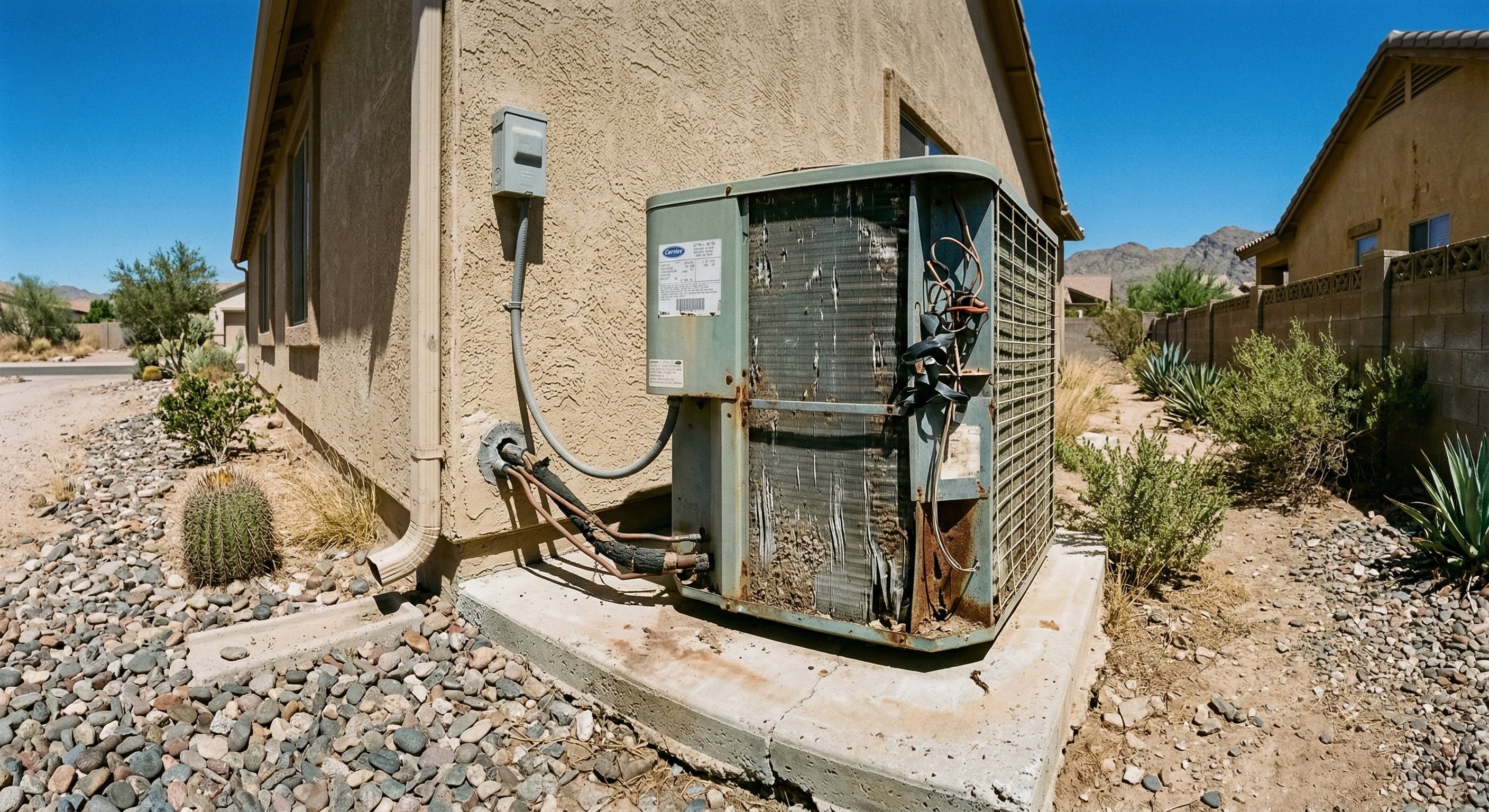
Here's what Phoenix homeowners actually need to know.
What Is R-22 and Why Is It So Expensive Now?
R-22 (brand name: Freon) was the standard refrigerant in home AC systems from roughly the 1980s through the early 2010s. If your system was installed before 2010, there's a good chance it uses R-22.
The EPA phased out R-22 under the Clean Air Act — it depletes the ozone layer. As of January 1, 2020, production and import of R-22 in the United States became illegal. No new R-22 can be manufactured or brought in. The only legal supply is reclaimed refrigerant from retired systems.
What happens when supply is fixed and demand is still there? Price explodes.
In 2018, R-22 ran about $20–$30 per pound wholesale. By 2022, it had climbed to $200–$400/lb. In 2025 and 2026, expect to pay $400 per pound or more — if your contractor can find it at all.
A typical 3-ton home AC system holds 6–12 pounds of refrigerant. If you've got a significant leak, you're looking at refilling 8–10 pounds. Do that math.
What a Refrigerant Recharge Actually Costs in Phoenix Right Now
Here's what Phoenix metro homeowners are actually paying in 2026:
| Scenario | Estimated Cost |
|---|---|
| Minor top-off (2–3 lbs, no leak found) | $800–$1,400 |
| Moderate recharge (4–6 lbs) | $1,600–$2,400 |
| Full recharge (8–10 lbs, major leak) | $2,200–$4,000+ |
| Leak repair + full recharge | $2,800–$5,000+ |
These aren't inflated quotes — they reflect real 2026 refrigerant prices. A Phoenix homeowner on Reddit last summer shared a $2,700 quote for 10 lbs of R-22. The HVAC responses confirmed: that's roughly market rate.
One important point: If your system is leaking refrigerant, recharging without fixing the leak is money thrown away. Any reputable contractor will either find and repair the leak first, or tell you honestly that the system isn't worth repairing.
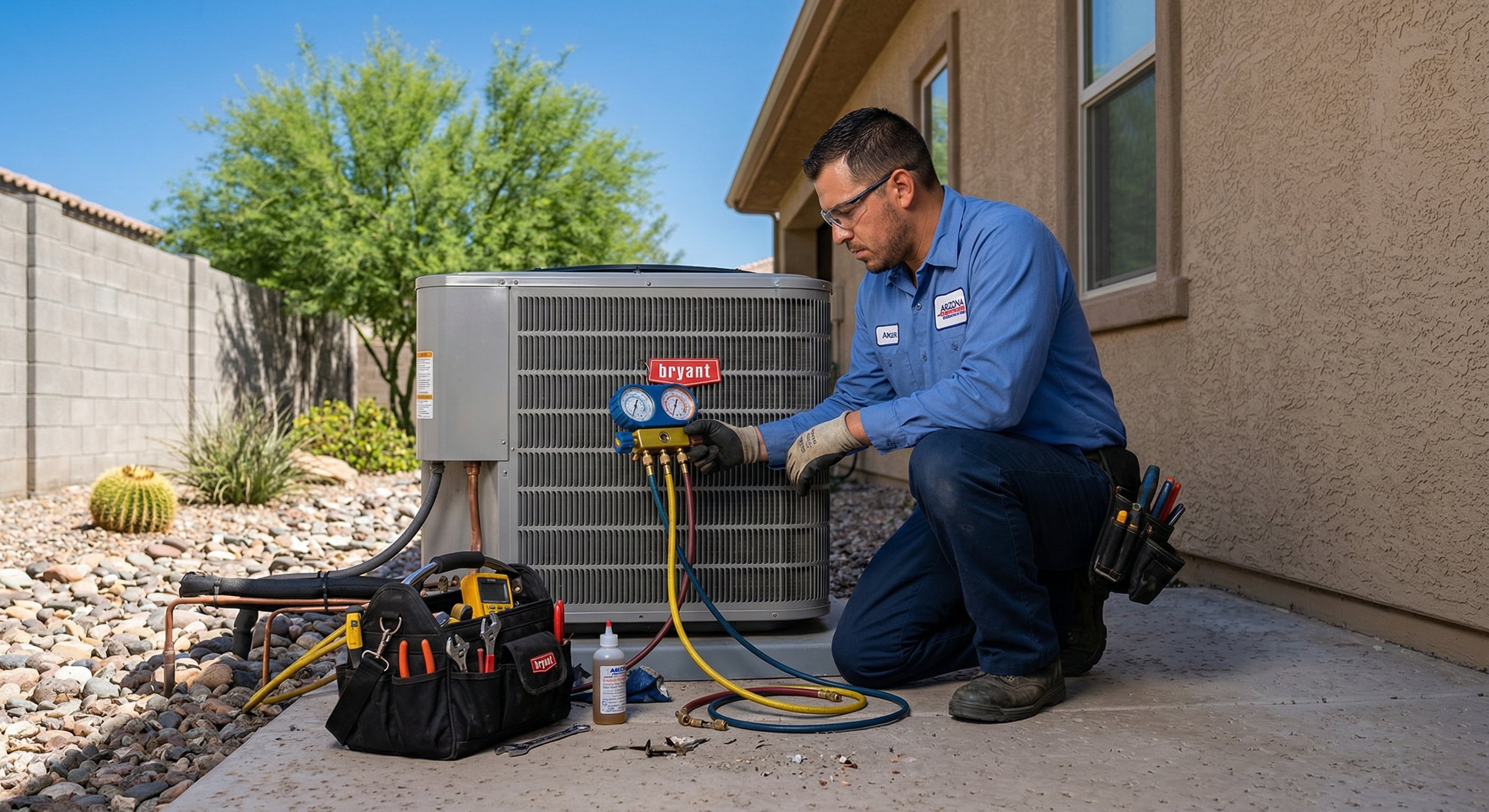
The Arizona Factor: Why R-22 Systems Here Die Faster
Here's what makes the R-22 calculation in Arizona different from everywhere else.
Arizona heat accelerates system wear. A well-maintained central AC system lasts 15–20 years nationally. In Phoenix, Mesa, Chandler, and the rest of the valley? You're looking at 10–13 years. Your AC runs 4,000+ hours per year here — that's more than triple the annual runtime of a system in a northern climate. More runtime means more wear, more refrigerant leak risk, and more compressor stress.
Most R-22 systems are already at or past their Arizona lifespan. R-22 was phased out for new systems around 2010. That means any R-22 unit that's still running in 2026 is at minimum 15–16 years old — and likely older. At Arizona's accelerated wear rate, that system is running on borrowed time regardless of refrigerant.
Desert dust and monsoon humidity compound the problem. Dust buildup on coils reduces efficiency and pushes refrigerant systems harder. Our July–September monsoon season adds humidity that the system wasn't designed to handle in its worn state. Hard water scaling on evaporator coils is another Phoenix-specific issue that shortens system life.
APS and SRP bills make inefficiency expensive. An old R-22 system running at half efficiency during a Phoenix August doesn't just cost more to recharge — it costs more every day it runs. Modern systems with SEER ratings of 16–20 can cut cooling costs by 25–40% compared to a degraded unit from 2006.
Skip the dealer markup
See What a New AC Actually Costs in Phoenix Metro, AZ
AC Rebel shows you the real equipment price — no sales pitch, no inflated quote. Get matched with a licensed installer and keep $3,000–$5,000 in your pocket.
Get My Direct Price →The Real Question: Recharge or Replace?
Use this framework to make the call:
Lean toward recharging if:
- Your system is less than 10 years old (unusual for R-22, but check)
- The leak is minor and easily repairable
- The total recharge + repair cost is under $1,200
- The compressor tests healthy
- You have a financial constraint that makes deferring the decision by 1–2 seasons worth it
Lean toward replacing if:
- The system is 12+ years old (very common for R-22 in Arizona)
- You've already spent money on repairs in the last 2 years
- The recharge quote exceeds $1,500
- The technician found multiple issues, not just low refrigerant
- You're thinking about selling the home in the next 2–3 years (buyers notice old systems)
The rule of thumb: If repair or recharge costs exceed 50% of a new system's price, replace. In Arizona, we'd lower that threshold to 30–40% given the accelerated depreciation and rising R-22 prices. Every dollar you put into a dying R-22 system is a dollar that doesn't go toward its replacement.

What Happens If You Do Nothing?
Some homeowners ask: what if I just don't recharge it?
Once refrigerant drops low enough, your AC will run the compressor hot trying to compensate — and eventually the compressor seizes. Compressor replacement on an R-22 system runs $1,500–$2,800 for the part and labor alone. And at that point, you've paid for a compressor on a refrigerant system you can't legally keep servicing long-term.
Compressor failure in July means you're making decisions in 115°F heat with kids or elderly family members in the house. In Arizona, an AC failure isn't a comfort issue. It's a health issue. Heat-related illness and death spike dramatically during Phoenix summers — AC isn't optional infrastructure here.
What Replaces R-22? (The New Refrigerant Landscape)
If you replace your system now, you're moving to one of the current-generation refrigerants:
R-410A: The dominant refrigerant from 2010–2024. Still widely available, though new system production ended in January 2025 under a further EPA phase-down. Existing R-410A systems are fine — you're just not getting a new one installed.
R-454B and R-32 (A2L class): The new generation. Lower global warming potential, similar efficiency to R-410A. All systems sold in 2025–2026 use these refrigerants. More environmentally responsible, and you won't face a supply crisis the way R-22 users are facing today.
Bottom line: whatever you install in 2026 will use refrigerant that's actually in production, with supply chain intact for the next 15+ years.
What It Actually Costs to Replace (vs. Recharge)
If you're staring down a $2,700 recharge quote, here's the comparison:
| Option | Cost | What You Get |
|---|---|---|
| Recharge only (8–10 lbs R-22) | $2,200–$4,000 | Same aging system, same efficiency, another failure likely within 2–3 years |
| Recharge + leak repair | $2,800–$5,000+ | Still an old, inefficient system |
| New 3-ton unit (Good tier) | ~$2,800 (unit only) | 10-year warranty, modern refrigerant, SEER 16+, starts fresh |
| New 3-ton unit (Better tier) | ~$3,800 (unit only) | Higher SEER, better humidity control, smarter features |
| Full system (unit + install, typical AZ) | $6,500–$9,500 | All-in, done, warranty, tax credit eligible |
The federal 25C Energy Efficiency Tax Credit applies to qualifying new AC systems — up to $600 back on qualifying units. That's money that doesn't exist in the "recharge the dying unit" scenario.
AC Rebel's direct pricing model cuts out the distributor and contractor markup that typically inflates installed system costs by $3,000–$5,000. The unit prices above reflect what you'd see buying direct.
→ See direct pricing on a new system and compare your options at AC Rebel
The Financing Reality Check
The sticker shock on a new system is real. But here's the comparison when you finance:
A $7,500 installed system financed over 60 months at 9.9% APR: roughly $160/month.
A $2,700 recharge today + another repair in 18 months + eventual replacement anyway: you'll spend more, and you'll still end up at the same destination.
Financing a new system also gets you lower monthly utility bills immediately. If a new SEER 16 system saves you $80–$120/month on summer APS or SRP bills compared to your degraded R-22 unit, the net cost of that $160 payment is closer to $40–$80. That math changes the whole conversation.
Frequently Asked Questions
Is it illegal to use R-22 in my existing system?
No. Using R-22 in an existing system is legal. What's illegal is manufacturing or importing new R-22. Your existing refrigerant can stay in the system. A contractor can legally recharge your system with reclaimed R-22 — it's just expensive because the only supply comes from retired systems.
My AC is low on refrigerant — does that always mean there's a leak?
Refrigerant doesn't "get used up" like fuel. If a system is low, there's almost certainly a leak somewhere. Recharging without finding and fixing the leak means you'll be back in the same situation within months. Always ask your contractor to do a leak search before topping off.
How do I know if my system uses R-22?
Check the yellow data plate on the outdoor condenser unit — it lists the refrigerant type. Alternatively, check the installation date: if the system was installed before 2010, it's almost certainly R-22. Systems installed 2010–2014 may be either R-22 or R-410A (transitional years). 2015 and later: R-410A.
Can I convert my R-22 system to use a newer refrigerant?
Not directly. R-22 and R-410A (and newer refrigerants) require different oil, different pressures, and different components. Retrofit refrigerants exist (like R-407C) but have trade-offs in efficiency and reliability. Most HVAC professionals in Phoenix advise against conversion — the cost and risk aren't justified when a new system starts fresh with full warranty.
What about the Arizona summer tax credits for new AC units?
The federal 25C tax credit (up to $600 for qualifying central AC units) is available through 2032. APS and SRP also offer rebates on high-efficiency systems — typically $50–$200 depending on SEER rating and program availability that year. These stack: you can claim the federal credit AND a utility rebate on the same system.
The Bottom Line for Arizona Homeowners
R-22 refrigerant is expensive, increasingly scarce, and the systems using it are at or past their service life in Arizona's climate. A recharge might buy you one more summer — but at $400+/lb, you could be spending $2,000–$4,000 for 12–18 months of peace before the next failure.
If your R-22 system is 12+ years old and needs significant refrigerant, the honest answer from anyone who isn't trying to sell you a recharge is: replace it. The math works in your favor when you factor in lower utility bills, a 10-year warranty, and the financing reality check above.
→ See how much a direct-priced replacement would cost at AC Rebel — 2-minute quote
You've already spent enough keeping an aging system alive. A new one, at direct pricing, might cost less per month than you think.
Ready to stop overpaying?
See Your Direct AC Price in 2 Minutes
Skip the dealer. Buy your AC unit at direct pricing and pay a vetted local installer only for the installation. No sales calls. No hidden markup. Most homeowners save $3,000–$5,000+ compared to a traditional quote.
Get My Direct Price — No Credit Card2-minute quote · Licensed installers · 10-year warranty options