
Emergency AC Repair Cost in Phoenix (What You'll Actually Pay)

Emergency AC Repair Cost in Phoenix (What You'll Actually Pay)
TL;DR: Emergency AC repair in Phoenix typically costs $150-$500 for minor fixes (capacitor, contactor, fuse) and $800-$2,500 for major repairs (compressor, coil replacement, refrigerant leak). After-hours and weekend rates add 50-100% to standard labor ($150-$300/hour vs $75-$150/hour). The total bill depends on parts, labor time, and whether the call is during business hours. Most emergency calls in Phoenix happen Friday evening through Sunday when temperatures peak.
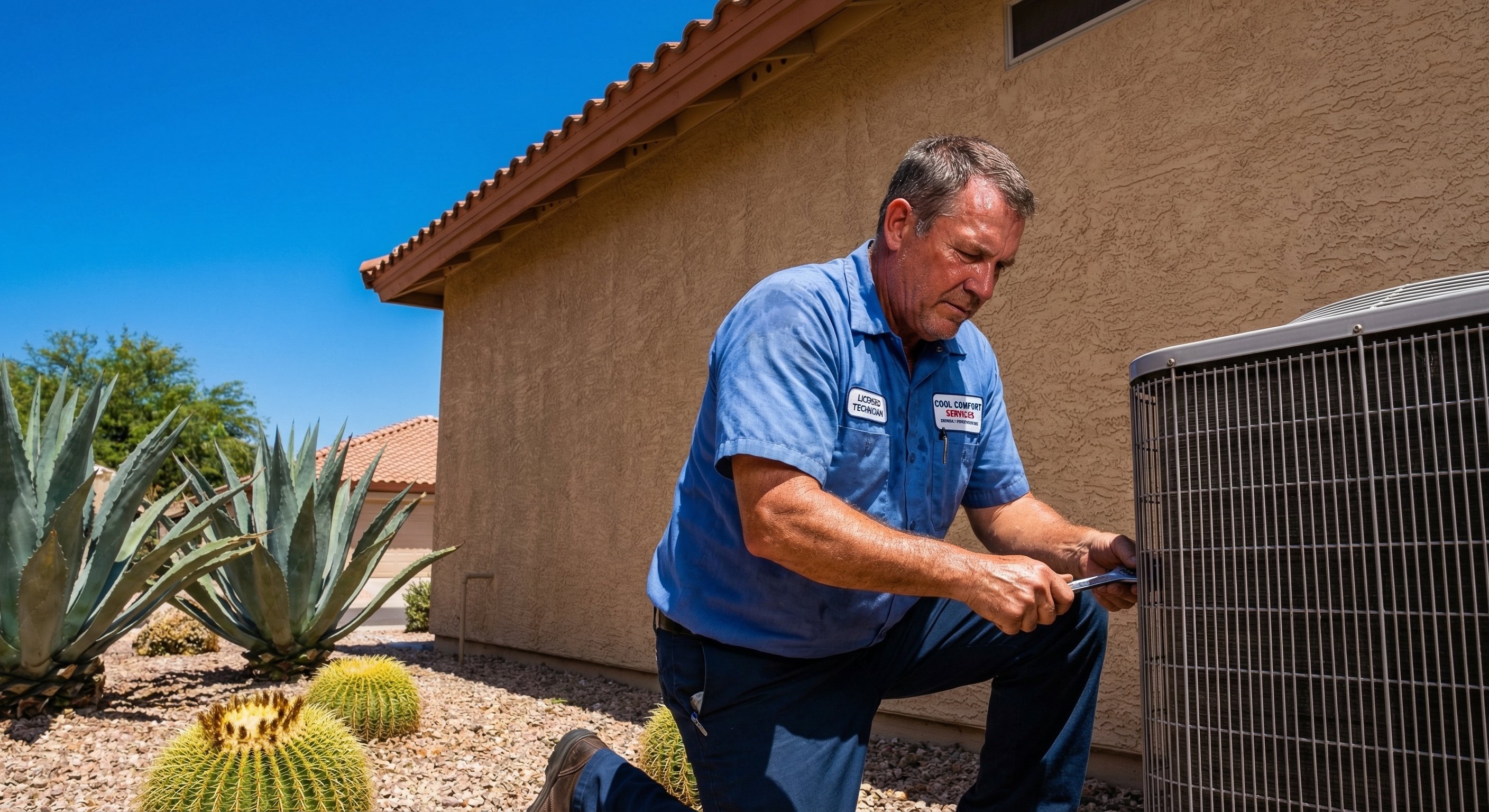
It's 6:47 PM on a Friday in July. Your AC just died. The thermostat reads 87 degrees and climbing. You have two choices: suffer through the weekend or call for emergency repair.
Most Phoenix homeowners choose the second option. But here's what they do not know: emergency HVAC pricing is one of the least transparent corners of an already opaque industry. The same repair that costs $300 on Tuesday morning can cost $600 on Saturday night. Not because the work is different. Because you are desperate, and contractors know it.
This article breaks down exactly what emergency AC repair costs in Phoenix, when the premium rates kick in, and how to protect yourself from inflated bills when your AC dies at the worst possible time.
What Counts as "Emergency" AC Repair in Phoenix
Not every after-hours call is truly an emergency. Understanding the difference can save you hundreds.
True emergencies require immediate attention to prevent further damage or health risks:
- Complete system failure when outside temps exceed 105°F
- Burning smells or electrical odors from the unit
- Loud grinding or screeching noises indicating compressor damage
- Refrigerant leaks that could damage the compressor if the system keeps running
- Water leaks that could damage ceilings, walls, or flooring
Urgent but not emergency situations can usually wait until regular hours:
- Reduced cooling capacity (system still runs)
- Strange but not alarming noises (humming, clicking)
- Thermostat issues that can be worked around
- Filter changes or routine maintenance needs
The distinction matters because some contractors classify any after-hours call as an emergency and charge accordingly. If your system is limping along but still producing some cool air, you might be able to wait until Monday morning and save 50% on labor rates.
Phoenix-specific factor: Temperature. When it is 112°F outside and your AC dies completely, that is genuinely an emergency. Elderly residents, infants, and people with health conditions face real risk. But when it is 95°F in April and your AC struggles, you have more flexibility.
Emergency AC Repair Cost Breakdown (Phoenix 2026)
Here is what you can actually expect to pay for common emergency repairs in the Phoenix metro area.
Minor Repairs: $150-$500
These are the most common emergency calls and typically take 1-2 hours:
| Repair Type | Parts Cost | Standard Labor | Emergency Labor | Total Range |
|---|---|---|---|---|
| Capacitor replacement | $15-$50 | $75-$150 | $150-$300 | $165-$350 |
| Contactor replacement | $25-$75 | $75-$150 | $150-$300 | $175-$375 |
| Fuse/breaker reset | $5-$25 | $75-$125 | $150-$250 | $155-$275 |
| Thermostat replacement | $50-$200 | $100-$200 | $200-$400 | $250-$600 |
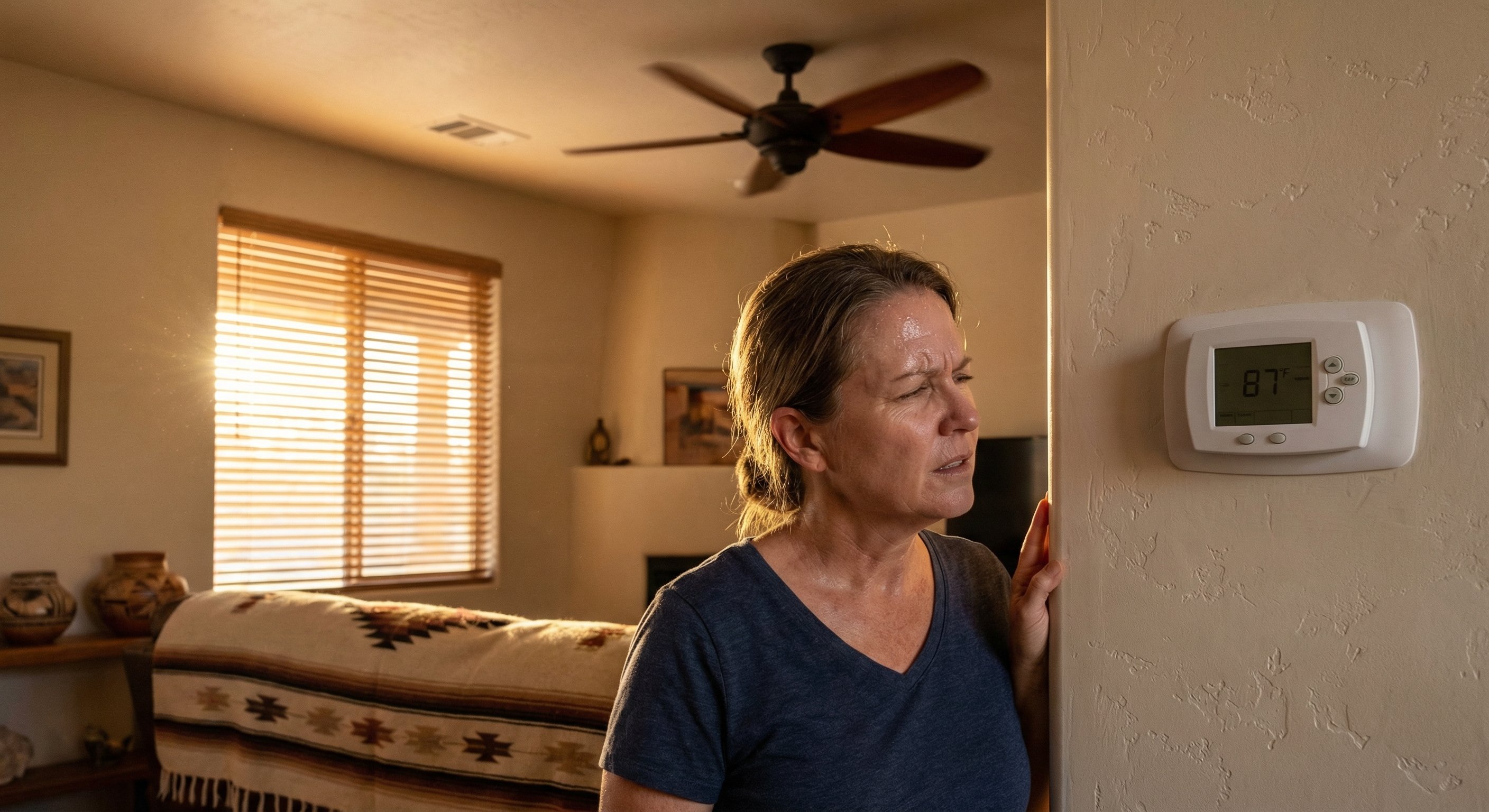
Capacitor failures are the single most common emergency AC issue in Phoenix. The extreme heat and frequent cycling during summer months shortens capacitor lifespan to 5-10 years instead of the 10-15 years expected in cooler climates.
Major Repairs: $800-$2,500
These repairs take 3-6 hours and often require ordering parts:
| Repair Type | Parts Cost | Standard Labor | Emergency Labor | Total Range |
|---|---|---|---|---|
| Compressor replacement | $400-$1,200 | $400-$800 | $800-$1,600 | $1,200-$2,800 |
| Evaporator coil replacement | $300-$800 | $400-$700 | $800-$1,400 | $1,100-$2,200 |
| Condenser coil replacement | $250-$600 | $300-$600 | $600-$1,200 | $850-$1,800 |
| Refrigerant leak repair + recharge | $200-$500 | $300-$600 | $600-$1,200 | $800-$1,700 |
Critical note on refrigerant: If your system uses R-22 (Freon), emergency refrigerant costs are substantially higher. R-22 has been phased out and now costs $100-$150 per pound. A typical system needs 5-10 pounds. That is $500-$1,500 just for refrigerant, before labor. Newer R-410A systems use refrigerant that costs $50-$80 per pound.
Diagnostic Fees: $75-$200
Most companies charge a diagnostic fee just to come out and identify the problem. This fee is often:
- Waived if you proceed with the repair
- Applied toward the total bill
- Charged separately on top of labor rates
During emergency hours, diagnostic fees typically double. A $75 weekday diagnostic becomes $150-$200 on nights and weekends.
When Emergency Rates Apply (And How Much They Add)
Understanding when premium pricing kicks in helps you make informed decisions about timing.
Standard vs Emergency Hourly Rates
| Time Period | Standard Rate | Emergency Rate | Premium |
|---|---|---|---|
| Weekdays 7 AM - 6 PM | $75-$150/hour | N/A | Base rate |
| Weekdays 6 PM - 10 PM | $100-$175/hour | $150-$250/hour | 50-75% |
| Weekdays 10 PM - 7 AM | $125-$200/hour | $200-$350/hour | 75-150% |
| Weekends 7 AM - 6 PM | $100-$175/hour | $175-$300/hour | 75-100% |
| Weekends 6 PM - 7 AM | $150-$225/hour | $250-$400/hour | 100-150% |
| Holidays | $200-$300/hour | $300-$500/hour | 150-200% |
These rates apply to labor only. Parts costs generally stay the same regardless of when the repair happens. However, some contractors add a "parts sourcing fee" for emergency calls if they need to acquire components outside normal business hours.
The Friday Night Trap
The most expensive time to need AC repair in Phoenix is Friday evening between 6 PM and 9 PM. Here's why:
- It is the hottest part of the week (temperatures peak Friday-Sunday)
- Most contractors have already sent crews home or are wrapping up
- You are competing with everyone else whose AC failed at the same time
- The contractor knows you cannot wait until Monday without suffering through a brutal weekend
If your AC fails Friday evening and you can limp through the night with fans, calling first thing Saturday morning often saves $200-$400 compared to the Friday night emergency rate.
Skip the dealer markup
See What a New AC Actually Costs in Phoenix Metro, AZ
AC Rebel shows you the real equipment price — no sales pitch, no inflated quote. Get matched with a licensed installer and keep $3,000–$5,000 in your pocket.
Get My Direct Price →Why Emergency AC Repair Costs More in Phoenix
Several factors specific to the Phoenix market drive up emergency repair costs.
Extreme Heat Creates Demand Surges
When Phoenix hits 115°F, AC systems fail across the entire metro area simultaneously. Emergency repair companies get overwhelmed. Basic economics kicks in: high demand, limited supply, prices rise.
During peak heat waves (typically late June through early August), even standard weekday repairs can take 24-48 hours to schedule. True emergency service becomes a premium product.
Technician Shortage
Arizona faces a chronic shortage of licensed HVAC technicians. The state requires specific licensing through the Arizona Registrar of Contractors, and training programs cannot keep up with demand.
When you call for emergency service at 9 PM on a Saturday, you are paying for a technician who:
- Has the required Arizona HVAC license
- Is willing to work nights and weekends
- Has experience with Phoenix-specific climate challenges
- Can source parts quickly in a market with high demand
That combination of qualifications is scarce, and scarcity commands premium pricing.
Geographic Spread
The Phoenix metro area covers over 14,000 square miles. If you live in Buckeye, Surprise, or Queen Creek, the nearest available emergency technician might be 30-45 minutes away. Drive time gets built into emergency rates.
Companies often charge a "trip fee" or "service call fee" that ranges from $50-$150 during business hours and $100-$300 for emergency calls. This fee covers the technician's travel time and fuel costs.
Monsoon Season Complications
July through September brings Arizona's monsoon season: sudden dust storms, lightning, and power fluctuations that damage AC systems. The combination of extreme heat + electrical damage creates a second peak in emergency repair demand.
Monsoon-related repairs often involve electrical components (capacitors, contactors, circuit boards) damaged by power surges. These parts fail suddenly and completely, creating true emergencies when temperatures are still brutal.
How to Avoid Getting Overcharged for Emergency Repairs
You are vulnerable when your AC dies in 110°F heat. Here is how to protect yourself.
Get the Diagnostic Fee in Writing
Before any technician touches your system, confirm:
- What is the diagnostic fee?
- Is it waived if you proceed with repair?
- What does the diagnostic include?
Reputable companies will tell you upfront. If a technician dodges the question or says "we will figure that out after I look at it," that is a red flag.
Ask for a Written Quote Before Work Begins
Arizona law requires contractors to provide written estimates for work exceeding $1,000. But even for smaller repairs, you should get a written or texted quote that includes:
- Parts needed (specific model numbers if possible)
- Labor hours estimated
- Hourly rate being charged
- Total estimated cost
Do not accept verbal estimates like "probably around $400." That leaves room for "unexpected complications" that mysteriously add $200 to the final bill.
Verify the Technician is Licensed
Arizona requires HVAC contractors to hold a license from the Arizona Registrar of Contractors (ROC). You can verify any license at roc.az.gov.
Red flags:
- Technician cannot provide a license number
- Quote comes from an out-of-state phone number with no local address
- Payment is requested in cash only
- No written contract or receipt provided
Unlicensed repair work voids most manufacturer warranties and creates liability issues if something goes wrong.
Check What "Emergency" Actually Means
Some companies advertise "24/7 emergency service" but what they mean is:
- An answering service takes your call
- A technician calls you back within 2-4 hours
- Actual repair happens during the next business day
True emergency service means a technician arrives within 2-4 hours of your call, any time of day or night. Clarify this upfront.
Consider Whether You Can Wait
This is the hardest decision when you are hot and frustrated. But if the repair estimate exceeds $500 and it is Friday night, you might save $200-$400 by waiting until Monday morning.
Temporary cooling strategies while you wait:
- Close blinds and curtains during the day
- Use fans to create airflow (ceiling fans, box fans)
- Sleep in the coolest room (usually lowest floor, away from afternoon sun)
- Visit public cooling centers (libraries, malls, movie theaters)
- Window units or portable AC for one room ($200-$400 at Home Depot)
For elderly residents, infants, or people with health conditions, this may not be an option. But for healthy adults, suffering through a hot weekend can save significant money.
When Emergency Repair Makes Sense vs When to Replace
Sometimes the emergency repair quote reveals that replacement is the smarter financial move.
The $5,000 Rule
If your emergency repair estimate exceeds $1,500 and your AC unit is over 10 years old, get a replacement quote before proceeding. Here is why:
- A 12-year-old AC in Phoenix is near end of life anyway
- Another major repair is likely within 1-2 years
- New systems are significantly more efficient, saving $50-$150/month on summer electric bills
- Emergency repairs on old systems are sometimes temporary fixes that fail again quickly
Example: Your 14-year-old AC needs a new compressor. Emergency repair cost: $2,200. New system cost: $6,500-$8,500. The new system comes with a 10-year warranty, lower operating costs, and no immediate risk of another failure.
Freon (R-22) Systems: Special Consideration
If your system uses R-22 refrigerant (manufactured before 2010), emergency repairs are rarely worth it for major issues:
- R-22 costs $100-$150 per pound and a typical leak requires 5-10 pounds
- Compressor replacement on an R-22 system means converting to new refrigerant ($2,000-$3,500)
- No warranty coverage on new parts installed on old R-22 systems
- Replacement is often cheaper than major R-22 repairs
Most of what you pay for emergency AC repair is dealer markup and after-hours premiums. The parts themselves (capacitors, contactors, fuses) cost $15-$75. The labor is what spikes when you are desperate. This is exactly why AC Rebel exists: we cut out the markup chain so you pay fair prices for equipment, and you choose your own installer based on transparent ratings and reviews. Get a free instant quote at acrebel.com to see what you would actually pay for a new system.
Frequently Asked Questions
Q: Why does emergency AC repair cost double on weekends?
Emergency rates reflect supply and demand. Fewer technicians work weekends, and those who do command premium pay. Additionally, contractors know homeowners with failed ACs in Phoenix heat have limited options and will pay more for immediate service. The same repair takes the same time, but the labor rate increases 50-150% depending on day and time.
Q: Can I negotiate emergency AC repair costs?
You have more leverage than you think. Try these approaches: Ask if the diagnostic fee is waived with repair. Request a written quote and compare it to standard pricing tables (like those in this article). Ask if waiting until Monday morning reduces the rate significantly. Some contractors will match their standard weekday rate if you agree to the repair immediately rather than calling competitors.
Q: What is the most common emergency AC repair in Phoenix?
Capacitor replacement accounts for roughly 40% of emergency AC calls in Phoenix during summer months. The extreme heat causes capacitors to fail prematurely. The part costs $15-$50, but emergency labor brings the total to $165-$350. It is a 30-minute repair that restores cooling immediately.
Q: Should I repair my 15-year-old AC or replace it?
In Phoenix, 15-year-old AC units are well beyond expected lifespan. If your emergency repair exceeds $1,000, get a replacement quote before proceeding. A new system costs $6,500-$8,500 installed but comes with a 10-year warranty and can reduce summer electric bills by $50-$150/month. The math usually favors replacement for systems this old.
Q: How quickly can an emergency AC technician arrive in Phoenix?
During moderate weather, true emergency service typically arrives within 2-4 hours. During extreme heat waves (110°F+), response times stretch to 6-12 hours as companies get overwhelmed. Some areas (Buckeye, Surprise, Queen Creek) face longer waits due to technician availability and travel distance. Always ask for estimated arrival time when you call.
Q: What should I do while waiting for emergency AC repair?
Close blinds and curtains to block heat. Use fans to create airflow and evaporative cooling. Move to the coolest room in your home (usually the lowest floor, away from afternoon sun). Stay hydrated. If temperatures inside exceed 90°F, consider visiting a public cooling center, library, or mall. For vulnerable individuals (elderly, infants, health conditions), do not wait; seek alternative cooling immediately.
Q: Are there any DIY emergency AC fixes I can try?
Check three things before calling: Replace the air filter if it is dirty. Check the thermostat batteries and settings. Verify the breaker has not tripped at your electrical panel. These simple fixes resolve about 20% of "emergency" calls. If the outdoor unit has ice on it, turn the system off completely and call a technician; do not try to chip the ice off yourself.
Q: Do home warranties cover emergency AC repairs?
Most home warranties cover AC repairs but impose significant limitations: service call fees ($75-$125), waiting periods (often 30 days after policy start), coverage caps ($1,000-$2,000 per occurrence), and exclusion of pre-existing conditions. Emergency service through warranty companies can take 24-48 hours. Many homeowners find the limitations frustrating when they need immediate cooling restored.
Key Takeaways
- Emergency AC repair in Phoenix costs 50-150% more than standard rates, with weekend and after-hours calls carrying the highest premiums
- Minor repairs (capacitors, contactors, fuses) typically cost $150-$500 even during emergencies
- Major repairs (compressor, coils, refrigerant leaks) range from $800-$2,500 depending on timing and system age
- The Friday night trap is real: Friday 6-9 PM is the most expensive time to need AC repair
- If your repair estimate exceeds $1,500 and your system is over 10 years old, consider replacement instead
- Always get written quotes, verify Arizona ROC licensing, and confirm what "emergency" actually means before work begins
Ready to stop overpaying?
See Your Direct AC Price in 2 Minutes
Skip the dealer. Buy your AC unit at direct pricing and pay a vetted local installer only for the installation. No sales calls. No hidden markup. Most homeowners save $3,000–$5,000+ compared to a traditional quote.
Get My Direct Price — No Credit Card2-minute quote · Licensed installers · 10-year warranty options