
AC Maintenance Before Arizona Monsoon Season: A Prep Guide for 2026

AC Maintenance Before Arizona Monsoon Season: A Prep Guide for 2026
TL;DR: Arizona monsoon season (July through September) stresses your AC differently than steady summer heat. Humidity spikes, haboob dust storms, and sudden pressure changes expose weaknesses in systems that sailed through spring. A pre-monsoon checklist completed by mid-June catches most of what leads to August emergency breakdowns. Filters and coils are the two highest-priority items. Professional tune-ups in Phoenix run $120 to $250, and the DIY portion takes under 30 minutes.
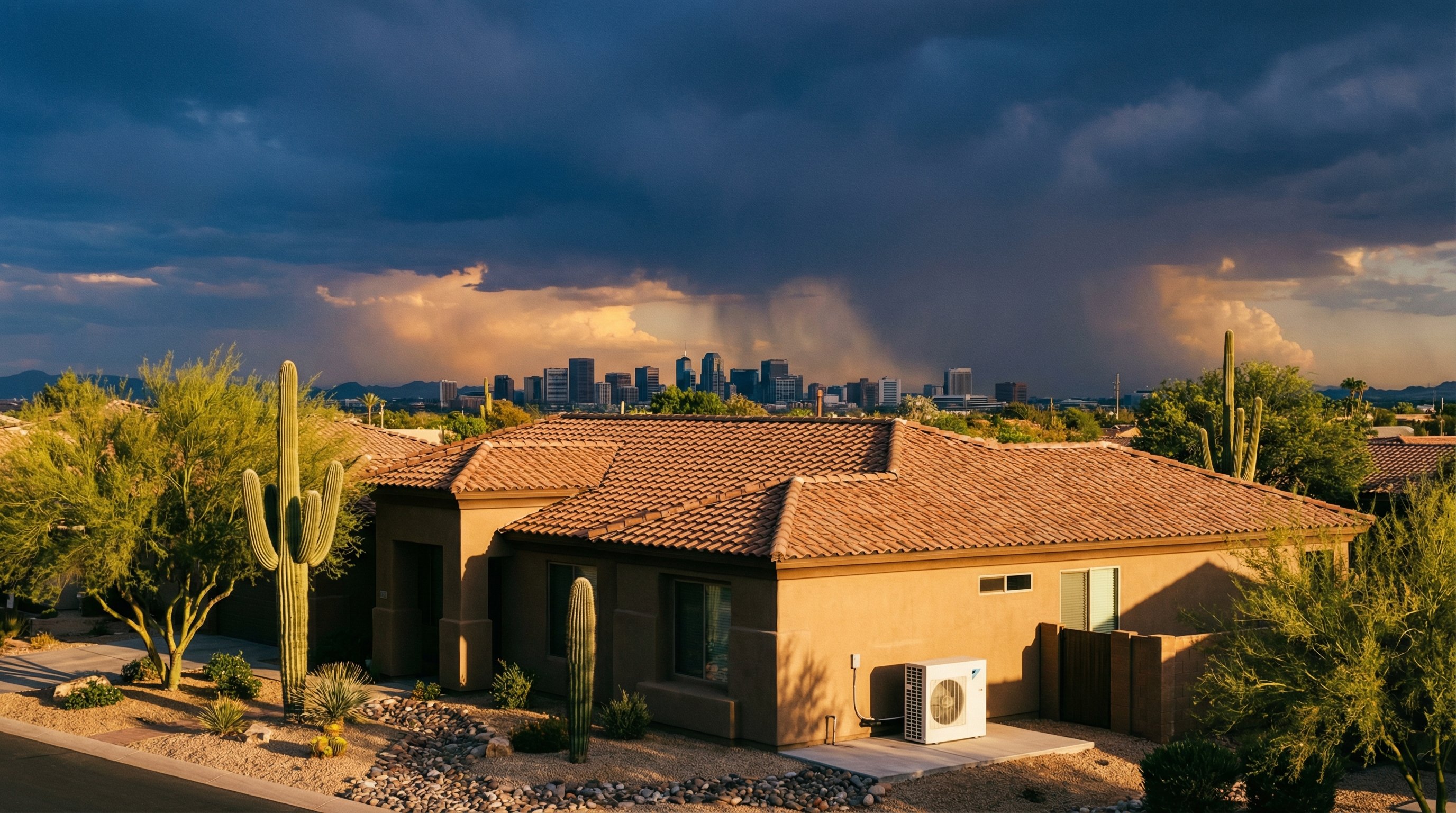
Why Monsoon Season Is Different From Straight Summer Heat
Most Phoenix homeowners know 115°F is brutal for an AC. But monsoon season stresses your system in ways that are not obvious until something breaks.
The Arizona monsoon is a full atmospheric shift. Starting around early July, moisture from the Gulf of California pours into the Valley. The daily pattern flips: clear hot mornings hit 105°F to 110°F, then the humidity surges in the afternoon, often jumping from 10% to 40% in under an hour when a dust storm or microburst rolls through.
That rapid change does three things that steady triple-digit heat does not.
The coil works harder. When humidity spikes, the evaporator has to pull both heat and moisture out of your home. Systems already marginal on refrigerant charge will stall out. You will notice air from your vents is not quite cold enough, even though the thermostat reads the right number.
Dust coats everything. When a haboob sweeps the Valley, it drops fine silt on your outdoor unit's coil fins. A unit running at 90% efficiency can drop to 65% or lower after one major dust storm. More run time, higher bills, same cooling output.
Water management overloads. Monsoon storms dump rain hard and fast. Your condensate drain line is sized for normal summer humidity, not the volume from a cell that stalls over your neighborhood for 20 minutes. If that drain is even partially clogged with algae or scale, you get water in your attic or crawl space. That is one of the leading causes of secondary water damage in Phoenix homes during July and August.
None of this means your AC cannot handle monsoon season. It means your AC needs to go into monsoon season in good shape. The difference between a unit that makes it through August and one that fails on the hottest Wednesday of the year is usually what you did, or did not do, in June.
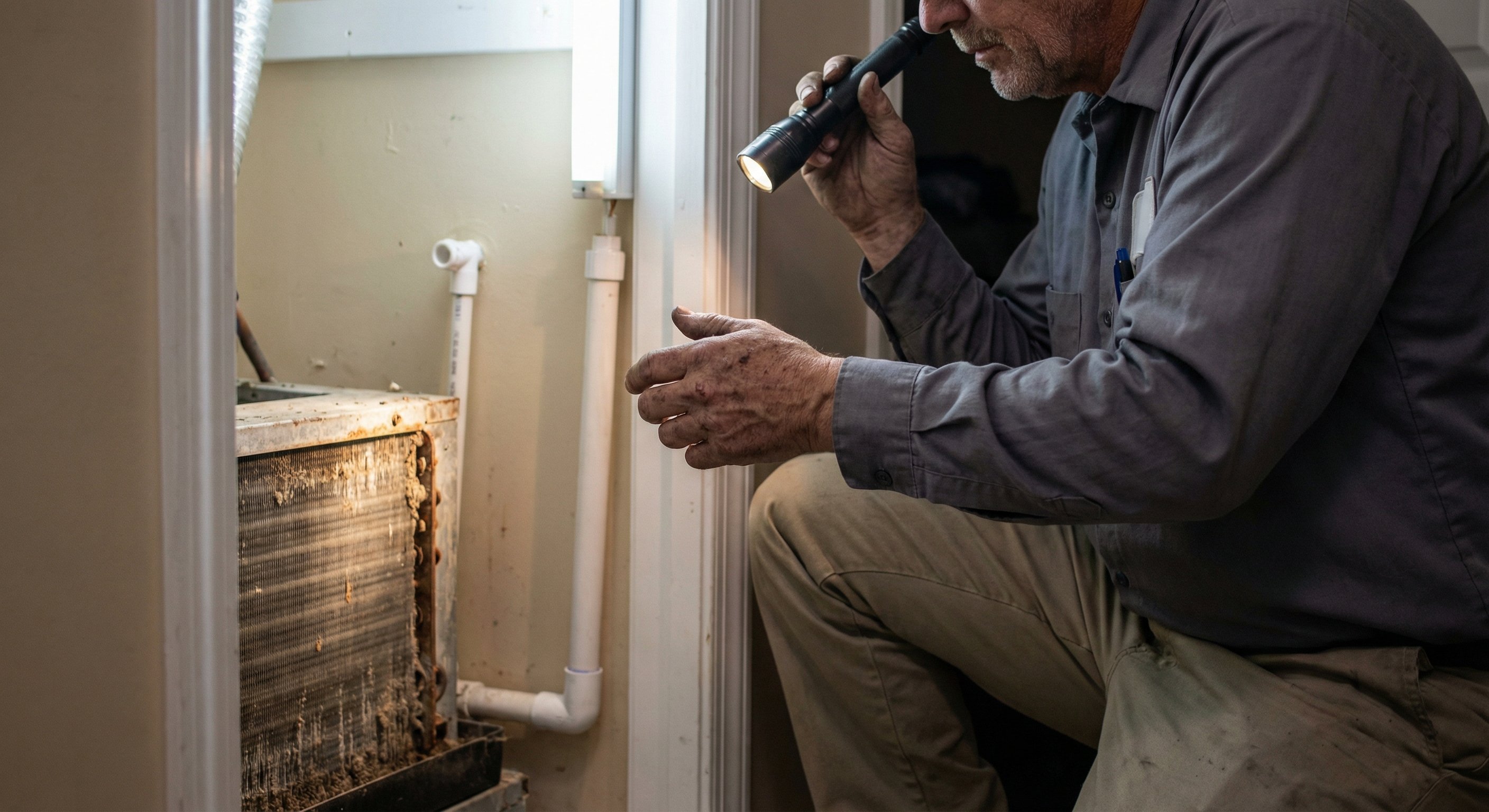
The Pre-Monsoon Checklist: What to Do in May and June
Replace Your Air Filter
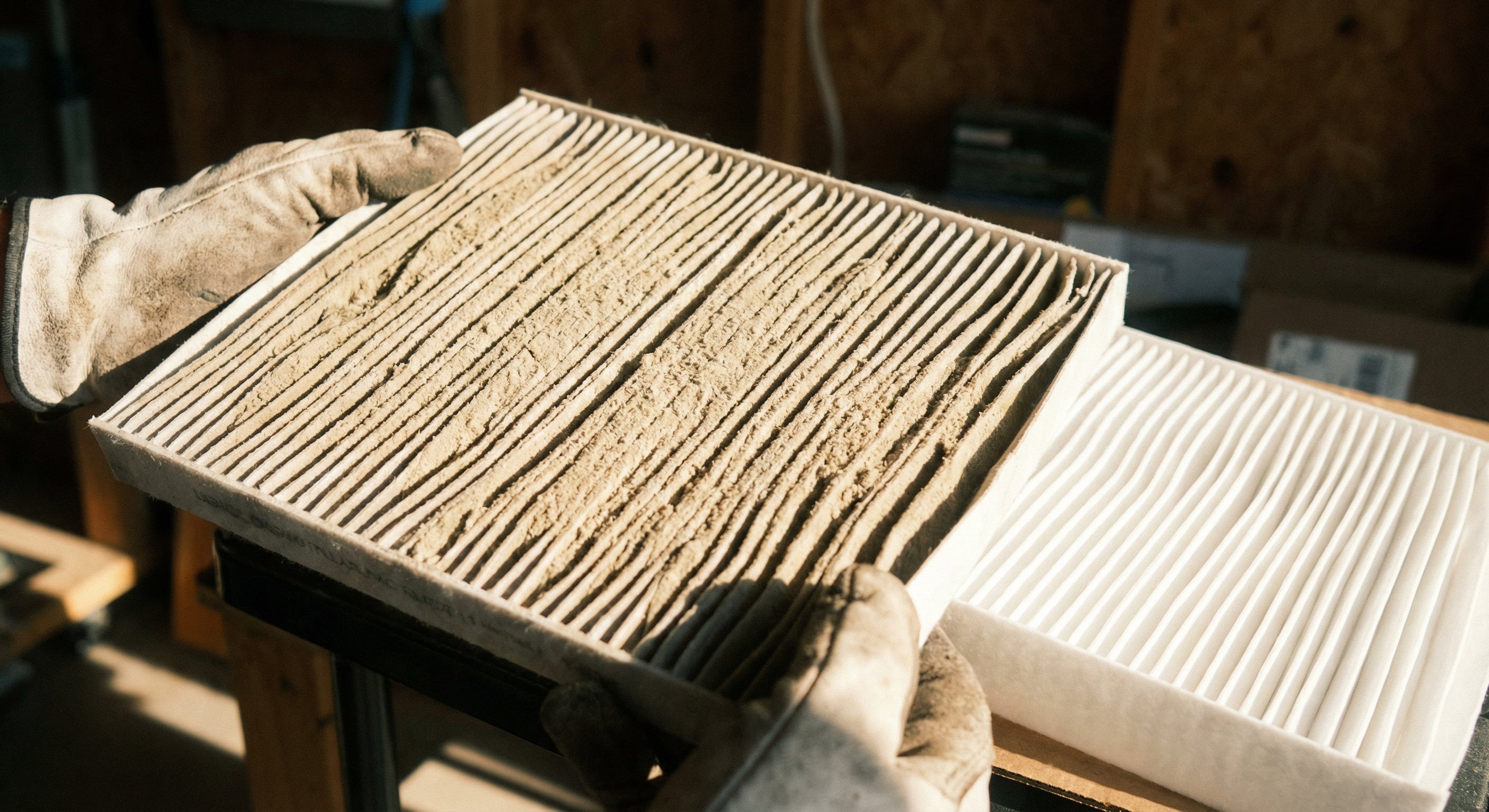
This is the single highest-return item on the checklist. A clogged filter is the most common cause of poor AC performance during monsoon season, and it is also the easiest to fix.
Check your filter every two to three weeks during summer. If you have pets, check it monthly. Desert dust, pet hair, and haboob particulate accumulate fast. A 1-inch pleated media filter costs $8 to $20. Replace it when airflow from your vents noticeably decreases or the filter looks visibly dirty. Phoenix homeowners typically go through 6 to 8 filters per summer.
Clean Your Outdoor Condensing Unit
By June, most Phoenix metro units have collected a full season of dust, pollen, and desert grit on the coil fins. Mesquite and palo verde trees nearby add waxy residue to the coil surface.
To clean safely: turn the unit off at the thermostat, hose the coil from top to bottom with a garden hose (never pressurized), and spray with a foaming coil cleaner if the fins are packed ($15 to $20 at any supply house). Maintain at least 24 inches of clearance on the sides and 5 feet on top. Never use a pressure washer on the coil fins, as the thin aluminum fins bend easily and reduce airflow permanently.
Check the Condensate Drain Line
The drain line runs from your evaporator coil to an outdoor exit near the unit. In Arizona homes, it is prone to algae buildup and disconnection at the coil box connection.
Find the secondary drain pan (usually under the evaporator coil in the attic or crawl space). If there is water sitting in it, your primary drain may be clogged. Turn the system off and call a technician.
You can also pour two cups of plain white vinegar down the drain line access port, wait five minutes, then flush with a gallon of water. If the water backs up, you have a clog. Call a technician before July.
Inspect Your Ductwork
Go to the vents in your hottest room and hold a thin piece of tissue near the vent while the system runs. If the tissue flutters but you do not feel strong airflow, there is likely a restriction in the duct system.
In older Phoenix homes built before 1990, ductwork is often undersized or has degraded connections at the register boots. Go to your attic or crawl space, look for gaps in duct connections, and check that any unsealed joints are sealed with mastic (not tape). Leaks at duct connections let cool air escape into unconditioned spaces, forcing the system to run longer during monsoon humidity.
Test Your Thermostat
If you have a non-programmable thermostat, this is the time to consider upgrading. Both APS and SRP in Phoenix charge their highest electricity rates between 3 p.m. and 8 p.m., which coincides exactly with the hottest monsoon afternoons. A smart thermostat that pre-cools your home before 3 p.m. and coasts through the peak rate window will reduce your monthly bill meaningfully during July through September.
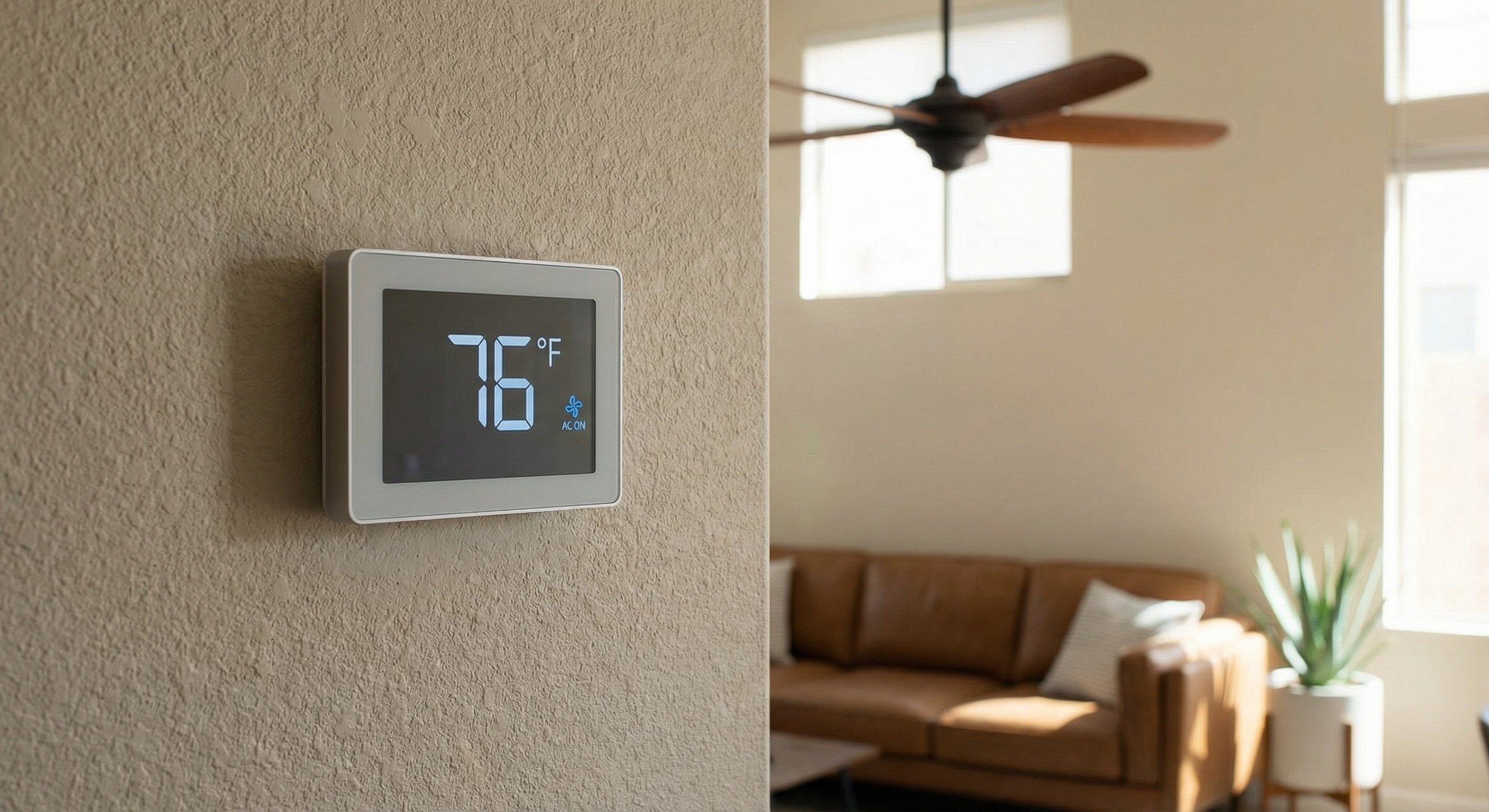
ENERGY STAR qualified smart thermostats start around $80 and go up to $280. Both APS and SRP have offered residential cooling rebates for smart thermostats in recent years. Check current programs at aps.com and srpnet.com. Federal tax credits under the Energy Efficient Home Improvement Credit may also apply for qualifying models.
When to Call a Technician Before July
Four situations warrant a licensed technician before monsoon season, not after.
Your system blows warm air but will not cool. The most common causes are a refrigerant leak or a compressor issue. Both get worse under monsoon load. A technician can pressure-test the system and find the leak before your unit fails on a 115°F afternoon.
The outdoor unit runs but the indoor air handler will not blow. This points to a problem with the indoor blower motor or the capacitor. The capacitor is the most common failure point on air handlers in Phoenix, and it is also one of the cheaper repairs at $180 to $350 for part and labor.
You hear grinding, rattling, or clicking from the outdoor unit. Thermal cycling through June and July makes loose components worse. A rattling outdoor unit is usually either a loose fan blade or a failing compressor.
Your system is more than 12 years old and has not had a professional service call in over a year. At 12-plus years, an AC in Phoenix is already past the national average lifespan. The desert climate accelerates wear on compressors, contactors, and coil fins. Budget for replacement on your timeline, not in an emergency in August.
Professional pre-monsoon tune-ups in the Phoenix market run $120 to $250 depending on the contractor and scope. Annual maintenance agreements covering two visits per year (spring and fall) run $180 to $350 and include priority scheduling during peak season.

Skip the dealer markup
See What a New AC Actually Costs
AC Rebel shows you the real equipment price — no sales pitch, no inflated quote. Get matched with a licensed installer and keep $3,000–$5,000 in your pocket.
Get My Direct Price →What It Costs to Skip This
An AC running at peak efficiency during monsoon season costs $180 to $320 per month through APS or SRP depending on home size and thermostat settings. A system running at 70% efficiency because of a clogged filter and dirty coil costs $260 to $420 per month for the same indoor temperature.
That is $80 to $100 more per month, every month. Four months of a neglected system costs $320 to $400 extra on your utility bills.
Now add the emergency repair scenario. A system that fails during an August monsoon afternoon is a 110°F house. Emergency service calls during peak season run $150 to $350 for the trip charge alone, with labor at $85 to $150 per hour. Emergency repair bills in Phoenix during August typically run $1,200 to $3,800 depending on what fails.
Compare that to $120 to $250 for a professional tune-up and 30 minutes of your own time for the DIY items above.
When to Schedule
The ideal window for pre-monsoon AC maintenance in Phoenix is mid-May through the end of June. July 1 is the practical deadline. Once the monsoon pattern establishes, your system is already under full load.
Book a professional tune-up now. June is when HVAC contractors are at their busiest, and the reputable ones get fully booked by mid-June. Call in early June and expect at least one of your three calls to have no availability until mid-July.
If you are doing the DIY checklist, finish the filter check, outdoor unit cleaning, and drain line inspection by mid-May. That leaves June to schedule a professional if you find something that needs it.
Frequently Asked Questions
Q: How often should I change my AC filter during Arizona monsoon season?
A: Check it every two to three weeks during monsoon season (July through September). If you have pets or live near construction zones or dirt roads, check monthly. Replace when airflow decreases noticeably or the filter looks visibly dirty. Most Phoenix homeowners go through 6 to 8 filters per summer.
Q: Can I spray down my outdoor AC unit during monsoon season?
A: Yes, and a garden hose spray after a haboob is one of the best things you can do for your unit. Always turn the unit off at the thermostat first. Never use a pressure washer. The best time to clean the coil is early morning when the outdoor temperature is below 85°F.
Q: What is a haboob and how does it affect my AC?
A: A haboob is a massive dust storm that sweeps through the Phoenix metro area when monsoon thunderstorm outflows hit dry desert air. A major haboob can deposit several inches of fine silt across the Valley in under an hour, coating your outdoor coil fins and reducing efficiency significantly. Spray down your outdoor unit with a hose after any major haboob event.
Q: Should I run my AC fan on auto or on during monsoon season?
A: Run the fan on auto during monsoon season. When the fan runs continuously, it circulates air but does not remove humidity. The evaporator coil only dehumidifies when refrigerant is actively flowing through it during cooling cycles. The exception is if you have a whole-home dehumidifier integrated with your HVAC system, in which case your technician can advise on the best setting.
Q: How do I know if my AC is undersized for monsoon season?
A: The most common sign is a system that runs constantly but never quite reaches set temperature on days above 105°F, especially when monsoon humidity spikes in the afternoon. If your system was correctly sized when installed and is now struggling, the culprits are usually a refrigerant charge problem, a dirty coil, or a duct leak. Most homes between 1,600 and 2,200 square feet in the Phoenix market need a 3-ton system.
Q: Does APS or SRP offer rebates for AC maintenance or upgrades in Phoenix?
A: Both utilities have offered residential cooling rebates, though programs change year to year. APS has offered rebates for smart thermostats and high-efficiency units. SRP has offered similar programs. Check current offerings at aps.com and srpnet.com. ENERGY STAR certified AC units (SEER 15 and above for the Phoenix climate zone) typically qualify for both utility rebates and federal tax credits.
Q: How much does a pre-monsoon AC tune-up cost in Phoenix?
A: Professional pre-monsoon tune-ups range from $120 to $250 for a single visit in the Phoenix metro area. Annual maintenance agreements covering two visits per year (spring and fall) run $180 to $350 and include priority scheduling and discounted repair rates. The cost of skipping a tune-up is measured in higher summer utility bills and the risk of emergency repair bills that average $1,200 to $3,800 in August.
A pre-monsoon maintenance session in May or June is one of the highest-return investments you can make in your Phoenix home. The cost is modest, the time commitment is low, and the downside of skipping it is a system that fails on the worst day of the year when you need cooling most.
If your AC is more than 12 years old and you are starting to think seriously about replacement, you can shop the full line of units at direct pricing on AC Rebel and compare what a new system costs against what you are paying to keep a failing unit running through another monsoon summer.
Get a free instant quote at acrebel.com
Ready to stop overpaying?
See Your Direct AC Price in 2 Minutes
Skip the dealer. Buy your AC unit at direct pricing and pay a vetted local installer only for the installation. No sales calls. No hidden markup. Most homeowners save $3,000–$5,000+ compared to a traditional quote.
Get My Direct Price — No Credit Card2-minute quote · Licensed installers · 10-year warranty options