
AC Drain Line Clogged in Phoenix? Why It Happens Faster Here (and How to Fix It)

AC Drain Line Clogged in Phoenix? Why It Happens Faster Here (and How to Fix It)
TL;DR: AC drain lines clog faster in Phoenix than almost anywhere else because hard water scale, desert dust, and extreme summer runtime create a sludge that national maintenance guides never account for. A clogged drain line forces condensation water back into your drain pan, overflows onto your ceiling, and can shut down your entire AC system. You can clear most clogs yourself with vinegar or a wet-dry vacuum, and a monthly vinegar flush prevents 90% of clogs before they start.
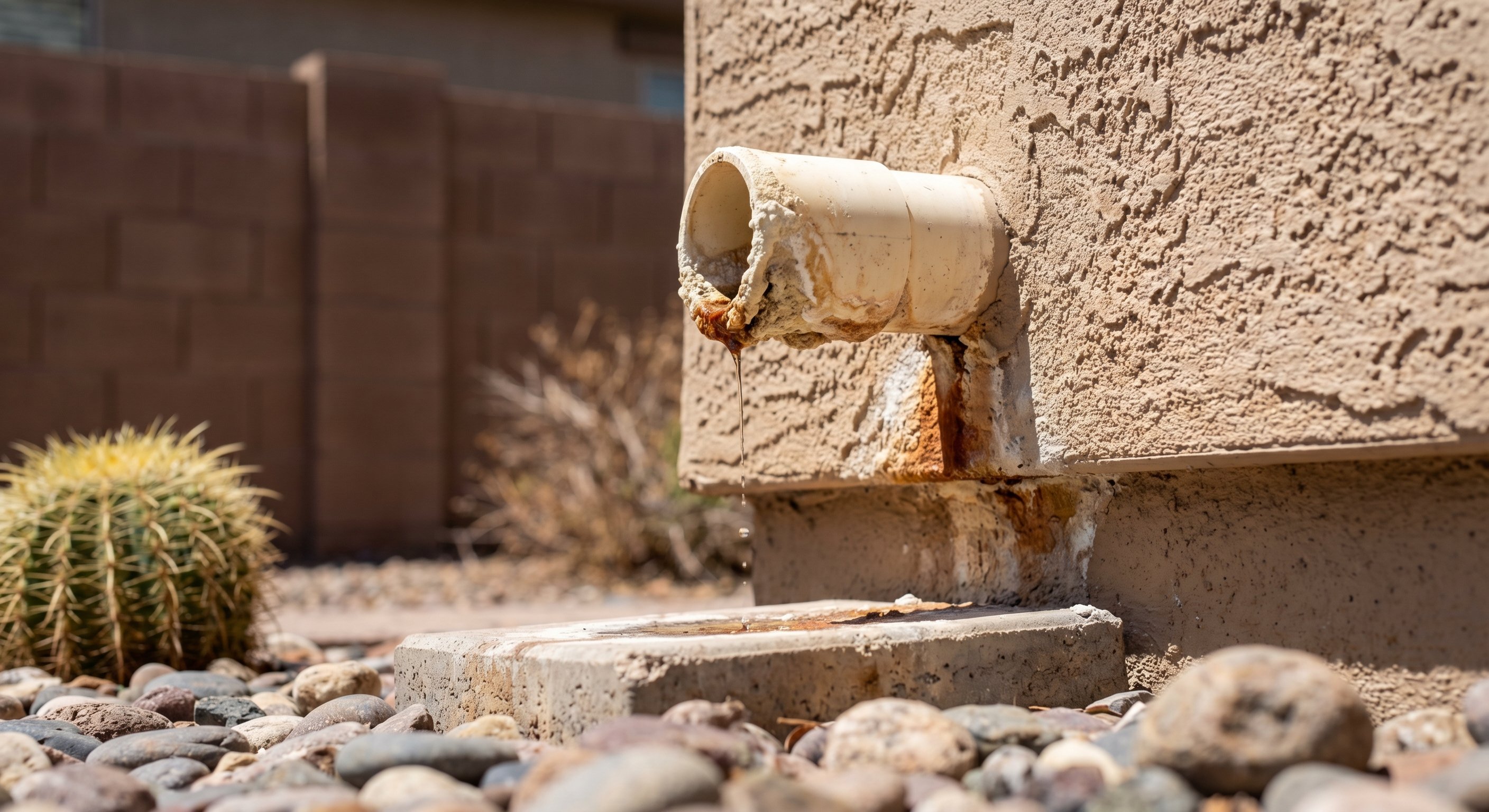
Your AC produces condensation every time it runs. In Phoenix, that is basically from May through October, sometimes 18 hours a day during the worst of it. All that water has to go somewhere. The condensate drain line carries it from the indoor evaporator coil pan to the outside of your house.
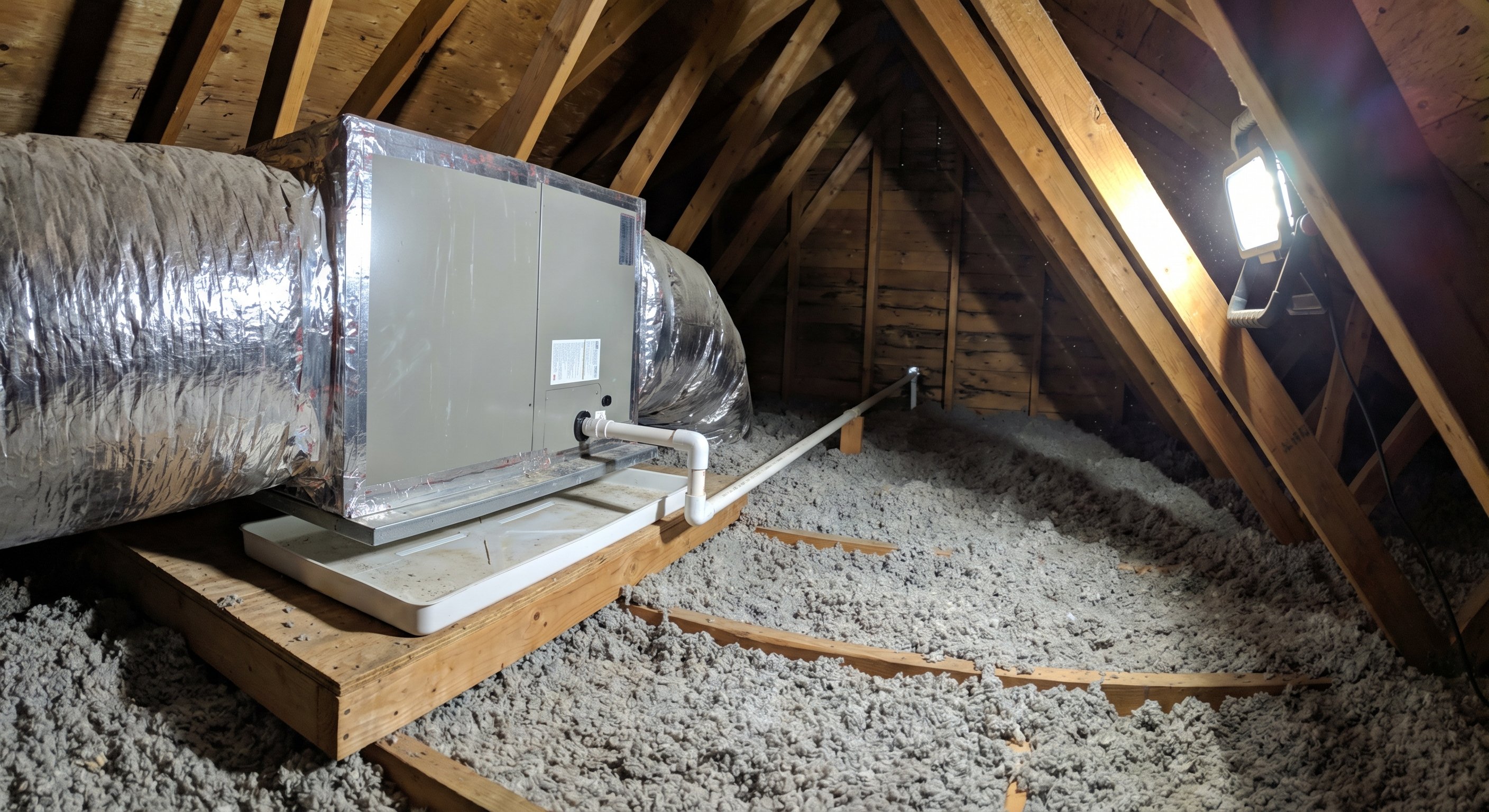
When that line clogs, the water backs up. If your air handler is in the attic, which is the case for most two-story homes in Gilbert, Chandler, and Scottsdale, that water pours through your ceiling. If the air handler is in a closet or garage, it pools around the unit and soaks into drywall.
If you search for an AC drain line clogged in Phoenix, you are dealing with something that costs $8 in vinegar to prevent or $2,000 in drywall repair to ignore.
Why AC Drain Lines Clog Faster in Phoenix
Most AC maintenance content is written for a national audience. It mentions algae and dirt as the main culprits. Those matter everywhere. But Phoenix has three extra factors that make drain line clogs more common and more aggressive than what homeowners in other states deal with.
Hard water scale. Phoenix has some of the hardest water in the country. The City of Phoenix Water Services Department reports typical hardness levels of 12 to 22 grains per gallon, well above the 10.5 threshold the U.S. Geological Survey classifies as "very hard." That calcium and magnesium dissolved in your water supply does not just affect your taps and showerheads. When condensation forms on the cold evaporator coil, it picks up mineral traces from the coil surface and the drain pan. Over months, those minerals deposit on the inside walls of the PVC drain line as a chalky white scale that narrows the pipe from the inside.
Desert dust. Phoenix sits in a basin that collects fine particulate dust, especially during dry spring months and haboob season. Your return air pulls that dust through the filter (even good filters let the finest particles through), and a portion of it ends up on the evaporator coil. When condensation washes it into the drain pan, the dust mixes with standing water and creates a thick biological sludge. Algae and mold love this mixture. It grows faster in Phoenix because the drain pan stays wet longer thanks to extended AC runtime.
Extreme runtime. A homeowner in Denver might run their AC 800 hours per summer. A homeowner in Phoenix easily hits 2,000 to 2,500 hours. More runtime means more condensation, which means more water flowing through the drain line, which means more mineral deposits and more biological growth. A drain line that might take three years to clog in Minneapolis can clog in one summer in Mesa.
The combination of these three factors is why you will see drain line clogs in Phoenix homes that are only two or three years old. It is not a maintenance failure. It is a climate reality.
What Actually Happens When the Drain Line Clogs
Your evaporator coil sits inside the air handler, and below it is a drain pan that catches condensation. A PVC pipe carries that water from the pan, through the wall or attic, and terminates outside your home near the condenser unit or along a side wall.
When the drain line clogs, water fills the drain pan faster than it can drain. Most modern systems have a float switch in the pan that trips when the water level gets too high and shuts the system off to prevent overflow. This is why sometimes your AC just stops working on a hot afternoon, no cold air, no error message on the thermostat, and the outdoor unit is still running but the indoor blower has stopped.
If your system does not have a float switch, or if the switch fails, the water overflows the pan. In attic installations, gravity does the rest. Water soaks through the drywall ceiling below, creating brown stains, sagging drywall, and eventually a full breach that dumps gallons of water into your living room or hallway.
The float switch is the difference between a $150 service call and a $2,500 ceiling repair. If your system does not have one, get one installed. Any HVAC tech can add it in 30 minutes.
How to Tell If Your AC Drain Line Is Clogging
You do not need to wait for water on the ceiling. There are early warning signs:
Water around the indoor unit. Even a small puddle near the air handler means the drain pan is overflowing or the line is partially blocked. Do not wipe it up and forget about it. That puddle is telling you something.
Musty smell near the air handler or return vents. Biological growth in a clogged drain line produces a distinct sour, damp odor that gets pulled into the airflow. If your house smells like a wet basement in the middle of a Phoenix summer, check the drain line.
AC shuts off unexpectedly but the thermostat looks normal. The float switch tripped. The system killed itself to protect your ceiling. The fix is clearing the drain line, not replacing the thermostat.
Visible drip from the exterior drain line is reduced or stops. During summer, your AC should be dripping water from the exterior drain termination pretty consistently while running. If that drip stops, the water is going somewhere else.
The exterior drain line termination has white crusty buildup. That is calcium carbonate scale. If it is building up on the outside, it is building up on the inside too.
Skip the dealer markup
See What a New AC Actually Costs
AC Rebel shows you the real equipment price — no sales pitch, no inflated quote. Get matched with a licensed installer and keep $3,000–$5,000 in your pocket.
Get My Direct Price →How to Clear a Clogged AC Drain Line Yourself
Two methods work. You can use either one, or both in combination for stubborn clogs.
Method 1: The Vinegar Flush (Best for Prevention and Light Clogs)
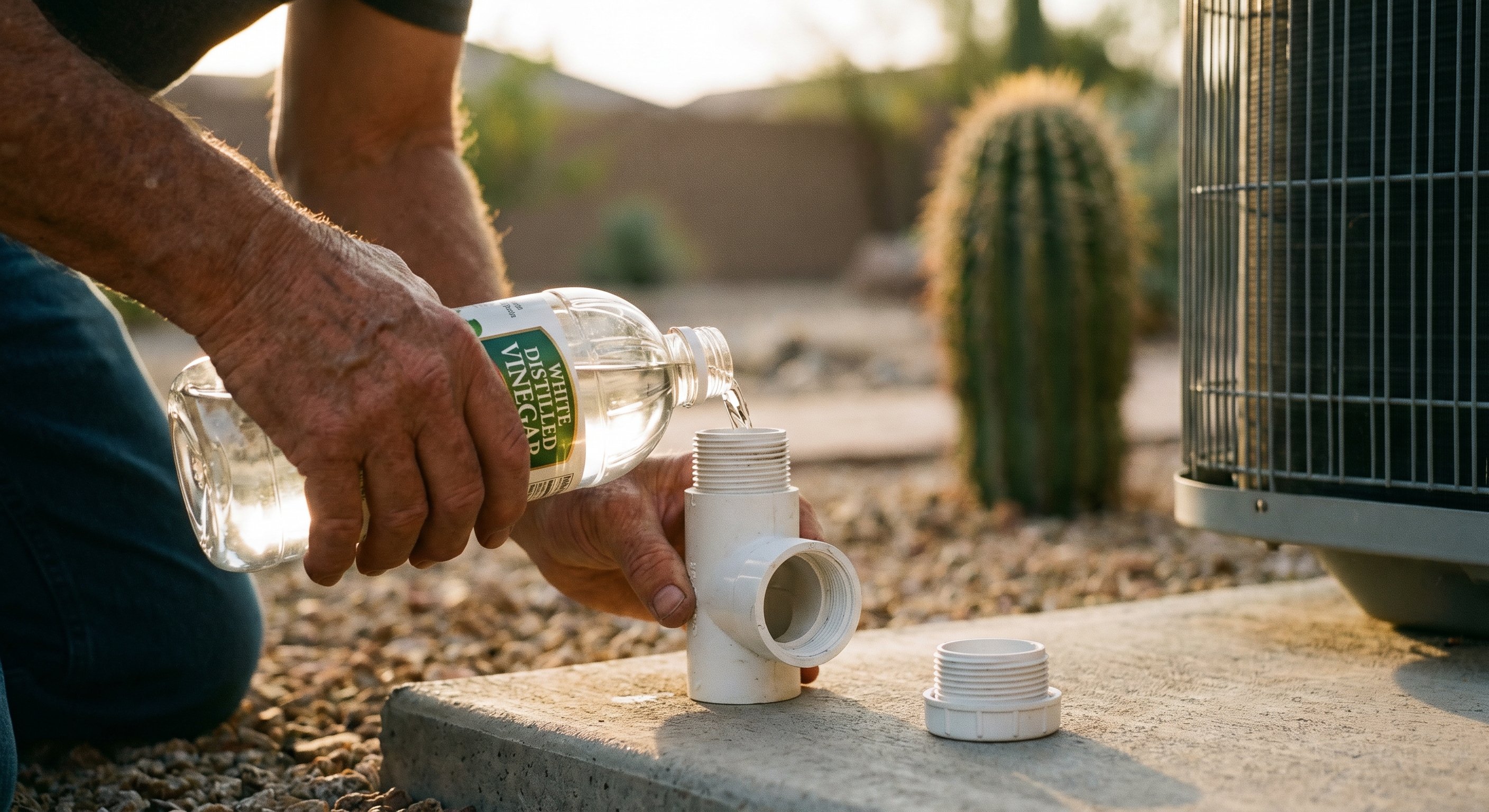
Find the drain line access point. This is usually a vertical PVC pipe with a removable cap, located near your indoor air handler. It looks like a T-fitting or a vertical standpipe with a cap on top.
- Remove the cap.
- Pour one cup of white distilled vinegar down the pipe.
- Wait 30 minutes.
- Pour a gallon of warm water to flush.
- Replace the cap.
Vinegar dissolves calcium carbonate scale and kills biological growth. It works as a monthly maintenance step and clears partial clogs. Do not use bleach. Bleach degrades PVC over time and creates toxic fumes when it contacts biological residue in the line.
Method 2: The Wet-Dry Vacuum (Best for Solid Clogs)
If vinegar does not clear it, the clog is probably a solid mass of scale and sludge.
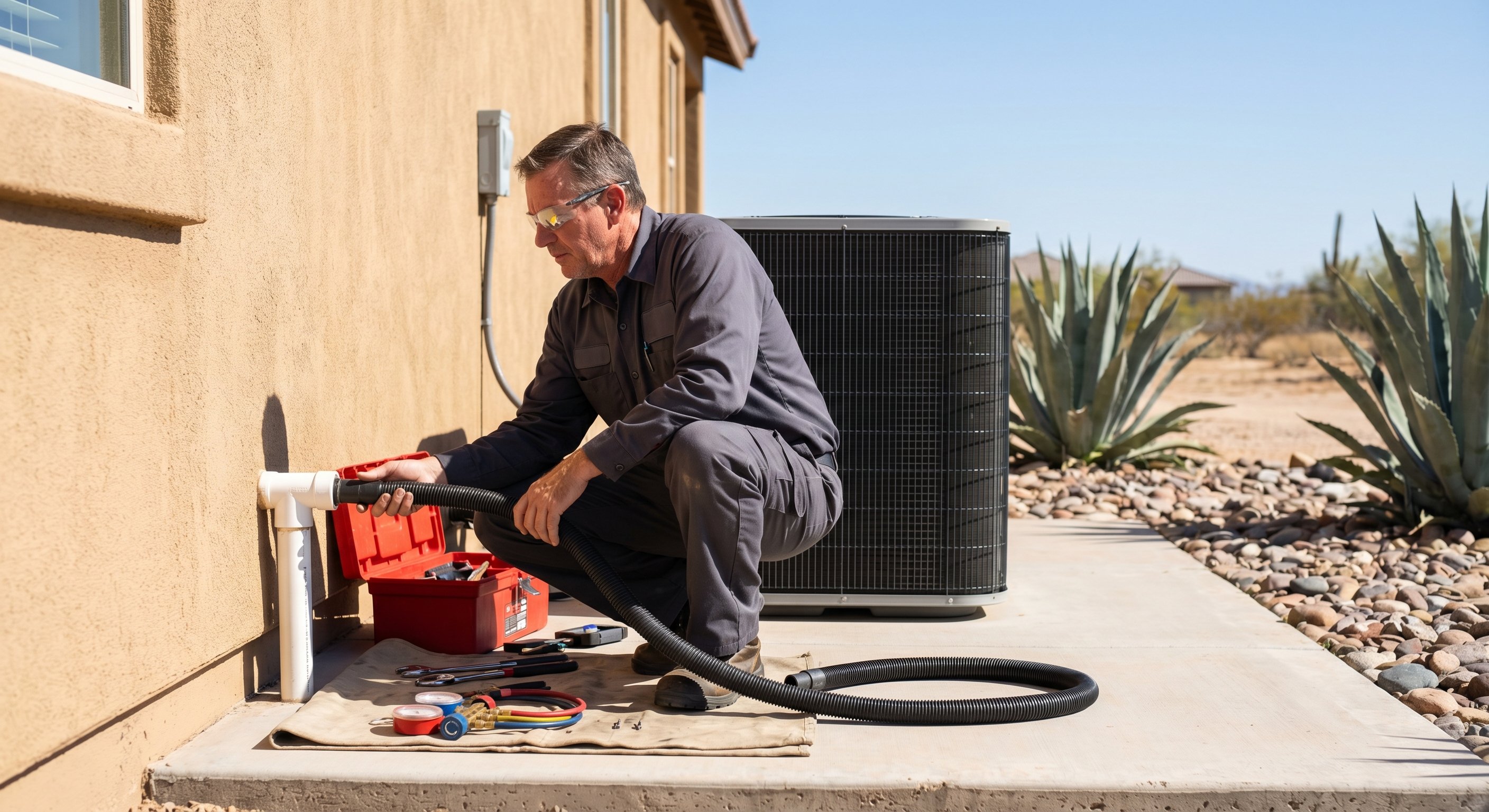
- Find where the drain line terminates outside your home. Usually a PVC pipe sticking out of the wall near the condenser or along the foundation.
- Hold the hose of a wet-dry vacuum against the end of the pipe. Wrap a towel around the connection to create a seal.
- Run the vacuum for two to three minutes.
- Check the vacuum tank. You should see a nasty sludge of dark water, scale chunks, and biological matter.
- Pour a cup of vinegar down the indoor access point afterward to clean the interior walls.
This method pulls the clog out rather than pushing it through. Works on most solid blockages.
Monthly Prevention Schedule
Phoenix homes need monthly drain line maintenance from April through October. Not quarterly. Not "when I think about it." Monthly. The hard water and dust load here make that frequency non-negotiable if you want to avoid surprises.
April and May (Pre-season): Pour one cup of vinegar down the drain line access. Flush with warm water after 30 minutes. Go outside and verify the water comes out the termination point at a steady flow.
June through September (Peak season): Repeat the vinegar flush every month. Check the exterior termination point weekly for reduced flow or scale buildup. If you have a wet-dry vacuum, pull the line clear once mid-summer as a precautionary measure even if it is not clogged.
October (Wind-down): One final vinegar flush after the last heavy AC use. This prevents scale from sitting in the pipe all winter and hardening into something you cannot clear in spring.
If your system is older than eight years or you have never cleaned the drain line, consider having an HVAC tech do a professional flush. They can pull the drain pan, clean the coil, and blow out the line with compressed air. Costs about $150 to $250 and buys you a clean baseline to maintain from.
What It Costs to Ignore a Clogged Drain Line
The vinegar costs $3 per bottle at any grocery store in the Valley. The wet-dry vacuum method costs nothing if you already own a Shop-Vac.
Here is what ignoring the problem costs:
Float switch replacement: $100 to $200 if the switch corroded from standing water.
Drain pan replacement: $250 to $500 if the pan rusted through or cracked from mineral buildup.
Ceiling drywall repair: $800 to $2,500 depending on room size, texture matching, and paint. This is the most common consequence in homes with attic air handlers.
Mold remediation: $1,500 to $4,000 if the water damage was slow and unnoticed. Attic spaces in Phoenix get hot enough to accelerate mold growth once moisture is introduced.
Emergency HVAC service call: $150 to $300 on a weekend in July. And that is just to diagnose the problem. The actual fix adds to it.
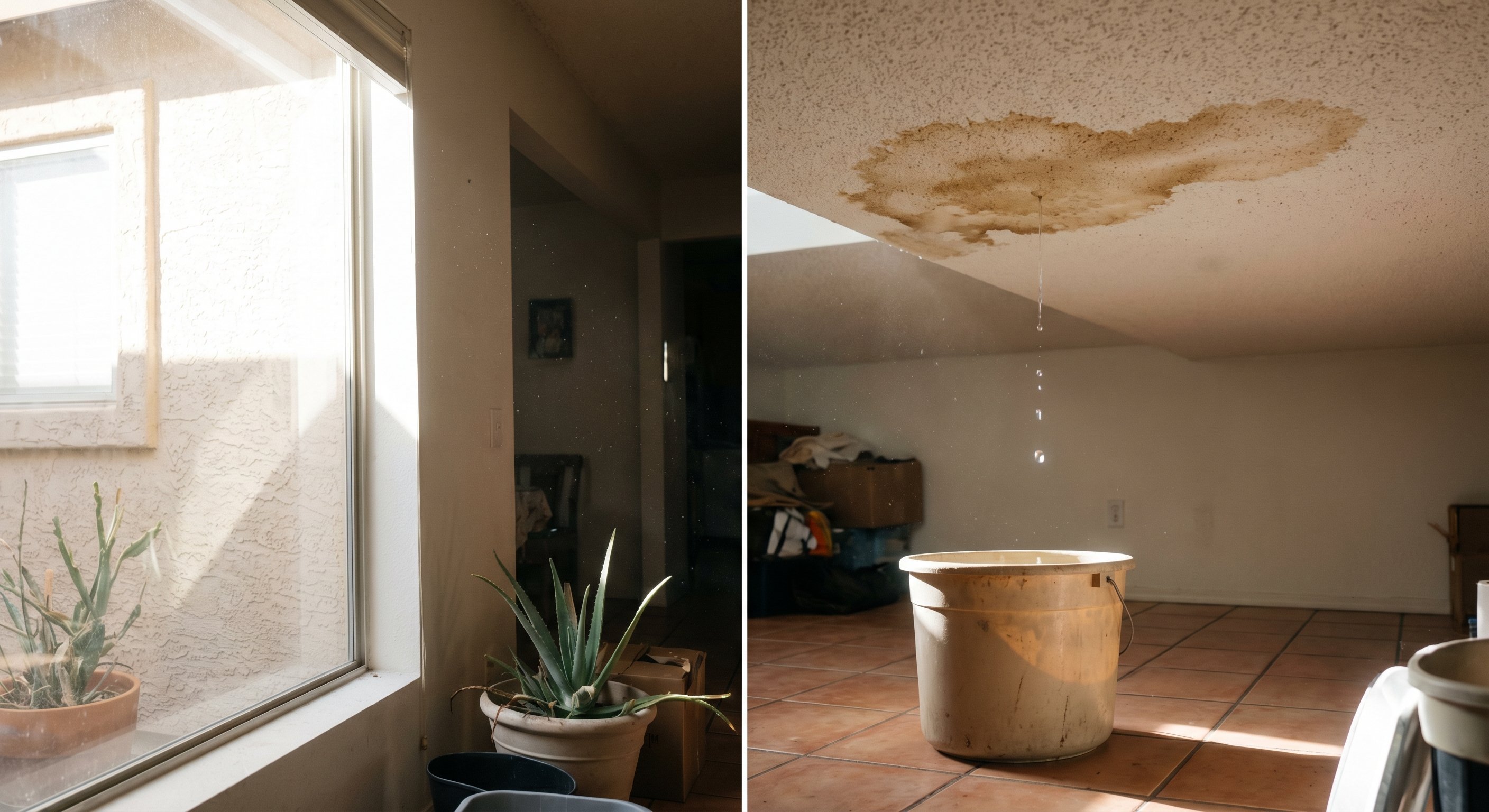
In fifteen years of working on Phoenix HVAC systems, the number one cause of preventable water damage I have seen is a clogged condensate drain line that the homeowner did not know existed. It is not dramatic. It is not expensive to fix. It is just invisible until it is not.
When to Call a Professional
Clear it yourself if the vinegar or vacuum method works and water flows freely afterward. Call a technician if:
- The line is completely solid and neither method clears it. The clog may be in a horizontal run under a slab or inside a wall where DIY methods cannot reach.
- Your system does not have a drain line access point. Some older Phoenix homes have drain lines that were installed without a cleanout T-fitting. A tech can add one.
- Water has already damaged drywall or you see mold. The drain line fix is secondary to the water damage remediation at that point.
- The drain pan is cracked, rusted, or has visible scale buildup that cleaning will not solve.
A professional drain line cleaning with coil inspection runs $150 to $350 in the Phoenix metro. Worth doing once if you have never had it done, then maintain it yourself monthly after that.
The Bottom Line
Phoenix hard water, desert dust, and extreme summer AC runtime make drain line clogs a question of when, not if. Most homeowners dealing with an AC drain line clogged in Phoenix had no idea the line existed until water started dripping from the ceiling. The fix is a $3 bottle of vinegar poured down the access point once a month from April through October. The consequence of skipping it is water pouring through your ceiling on the hottest day of the year.
If your AC system is getting old enough that you are thinking about replacement, get a free instant quote at acrebel.com and see what a new system actually costs without the dealer markup.
Frequently Asked Questions
Q: How often should I pour vinegar down my AC drain line in Phoenix?
Once a month from April through October. Phoenix hard water scale builds up faster than the national average, so the standard "quarterly" advice you see on national HVAC sites is not enough here.
Q: Can I use bleach instead of vinegar to clean my AC drain line?
No. Bleach degrades PVC pipe over time and produces toxic chloramine gas when it reacts with biological residue in the drain line. White distilled vinegar is safer, equally effective against scale, and will not damage the pipe.
Q: Where is the AC drain line access point?
It is usually a vertical PVC pipe with a removable cap, located within three feet of your indoor air handler unit. It looks like a T-fitting or a short vertical standpipe. If you cannot find it, check near the indoor unit in the attic, closet, or garage.
Q: Why does my AC drain line keep clogging?
In Phoenix, the most common reasons are hard water scale buildup inside the PVC pipe, desert dust mixing with condensation to create biological sludge, and insufficient maintenance frequency. Monthly vinegar flushes prevent most recurring clogs.
Q: Can a clogged AC drain line damage my ceiling?
Yes. If your air handler is in the attic and the drain line clogs, the overflow pan fills and water soaks through the drywall ceiling below. Ceiling repair typically costs $800 to $2,500, which makes the $3 monthly vinegar prevention one of the highest-return maintenance tasks you can do.
Q: How much water does a Phoenix AC system produce per day?
During peak summer, a residential AC system in Phoenix produces between 5 and 20 gallons of condensation per day depending on system size, home square footage, and humidity levels. Monsoon season (July through September) pushes this to the higher end because the indoor coil has to remove more moisture from the air.
Q: Should I install a float switch on my AC drain pan?
Yes, without question. A float switch shuts off the AC system when the drain pan water level gets too high, preventing overflow. If your system does not have one, a technician can install one for $100 to $200. It is the single best insurance policy against ceiling water damage in homes with attic air handlers.
Ready to stop overpaying?
See Your Direct AC Price in 2 Minutes
Skip the dealer. Buy your AC unit at direct pricing and pay a vetted local installer only for the installation. No sales calls. No hidden markup. Most homeowners save $3,000–$5,000+ compared to a traditional quote.
Get My Direct Price — No Credit Card2-minute quote · Licensed installers · 10-year warranty options