
AC Replacement Cost in Goodyear, AZ (2026 Real Numbers)

AC Replacement Cost in Goodyear, AZ (2026 Real Numbers)
TL;DR: AC replacement in Goodyear, AZ runs $7,200–$13,800 installed in 2026. Most homeowners in Estrella Mountain Ranch, Palm Valley, and PebbleCreek pay $8,400–$11,500 for a standard 3.5-ton or 4-ton system. The spread is wide because dealer markup — not equipment cost — drives the variation. A unit that costs $3,500 at the manufacturer level often leaves a homeowner's driveway at $5,000+ by the time it goes through distribution and contractor sourcing.
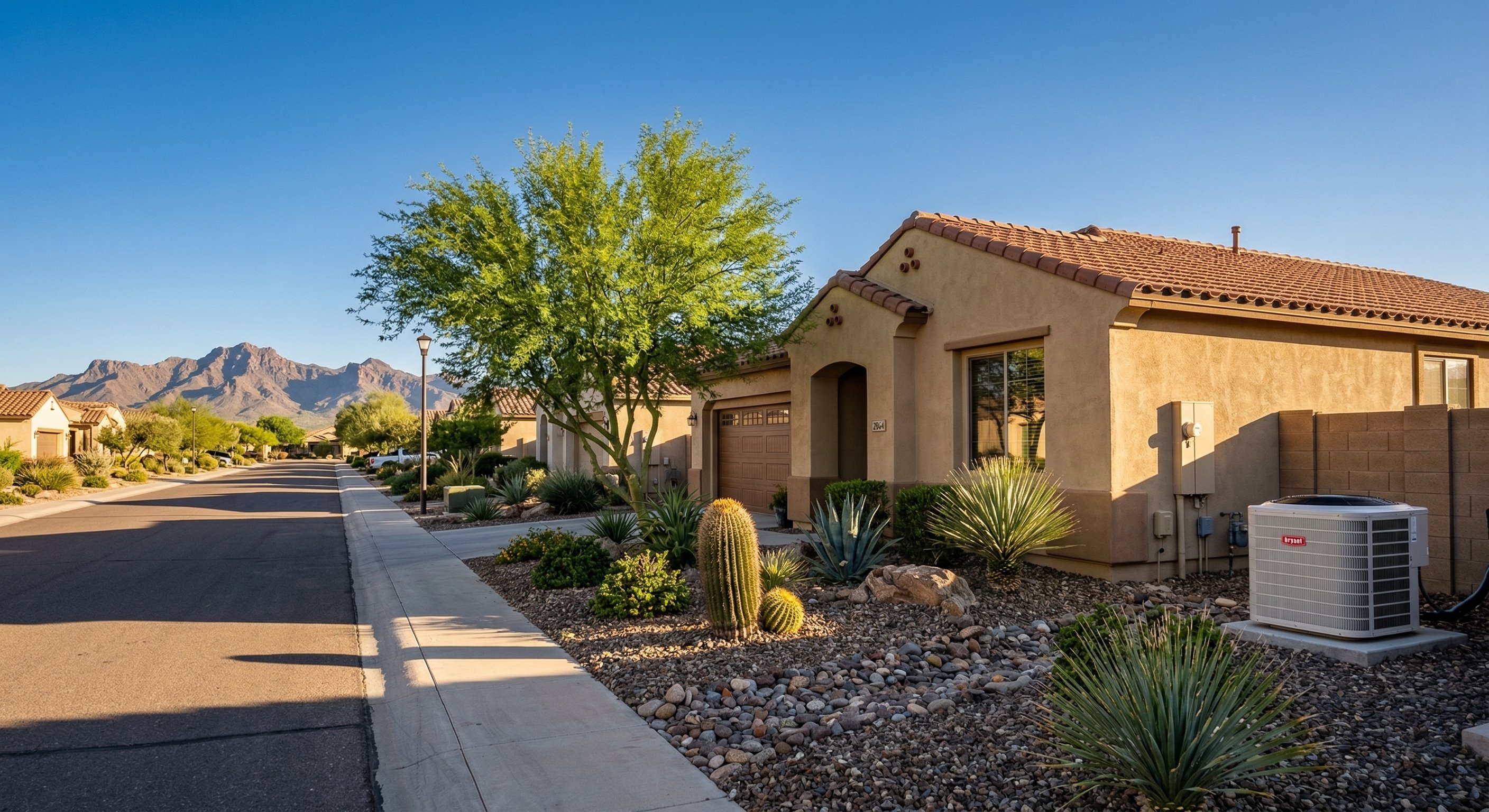
Goodyear is one of the fastest-growing cities in the entire country — the western Valley is exploding with homes built between 2005 and 2020. That means a lot of original HVAC systems are now 10–18 years old and approaching the end of their useful life. The calls come in every May and June as the temps start hitting the low 100s, then accelerate when the first 110-degree week shows up.
Here's what actual replacement costs look like in Goodyear in 2026 — by system size, by scenario, and by what drives the price up or down.
What Does a New AC Cost in Goodyear, AZ?
These are total installed costs — unit + labor + permits + refrigerant charge. They assume a like-for-like replacement (same location, existing ductwork in usable condition, no major electrical panel work needed).
| Home Size | System Size | Entry Range | Mid Range | Premium Range |
|---|---|---|---|---|
| Up to 1,400 sq ft | 2.5-ton | $6,800–$7,900 | $8,200–$9,400 | $10,500+ |
| 1,400–2,000 sq ft | 3-ton | $7,200–$8,600 | $9,000–$10,800 | $12,000+ |
| 2,000–2,600 sq ft | 3.5-ton | $7,800–$9,500 | $10,000–$11,800 | $13,200+ |
| 2,600–3,200 sq ft | 4-ton | $8,400–$10,200 | $11,000–$12,500 | $13,800+ |
"Entry" means a 14 SEER2 base efficiency unit, brands like Carrier Performance or Trane XR13. "Mid" is 16–18 SEER2, better variable-speed options. "Premium" is 20+ SEER2 or variable-speed compressors like Lennox XC21 or Trane XV20i.
For most Goodyear homeowners replacing a working ductwork system in a home built after 2000, the sweet spot is the mid range. The premium efficiency units can make sense for homes over 2,800 sq ft where the runtime hours are extreme — but the payback period in a 1,600 sq ft home rarely pencils out.
Why Goodyear Costs Can Run Higher Than the Valley Average
A few things specific to the west Valley push prices up:
Heat load is real here. Goodyear sits further from the mountain ranges that moderate temps in Scottsdale or Fountain Hills. The Estrella Mountain Ranch area, Palm Valley, and the subdivisions along Van Buren and McDowell regularly see sustained temps 2–4°F higher than central Phoenix during the worst of July. Systems run longer every day, age faster, and need to be sized correctly — not just matched to the old system's tonnage.
New construction neighborhoods aged out at the same time. The master-planned communities that went up from 2004–2010 — Estrella Mountain Ranch, Palm Valley Phases 1-5, Wigwam area — are all hitting 15–18 years simultaneously. That means HVAC contractors in Goodyear are fielding more demand per square mile than they can easily absorb during summer. Demand spikes push labor rates up.
Luke AFB proximity. With a large military and civilian workforce in the area, there's a transient renter population mixed with long-term homeowners. Rental properties often have older, neglected systems that need full replacements — which also keeps local contractors busy and can extend wait times in peak season.
APS territory and summer rate structures. The west Valley runs on APS, not SRP. APS's peak pricing periods (3–8 PM in summer) are punishing for older, less efficient systems. An 11-year-old 10 SEER unit running 10+ hours a day during peak windows can push an APS bill well over $450/month. That's the math that often tips Goodyear homeowners from "repair it" to "replace it" — even when the unit is still technically running.
The Real Cost Driver: Where Your Money Goes
This is the part most HVAC companies don't explain because they benefit from the opacity.
The equipment itself — the condenser, air handler or furnace, coil — costs roughly the same everywhere. The price difference between a $7,500 quote and a $12,000 quote for the same system in Goodyear is almost never about the equipment. It's about:
- Contractor markup on equipment — Traditional contractors buy from local distributors at 40–60% markups baked in. They present one price to you and call it "installed." You can't see what they paid for the unit.
- Labor rate differences — Some Goodyear contractors charge $85/hour, others $140/hour. A 6-hour installation goes from $510 to $840 just on hourly rate. Most contractors don't itemize.
- Service call bundling — Companies that offer "free estimates" often recoup that through equipment margin. The "free" quote is subsidized by you paying $800 more for the unit.
The gap matters most when you're replacing a system in a $450,000 home in Estrella Mountain Ranch and getting quotes that range from $8,900 to $13,400 for the exact same 4-ton Carrier system. That range is almost entirely margin variability.

Skip the dealer markup
See What a New AC Actually Costs in Goodyear, AZ
AC Rebel shows you the real equipment price — no sales pitch, no inflated quote. Get matched with a licensed installer and keep $3,000–$5,000 in your pocket.
Get My Direct Price →What You'll Actually Pay: Common Goodyear Scenarios
Scenario 1: 2008 build in Estrella Mountain Ranch, 2,400 sq ft, original 3.5-ton Carrier dies in June
- You're on year 18 of a system designed to last 12–15 in AZ heat
- Like-for-like replacement (3.5-ton, 16 SEER2 split system) from a local dealer: $10,500–$12,200
- Same replacement through direct pricing: $8,200–$9,600
- Ductwork was inspected and is still serviceable — no surprise costs
Scenario 2: Smaller townhome in Palm Valley, 1,500 sq ft, second owner, 13-year-old unit
- 2.5-ton or 3-ton system depending on actual load calculation
- Local dealer quotes: $7,800–$9,200
- The system isn't dead but efficiency has dropped, APS bills are climbing
- Direct-purchase option: $6,800–$8,100 — savings of $900–$1,100
Scenario 3: PebbleCreek home, 2,800 sq ft, heat pump replacing a gas system
- More complex swap — may involve some electrical work and duct modifications
- Budget $11,000–$14,500 depending on complexity
- This is where getting itemized quotes matters most — the range is wide for real reasons (electrical panel upgrades, new thermostat wiring, etc.)
Factors That Move Your Final Number
System type: A standard split system (condenser + air handler) is the most common and least expensive. Package units — common in Goodyear's older flat-roof construction — are mid-range. Heat pumps add $800–$2,000 to the base cost but can eliminate gas heating costs.
Ductwork condition: This is the hidden variable. If your ductwork was installed in 2006 and hasn't been inspected since, a contractor may quote $1,200–$3,000 in ductwork repairs alongside the unit replacement. Get a separate ductwork assessment before committing to a quote that bundles it.
Permit fees: Goodyear requires permits for AC replacement. Permit fees run $150–$300 and should already be included in any legitimate quote. If a contractor offers to skip the permit to "save you money," walk away.
Refrigerant: New systems use R-410A or R-454B (the newer standard). If you're replacing a very old R-22 system, the refrigerant transition is automatic — but make sure the quote specifies R-410A or R-454B, not a transitional refrigerant blend that some contractors use.
Timing Your Replacement in Goodyear
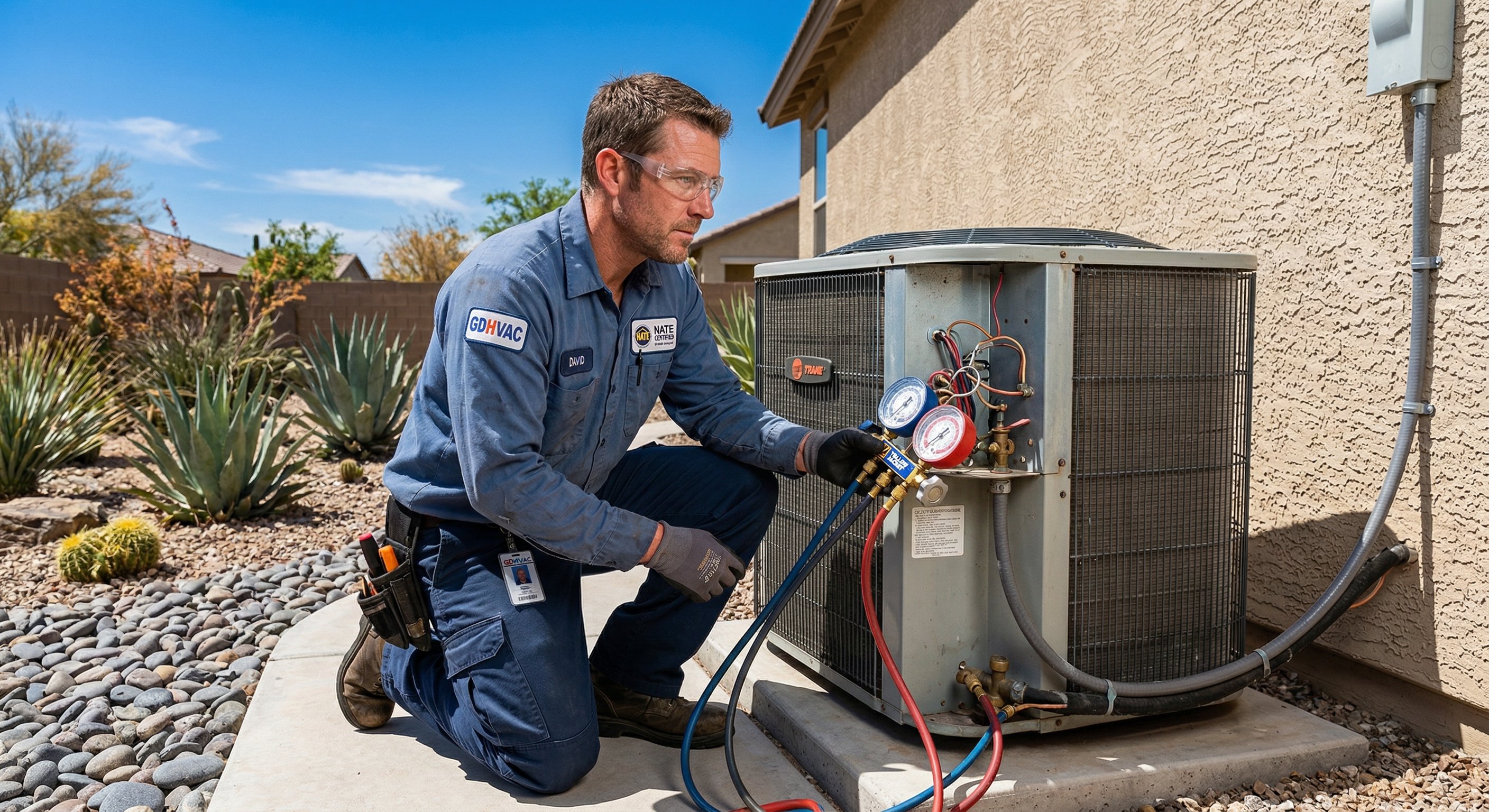
The worst time to replace your AC in Goodyear is June through August. Not because it can't be done — contractors work year-round — but because:
- Labor demand is highest, which means less scheduling flexibility and sometimes higher rates
- You're likely in reactive mode (system failed) with less time to compare quotes
- Lead times on premium equipment stretch from 3 days to 3 weeks during peak season
The best windows for replacement:
- March–April: Pre-summer pricing, full contractor availability, you have time to compare 3+ quotes
- October–November: Post-monsoon lull, contractors actively looking for work, some of the best pricing of the year
We're in early March right now — genuinely the optimal window for Goodyear homeowners who know their system is aging. A system that's 12+ years old in AZ heat isn't getting more reliable. Replacing it before June on your timeline vs. replacing it in July on your system's timeline is a $800–$1,500 difference in both equipment pricing and your own stress level.
AC Rebel and the Goodyear Math
The reason price varies so much for the same system is the supply chain, not the equipment. Traditional path: manufacturer → regional distributor (+15%) → local supplier (+20%) → contractor (+40%) → you. Every link adds margin. By the time a 3.5-ton Carrier unit leaves the warehouse and lands in your backyard in Goodyear, you've funded four businesses' margins instead of one.
AC Rebel's model cuts that chain: you buy the equipment at near-wholesale pricing, then pay a local vetted contractor for installation only. The install labor is the same. The equipment is the same. The difference is in whose margin you're funding.
For a typical Goodyear replacement — 3.5-ton, 16 SEER2, split system — that difference runs $1,800–$3,200. That's real money on a system you're going to run 4,000+ hours a year for the next decade-plus.
Get your free quote in 2 minutes at AC Rebel — see the direct unit price against what a dealer would charge. No salesperson, no pressure, and you'll have the numbers to compare.
What a Good Quote Includes (and What Red Flags Look Like)
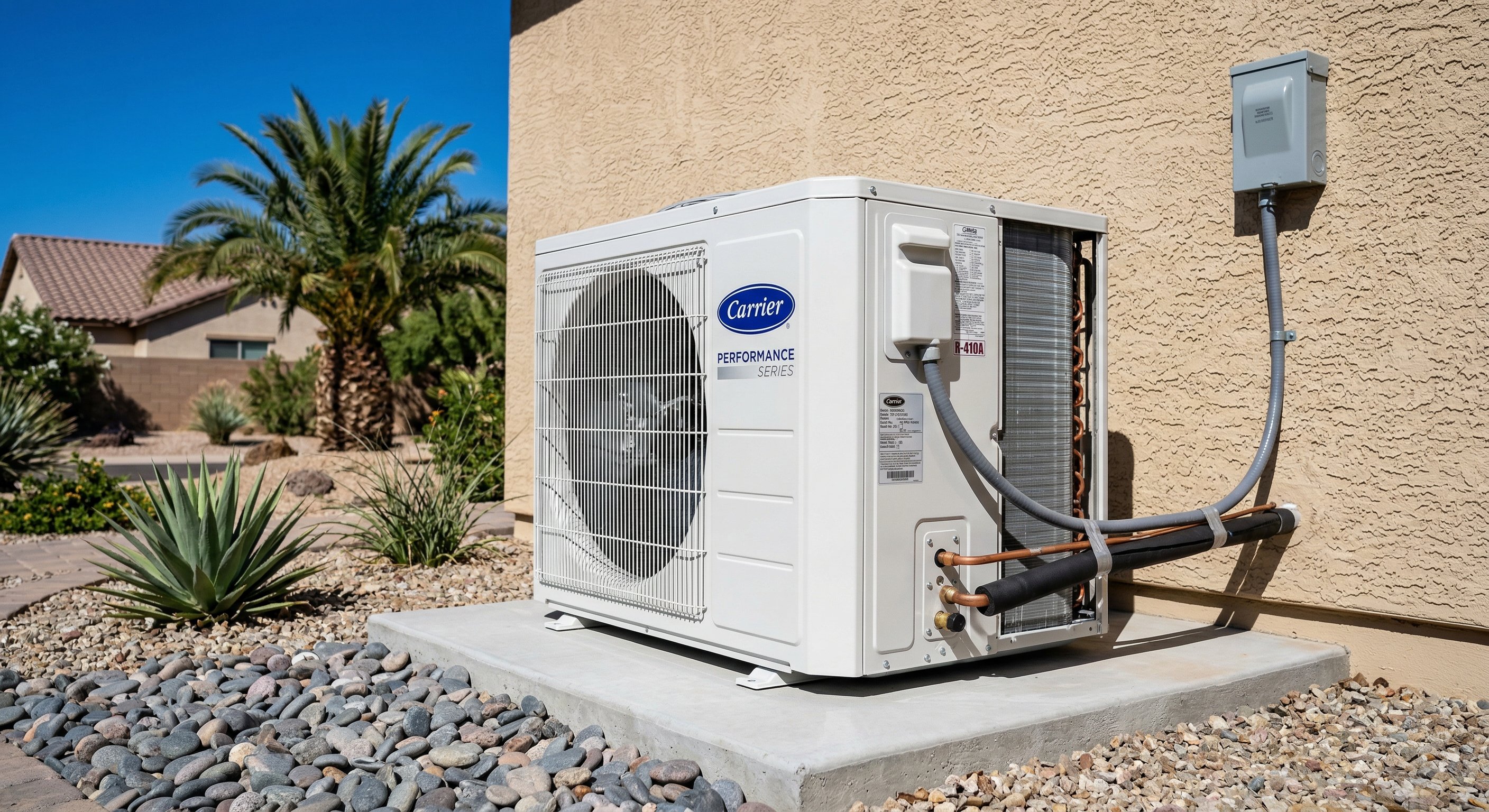
A legitimate AC replacement quote from any Goodyear contractor should itemize:
- Equipment (brand, model number, tonnage, SEER2 rating)
- Labor (hours and rate, or a flat install fee)
- Refrigerant charge
- Permit fees
- Warranty terms (factory and labor separately)
- What's NOT included (ductwork, electrical, thermostat)
Red flags in Goodyear HVAC quotes:
- A single lump-sum number with no breakdown
- "We'll match any price" with no explanation of what's being matched
- No mention of permits
- Equipment described only as "comparable unit" without a model number
- Urgency pressure ("this price is only good today")
You should get at least three itemized quotes before committing. In March, you have the time to do it right.
Financing Your Goodyear AC Replacement
Replacing a system at $8,000–$12,000 is a significant hit. Most Goodyear homeowners aren't sitting on that cash, and they shouldn't have to.
GreenSky financing (available through AC Rebel) offers payment options starting at $47–$87/month depending on system price and term. A $9,500 system financed over 60 months with approved credit is roughly $165/month — less than what an old, inefficient system costs in extra APS bills during a Phoenix summer.
APS also offers rebates for qualifying high-efficiency equipment — systems rated 16 SEER2 or higher may qualify for $100–$300 in utility rebates. Check APS's current rebate program before purchasing.
Frequently Asked Questions
How much does AC replacement cost in Goodyear, AZ?
Most Goodyear homeowners pay $7,200–$13,800 for a full AC replacement in 2026, with the average for a standard 3–4 ton system landing around $8,500–$11,500 installed. The spread comes from equipment efficiency tier, contractor pricing variation, and whether any ductwork or electrical work is needed.
Is Goodyear in APS or SRP territory?
Goodyear is primarily served by APS (Arizona Public Service). APS has peak-demand pricing windows (typically 3–8 PM in summer months) that make high-efficiency systems more financially valuable here than in some other markets. Check your utility bill or APS's service territory map to confirm.
How long does AC last in Goodyear, AZ?
In the Phoenix west Valley heat, expect 10–14 years from most systems with proper maintenance. Goodyear's sustained summer temperatures mean more runtime hours per year than national averages — a system that might last 15–20 years in a moderate climate gets cycled down significantly in the desert.
Should I replace my AC before summer in Goodyear?
If your system is 12+ years old, March–April is the best time to replace it proactively. You get full contractor availability, no emergency pricing, and time to compare 3+ quotes. Waiting until June or July means more expensive installs and potential emergency fees if the system fails during a heat wave.
What size AC do I need for my Goodyear home?
A proper Manual J load calculation is the only reliable way to size a system for your specific home. As a rough guide: 1,200–1,600 sq ft = 2.5–3 ton, 1,600–2,200 sq ft = 3–3.5 ton, 2,200–2,800 sq ft = 3.5–4 ton, 2,800+ sq ft = 4–5 ton. Goodyear's heat load means erring toward the higher end of those ranges is often appropriate.
Can I just replace the outside unit to save money?
Sometimes — but only if the indoor air handler and coil are compatible with modern refrigerants and are in good condition. Mismatching an old coil with a new condenser can void warranties and reduce efficiency significantly. A reputable contractor will assess compatibility before recommending this approach.
Ready to get a real AC price for your Goodyear, AZ home?
AC Rebel quotes are direct-to-homeowner with no contractor markup.
See Goodyear, AZ Pricing →Ready to stop overpaying?
See Your Direct AC Price in 2 Minutes
Skip the dealer. Buy your AC unit at direct pricing and pay a vetted local installer only for the installation. No sales calls. No hidden markup. Most homeowners save $3,000–$5,000+ compared to a traditional quote.
Get My Direct Price — No Credit Card2-minute quote · Licensed installers · 10-year warranty options