
AC Replacement Cost in Fountain Hills, AZ (2026 Real Numbers)

AC Replacement Cost in Fountain Hills, AZ (2026 Real Numbers)
TL;DR: Replacing your AC in Fountain Hills typically runs $6,800–$13,500 installed, depending on system size and efficiency. Most single-story homes in the 2,000–3,000 sq ft range fall in the $7,500–$10,500 window. Fountain Hills homes trend larger and have more complex ductwork than typical east Valley subdivisions, which pushes costs slightly above the Phoenix metro average. The single biggest variable isn't the equipment — it's whether you're buying through a traditional contractor (markup city) or sourcing the unit directly. Here's what 2026 actually looks like.
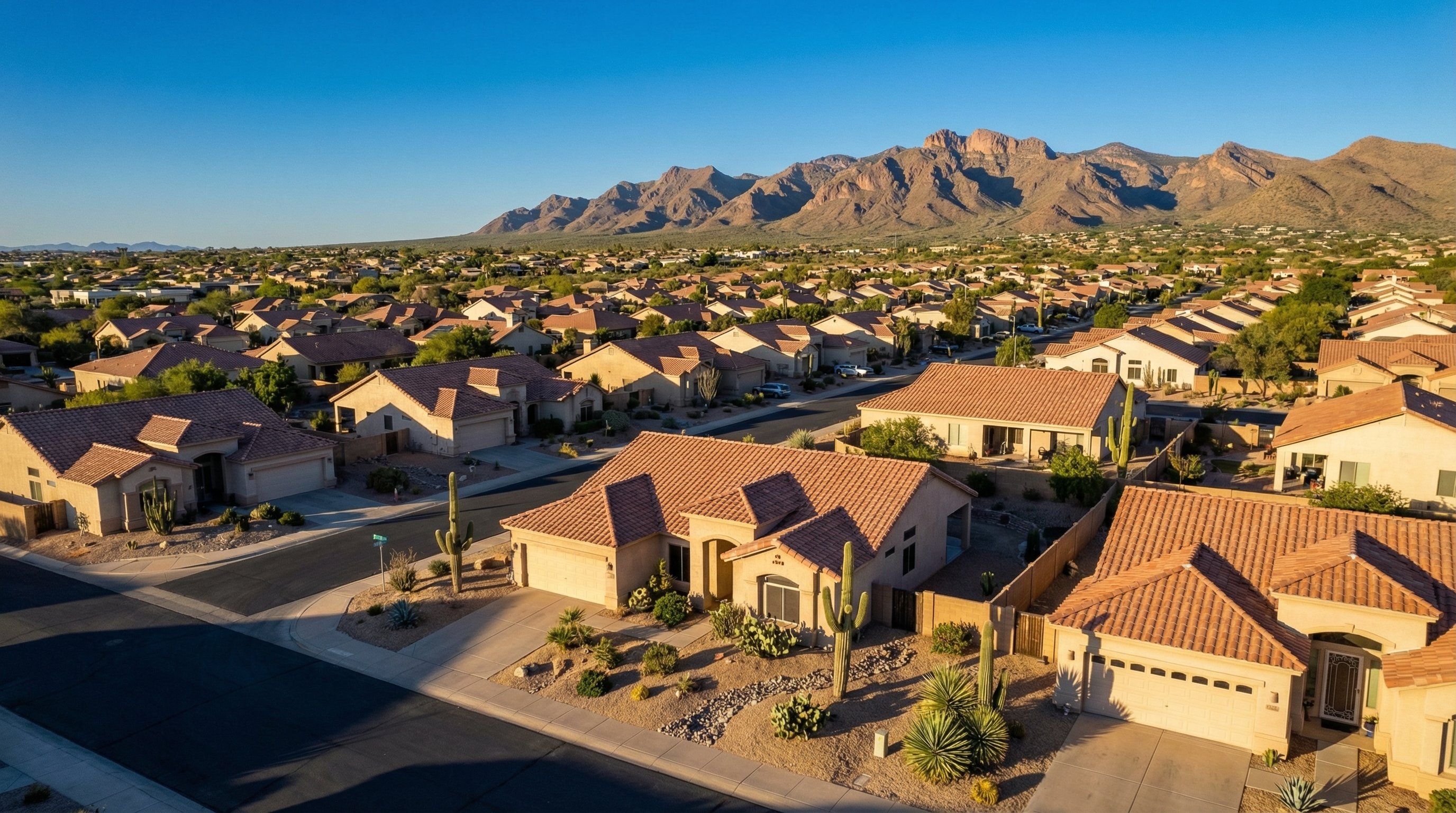
Fountain Hills is small — about 24,000 residents on the northeastern edge of Maricopa County — but its AC situation is specific enough to deserve its own breakdown.
The homes here are different. You've got custom and semi-custom construction scattered throughout, larger floor plans in the 2,500–4,000 sq ft range, lots of single-story sprawl, and a town laid out around the world's tallest fountain. What you don't have is cookie-cutter. And that matters when you're pricing an AC replacement.
You're also sitting at roughly 1,520 feet of elevation — nothing dramatic, but slightly cooler than downtown Phoenix during peak summer. That said, summers still hit 108°F regularly, and your AC still runs 12+ hours daily from May through September. The desert heat here isn't optional.
Here's what a replacement actually costs in Fountain Hills in 2026.
What AC Replacement Costs in Fountain Hills: The Real Numbers
The table below covers the most common scenarios for Fountain Hills homes. These are installed totals — unit plus labor, permits, and standard installation.
| Home Size | System Size | Good Tier | Better Tier | Best Tier |
|---|---|---|---|---|
| 1,500–2,000 sq ft | 3-ton | $6,800–$7,800 | $8,200–$9,500 | $10,000–$11,500 |
| 2,000–2,800 sq ft | 4-ton | $7,500–$8,800 | $9,200–$10,800 | $11,500–$13,000 |
| 2,800–4,000 sq ft | 5-ton | $8,200–$9,500 | $10,500–$12,000 | $12,500–$13,500+ |
Good tier (14–16 SEER2): Trane XR series, Carrier Performance, Lennox Merit. Gets the job done, solid warranties, nothing fancy. The right pick for a 15-year-old home you're not selling anytime soon.
Better tier (17–19 SEER2): Two-stage cooling, variable-speed blower, better humidity control. Your SRP or APS bill drops noticeably. Better long-run value for most Fountain Hills homeowners.
Best tier (20+ SEER2): Variable-capacity inverter technology, excellent zoning capability, top-of-line noise performance. Makes sense if you're in a larger custom home or planning to stay put for 15+ years.
If quotes you're getting look dramatically higher than these ranges, ask for an itemized breakdown. You're entitled to know what the unit costs versus what installation costs.
Why Fountain Hills AC Costs Trend Slightly Higher
A handful of factors push Fountain Hills toward the higher end of the Maricopa County range:
Home size and age. The average Fountain Hills home is larger than a Mesa or Chandler tract home, and much of the housing stock was built in the 1980s–2000s. Older ductwork — especially in homes with cathedral ceilings or multiple zones — may need modification or sealing to work efficiently with a new system. Figure an extra $400–$1,200 if ductwork hasn't been touched in 15+ years.
Contractor travel. Fountain Hills sits about 25 miles from Scottsdale's core and farther from Phoenix proper. Some contractors add a small travel premium or won't service the area at all. Fewer local competitors means slightly less pricing pressure.
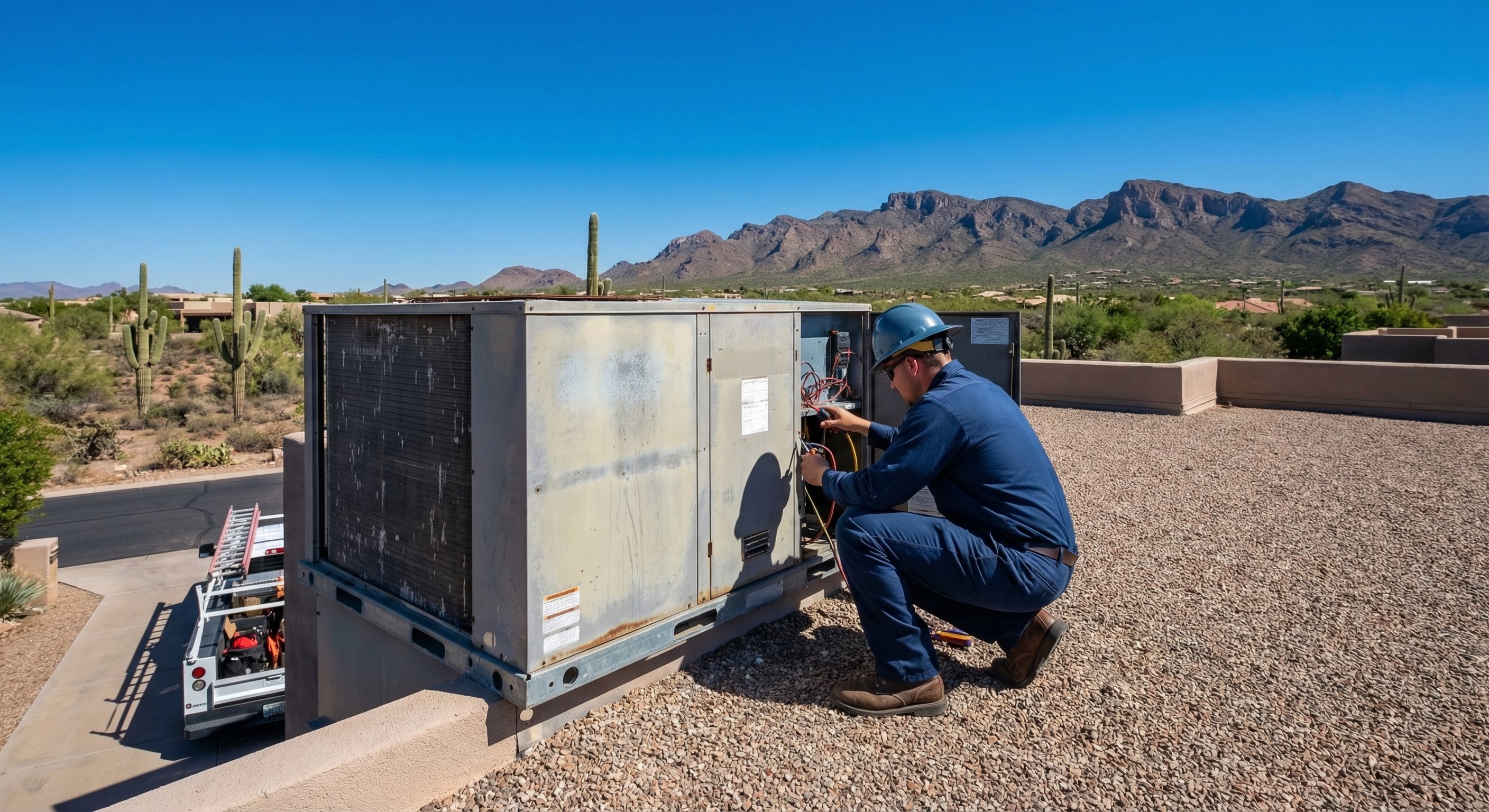
Rooftop units. A fair number of Fountain Hills homes have flat-roof sections with rooftop package units. These are slightly more complex to replace than a standard split system — plan for an extra $300–$600 in labor for rooftop access and rigging.
Custom ductwork configurations. Because many Fountain Hills homes aren't subdivision-spec builds, you'll occasionally find ductwork layouts that don't match the new system's specifications without modifications. A good contractor identifies this in the load calculation phase, but not all contractors run one.
None of this is a deal-breaker. It's just context for why a quote in Fountain Hills might land a few hundred dollars higher than a friend's quote in Gilbert on a similar-sized home.
What SEER Rating Do You Actually Need in Fountain Hills?
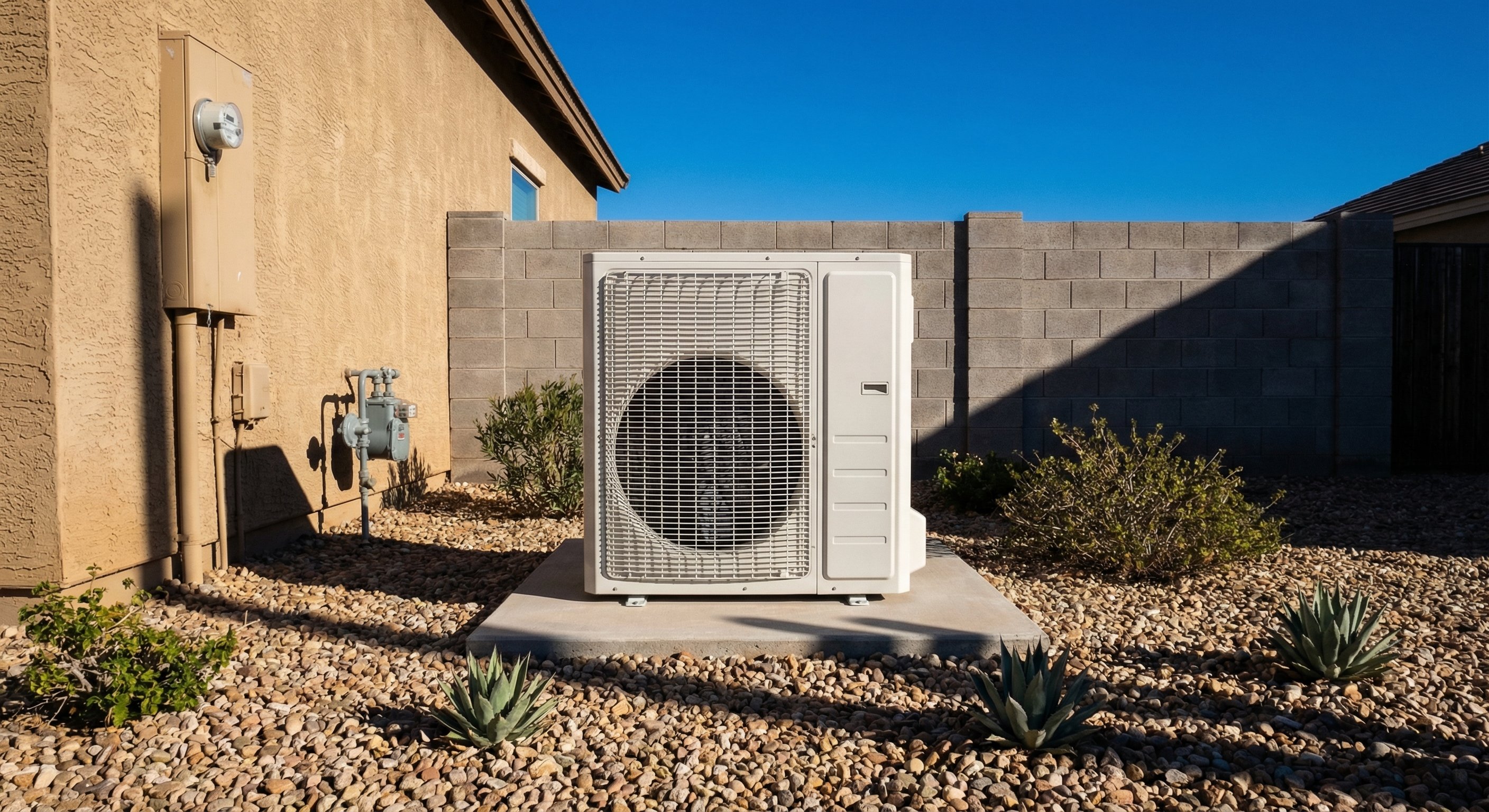
Arizona homeowners get more out of efficiency upgrades than most of the country — because the system runs so much longer.
The math: a 20 SEER2 system versus a 15 SEER2 system in Phoenix might deliver $400–$650 in annual energy savings. In Ohio, that same upgrade saves maybe $180. Same equipment, different climate, dramatically different payback.
For Fountain Hills specifically:
- If you're on SRP: SRP's Comfort Plus plan offers rebates of $250–$500 for qualifying high-efficiency systems (17+ SEER2). Factor that into the math.
- If you're on APS: APS rebates for qualifying systems typically run $150–$300. Check their current program before signing any contract.
- For most Fountain Hills homeowners: A 17–19 SEER2 system hits the best value window — meaningful efficiency gains without the full premium-tier price jump.
Go below 15 SEER2 and you're buying equipment that's already being phased out under federal standards. Don't do it.
Skip the dealer markup
See What a New AC Actually Costs in Fountain Hills, AZ
AC Rebel shows you the real equipment price — no sales pitch, no inflated quote. Get matched with a licensed installer and keep $3,000–$5,000 in your pocket.
Get My Direct Price →The Elephant in the Room: Dealer Markup
Here's the part most contractors won't explain.
When you get a quote from a traditional HVAC contractor, the equipment cost is bundled into a single number. You never see what the unit itself costs. That matters because the markup on equipment — from what a contractor pays to what they charge you — typically runs 40–60%. On a $3,500 unit, you're looking at $1,400–$2,100 in markup before they've touched a tool.
The traditional supply chain looks like this: Manufacturer → Distributor → Contractor → You. Every step adds margin. By the time the unit gets to your rooftop or side yard, you've paid for a lot of hands that never did any installation work.
Buying the unit separately — at or near direct pricing — cuts the equipment markup out entirely. You still pay for professional installation (licensed, permitted, same quality), but you're not subsidizing the contractor's inventory float and equipment margin.
On a $9,000 quote, this can mean $2,000–$3,500 back in your pocket.
When to Replace (The Fountain Hills Timing Question)
The windows that matter here:
March–April is the best time. Demand is low, contractors have availability, and you avoid the July emergency premium (15–25% more, plus days waiting in the heat). You also have time to shop properly — get multiple quotes, check references, run the numbers.
October–November is the second window. Summer is over, contractors are catching up, and there's still runway before next year's heat. Good for proactive replacement on a system that's limping.
June–September is the worst time for everyone. Your system dies in 108°F heat, you need a replacement tomorrow, and every contractor in Maricopa County is slammed. Emergency premium is real. If you're reading this in March, the fact that you're thinking about it now is a good sign.
Signs your system is close:
- It's 12+ years old (Arizona's brutal run cycles cut typical lifespans to 10–14 years)
- Repair estimates are running above $1,500–$2,000
- Summer utility bills have climbed 15–20% year-over-year without changes in usage
- It runs constantly and still can't maintain 78°F on a 108°F afternoon
If two or more of those apply, the replacement conversation is now, not later.

What to Ask Every Contractor Before Signing
A few questions that filter out the bad actors fast:
"Can you show me the equipment cost separately from the installation cost?" Good contractors will. If they won't, that's information.
"Will you pull a permit?" In Maricopa County, AC replacements require a permit. If a contractor offers to skip it "to save time," walk away — you'll have issues with resale and warranty claims.
"Do you do a Manual J load calculation?" This is the proper engineering method for sizing a system to your home's specific square footage, insulation, windows, and ceiling height. Contractors who size by "what was there before" often get it wrong.
"What does the warranty cover and who administers it?" Equipment warranty (typically 10 years on parts) is from the manufacturer, not the contractor. Labor warranty is from the installer. Know the difference.
"Do you have references in Fountain Hills?" Not just "the Phoenix area" — but specific recent jobs in FH. Contractors who've worked these streets know the local building quirks.
Rooftop Units: The Fountain Hills-Specific Note
If your home has a rooftop package unit — common in flat-roof or low-slope sections of older Fountain Hills construction — the replacement dynamic is a bit different.
Rooftop package units (where the entire system — compressor, condenser, and air handler — sits on the roof) are more common in commercial settings, but not rare in Arizona residential. Replacing one involves crane or mechanical lift access, roof penetration work, and often ductwork modification at the plenum.
Cost premium over a standard split system: typically $600–$1,200 extra in labor. The unit itself is comparably priced. The good news is that rooftop units tend to have longer service lives when maintained properly, because they're not fighting ground-level dust accumulation the way a side-yard condenser does.
If you have a rooftop unit, confirm your contractor has specific rooftop replacement experience. Not every residential HVAC contractor handles these regularly.
The Bottom Line on Fountain Hills AC Costs
Most Fountain Hills homeowners replacing a central AC system in 2026 will land between $7,500 and $11,500 installed, with the midpoint around $9,000 for a 4-ton Better-tier system. Larger homes with rooftop units or older ductwork can push past $13,000.
The fastest way to know if a quote is reasonable: ask what the unit costs separately. If the contractor won't tell you, that should tell you something. Transparent pricing — where you can see equipment versus labor — is how you know you're not getting marked up.
Most of what you're paying for in a traditional HVAC quote isn't the installation. It's the equipment markup that's been baked into a bundled number you're never supposed to question.
You're allowed to question it.
At AC Rebel, we show you direct pricing on the equipment — the same units traditional contractors resell at 40–60% markup — so you can compare apples to apples before you decide. It takes about 2 minutes to see your actual options.
Get your direct AC price in 2 minutes — no dealer markup →
Frequently Asked Questions
How much does a new AC unit cost in Fountain Hills, AZ?
Total installed cost for a new AC system in Fountain Hills typically runs $6,800–$13,500 depending on home size, system efficiency, and whether the home has a standard split system or a rooftop package unit. Most 2,000–2,800 sq ft homes land between $7,500 and $10,800 installed.
What SEER rating should I get for an Arizona home?
For Fountain Hills and the broader Phoenix metro, a 17–19 SEER2 system offers the best value — meaningful efficiency gains over baseline without paying the full premium-tier price. Systems below 15 SEER2 are being phased out under current federal standards. SRP and APS offer rebates of $150–$500 for qualifying high-efficiency equipment.
How long do AC systems last in Fountain Hills?
Expect 10–14 years for most systems in the Phoenix metro. Arizona's extreme heat cycles — 12+ hours of daily runtime during summer — put more wear on equipment than moderate climates. The national average lifespan of 15–20 years does not apply here.
Does Fountain Hills cost more for AC replacement than Phoenix?
Slightly. Fountain Hills homes trend larger, have more custom construction with complex ductwork, and sit farther from central Phoenix — which can add contractor travel costs. Expect quotes to run $300–$800 higher than a comparable Phoenix tract home, depending on the job.
What is the best time to replace an AC in Fountain Hills?
March through April is the best window — low demand, full contractor availability, no emergency pricing, and plenty of time to compare quotes before summer. October–November is the second-best window. Avoid replacing in June–September if possible; summer demand pushes pricing and wait times up significantly.
Do I need a permit for AC replacement in Maricopa County?
Yes. A permit is required for AC replacements in Maricopa County. Any contractor offering to skip the permit to "save time" is a red flag — it creates issues with resale disclosures and can void your equipment warranty. A legitimate contractor handles permitting as part of the job.
Ready to stop overpaying?
See Your Direct AC Price in 2 Minutes
Skip the dealer. Buy your AC unit at direct pricing and pay a vetted local installer only for the installation. No sales calls. No hidden markup. Most homeowners save $3,000–$5,000+ compared to a traditional quote.
Get My Direct Price — No Credit Card2-minute quote · Licensed installers · 10-year warranty options