
AC Refrigerant Leak Repair Cost in Phoenix (2026 Pricing Guide)

AC Refrigerant Leak Repair Cost in Phoenix (2026 Pricing Guide)
TL;DR: Refrigerant leak repair in Phoenix typically costs $150 to $900 when the leak is sealable, covering leak detection ($75 to $200) plus repair and recharge. If the evaporator coil is cracked, expect $1,200 to $3,500 for a coil replacement. R-22 systems push repair costs much higher due to refrigerant scarcity. AC refrigerant does not simply wear out , if you are adding it every summer, you have a leak. AC Rebel shows you the full cost breakdown before you sign anything.
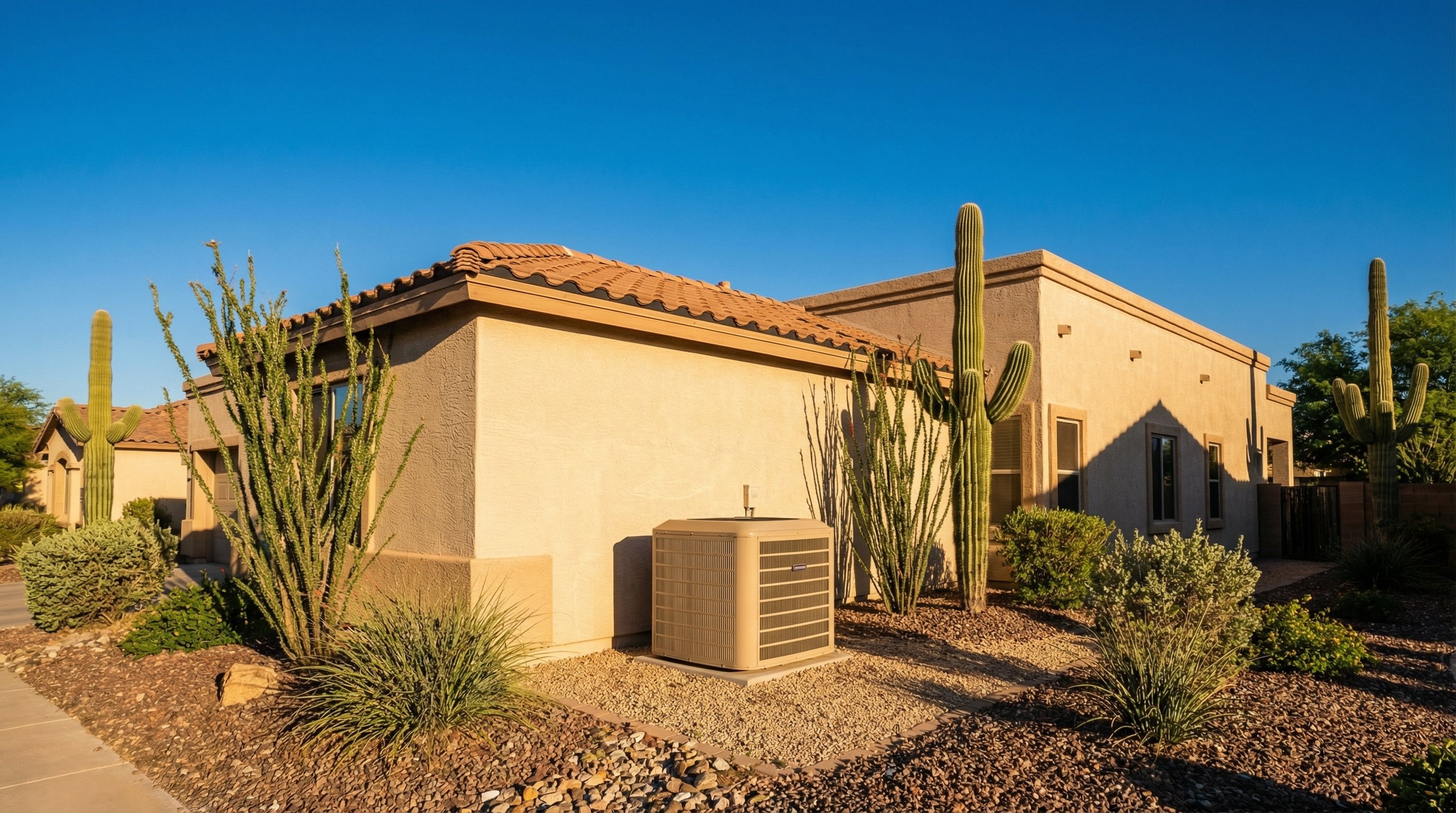
It is 7:30 on a Tuesday morning in Gilbert. You set the thermostat to 76. By noon your house is 88 degrees and the AC is running constantly without making a difference. The contractor comes out and says the word "refrigerant" with a grave look on their face. Then comes the estimate: $800 for a recharge, $1,400 to fix the coil, something about a leak.
Here is what you should know before you agree to anything.
Why Refrigerant Leaks Hit Phoenix Harder
Refrigerant leaks happen everywhere, but Phoenix accelerates them. Your AC compressor cycles on and off hundreds of times per summer. Each cycle expands and contracts the metal components in the coils and copper lines. Over time, that flexing works at solder joints and fittings.
Two Phoenix-specific accelerants make it worse. First, the summer heat pushes systems hard, and the first sustained 105-degree run of the season puts maximum stress on joints that have been sitting since spring. Second, monsoon humidity from July through September introduces moisture into the air handler, accelerating corrosion at coil fins and cabinet seams. Corrosion thins metal. Thinned metal cracks.
How to Know If You Have a Refrigerant Leak
Your AC is blowing warm air but the fan runs fine. The house climbs above thermostat setting even with the system running constantly. You hear a faint hiss near the outdoor unit or the copper lines running to it. On hot days, you may see ice on the suction line or the evaporator coil access panel inside.
A simple temperature differential test confirms it. Put a probe thermometer on the supply register (air coming out of a vent) and the return register. A working system should show a 14 to 20 degree temperature drop across the evaporator coil. If that differential is 8 degrees or less, low refrigerant is the likely cause.
If you do have a leak, the fix is not just adding more refrigerant. A responsible contractor will find and repair the leak first. Adding refrigerant without fixing the leak costs you the same service call fee again in six months.
The Four Costs That Make Up Your Repair Bill
A clear contractor separates your quote into four components.
Leak Detection
Modern leak detection uses electronic refrigerant sniffers, ultraviolet dye injection, or nitrogen pressure testing to locate the breach. Electronic sniffer detection runs $75 to $150. Nitrogen pressure testing, which is more thorough, typically runs $150 to $200. Ask what method they are using and whether the detection fee is credited toward repair labor if you proceed.
Sealant Repair
If the leak is at a fitting, flare joint, or accessible solder point, a qualified technician can reseal it. Sealant repair at an accessible fitting runs $150 to $400 depending on location and access difficulty. After resealing, the system is pressure-tested before recharging. This is the best-case scenario.
Evaporator Coil Replacement
If the evaporator coil inside your air handler is cracked or has corrosion damage at the header tubes, it must be replaced. Evaporator coil replacement in Phoenix runs $1,200 to $3,500 depending on system size and whether the air handler needs modification. On a 3-ton system, expect $1,400 to $2,200 for the coil plus $400 to $800 in labor.
This is where repair versus replace becomes a real conversation. Replacing the coil on a 12-year-old system while leaving the aging compressor and condenser is a partial fix that may not make financial sense.
Recharge and System Verification
Once the leak is sealed or the coil replaced, the system is recharged to manufacturer specification. Recharging an R-410A system runs $150 to $400 depending on the amount needed. After recharge, a thorough contractor checks the temperature differential again, inspects the condenser coil for Arizona dust buildup, and confirms the capacitor and contactor are within spec.
Skip the dealer markup
See What a New AC Actually Costs
AC Rebel shows you the real equipment price — no sales pitch, no inflated quote. Get matched with a licensed installer and keep $3,000–$5,000 in your pocket.
Get My Direct Price →What R-22 Means for Your Repair Decision
If your home has an AC system made before 2010, it likely uses R-22 refrigerant. R-22 is being phased out under the Montreal Protocol because it depletes atmospheric ozone (EPA, 2024). R-410A was adopted as the EPA-approved replacement and is now the standard for all new residential AC systems (ENERGY STAR, 2025). The practical consequence: R-22 is no longer manufactured in quantity. A pound that cost $20 in 2015 now costs $150 to $300 per pound. A typical residential AC requires 5 to 12 pounds.
If you have an R-22 system with a refrigerant leak, a repair that costs $600 on an R-410A system could cost $2,500 or more just to recharge after the repair. When you factor in that an R-22 system is already 15 to 20 years old, the math often points toward replacement. AC Rebel shows you both sides of that calculation without a sales pitch.
When to Repair and When to Replace
Use the 10-year rule as a starting framework. Repair the system if it is 10 years old or younger, the leak is sealable at a fitting, and the outdoor unit and air handler are otherwise sound. Replace the system if the evaporator coil is cracked, the outdoor unit is over 12 years old and the coil has failed, or the system uses R-22 and the repair-plus-recharge cost approaches $2,000 or more.
For R-410A systems in the 8 to 12 year range, compare the repair cost against a full replacement estimate. If the repair cost is more than 25 percent of full replacement cost and the outdoor unit is near end of life, replacement usually makes more financial sense.
Why Your Quotes Differ So Much
You may get three different quotes for the same refrigerant leak. One contractor finds the leak, patches it, recharges, and is done. Another finds the same leak and tells you the coil is showing signs of corrosion that will likely fail in two to three years. Same leak, different picture of your system.
Ask specifically: what is causing the leak, where is it located, and what is the expected life of the rest of the system if we repair this today?
Protecting Your System After a Repair
Once your system is repaired and recharged, a few maintenance habits reduce recurrence. Replace your air filter every 30 to 60 days during cooling season. A dirty filter restricts airflow across the evaporator coil, changing refrigerant pressure and accelerating wear at coil connections. In Phoenix during peak summer, check your filter monthly.
Keep the area around your outdoor condenser clear of landscaping debris and dust. Arizona dust storms in spring coat condenser fins with fine particulate that traps heat and increases compressor load. Schedule a pre-monsoon tune-up every April or May. That is the single best investment you can make in your system's longevity.
Frequently Asked Questions
Q: Can I add refrigerant to my AC without fixing the leak?
You can, but it will not last. Most systems lose their charge over a single cooling season if there is an active leak. Adding refrigerant without fixing the leak costs $150 to $400 per service call and guarantees you will be making that call again. Fix the leak first.
Q: Is refrigerant something that needs to be topped off regularly?
No. Properly functioning AC systems are sealed and should never need refrigerant added. If you are adding it every year or every cooling season, you have a leak. The idea that refrigerant naturally depletes is a misconception that leads homeowners to ignore an underlying problem.
Q: How much does evaporator coil replacement cost in Phoenix?
A full evaporator coil replacement runs $1,200 to $3,500 depending on system size and accessibility. On a standard 3-ton system, $1,400 to $2,200 for the coil and $400 to $800 in labor is a reasonable range. Always ask if your outdoor unit and compressor are worth the additional investment before committing to a coil-only replacement.
Q: Does homeowners insurance cover AC refrigerant leaks?
Standard homeowners insurance typically does not cover gradual leaks from normal wear and corrosion. It may cover sudden and accidental damage from events like a pipe burst, but gradual refrigerant loss is generally excluded. Check with your provider to confirm what is covered under your policy.
Q: How long does a refrigerant leak repair take?
A straightforward sealant repair at an accessible fitting takes 1 to 2 hours including leak detection and pressure testing. An evaporator coil replacement typically takes 3 to 5 hours. Ask your contractor for a realistic timeline before work begins.
Q: What is the difference between R-410A and R-22 refrigerant?
R-410A is the current standard, adopted in the 2010s as an ozone-safe replacement for R-22. R-410A operates at higher pressure and performs more efficiently in high-heat conditions like Phoenix summers (AHRI, 2025). R-22 systems are older and increasingly expensive to service due to refrigerant scarcity, which makes repairing them financially questionable compared to replacement.
Q: How do I know if I should repair or replace my system?
Use the 10-year rule. If your system is under 10 years old and the leak is sealable, repair it. If it is over 12 years old and uses R-22, replacement is usually the better long-term investment. For systems in the 10 to 12 year range with R-410A, compare the repair cost against a full replacement estimate. If the repair cost is more than 25 percent of full replacement cost, replacement makes more financial sense.
All pricing reflects 2026 Phoenix metro market rates. Costs vary by system size, accessibility, and conditions at your home. Get a full line-item quote before authorizing any repair work.
Get a free instant quote at acrebel.com
Ready to stop overpaying?
See Your Direct AC Price in 2 Minutes
Skip the dealer. Buy your AC unit at direct pricing and pay a vetted local installer only for the installation. No sales calls. No hidden markup. Most homeowners save $3,000–$5,000+ compared to a traditional quote.
Get My Direct Price — No Credit Card2-minute quote · Licensed installers · 10-year warranty options