
Ductless Mini Split vs Central AC in Phoenix: Which One Actually Makes Sense

Ductless Mini Split vs Central AC in Phoenix: Which One Actually Makes Sense
TL;DR: Phoenix homeowners with no existing ductwork, or those cooling specific rooms in an older home, should seriously consider ductless mini splits. Installation runs $3,000 to $8,000 per unit versus $7,500 to $14,000 for a full central system. Operating efficiency is comparable in cooling mode, though central AC handles Arizona summers more consistently during extreme heat waves. For new construction or whole-home replacement, central AC still wins on cost-per-ton. For room additions, converted garages, or homes with damaged ductwork, ductless is the smarter call.
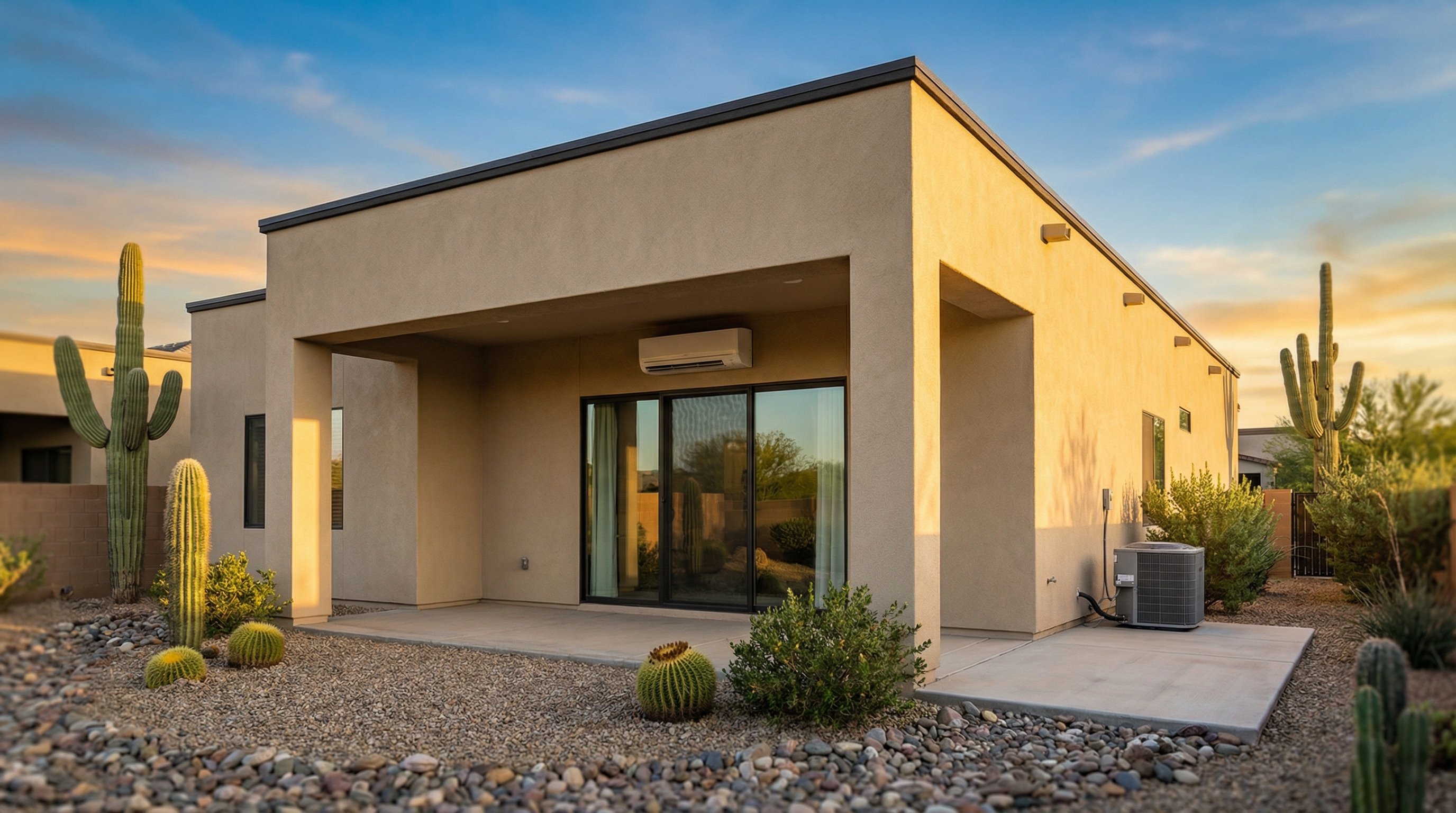
Your neighbor in Scottsdale just had a ductless system installed in her home office. Your cousin in Gilbert went with central AC when he built his new house. Both swear their system is the right call. Both are probably right for their specific situation, and that is the honest answer most HVAC salespeople will not give you.
The ductless versus central AC decision is not a universal right-or-wrong question. It depends on your home's construction, whether you have existing ductwork, how you use your space, and your budget. Here is what Phoenix homeowners actually need to know before signing anything.
What You Are Actually Comparing
Before getting into costs and efficiency ratings, it helps to understand what these two systems are doing differently.
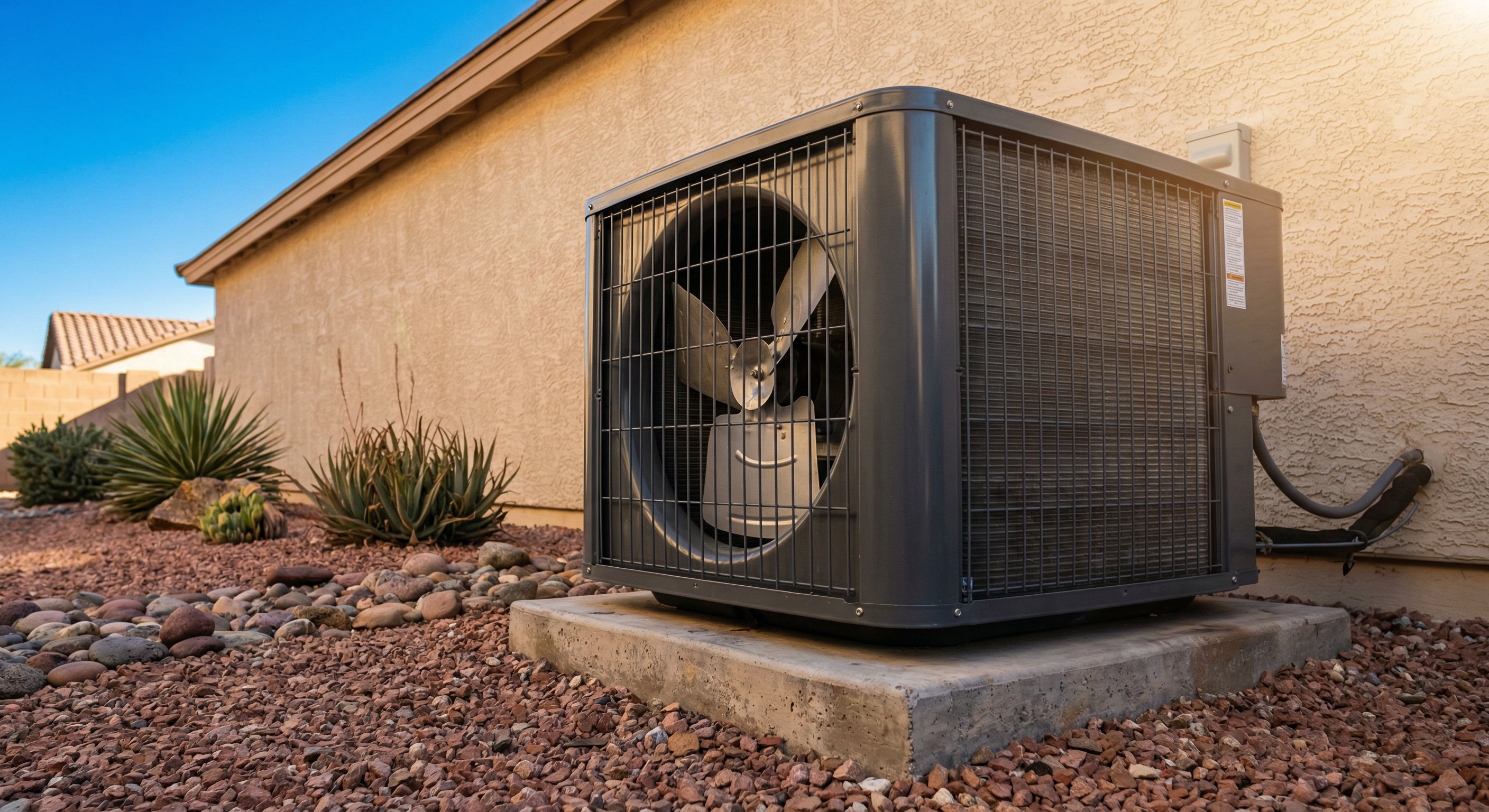
A central air conditioning system uses one outdoor condenser unit connected to a network of ducts that run through your attic, crawlspace, or interior walls. Cold air gets distributed through supply vents to every room. The system cools the entire house at once, and a single thermostat controls everything.
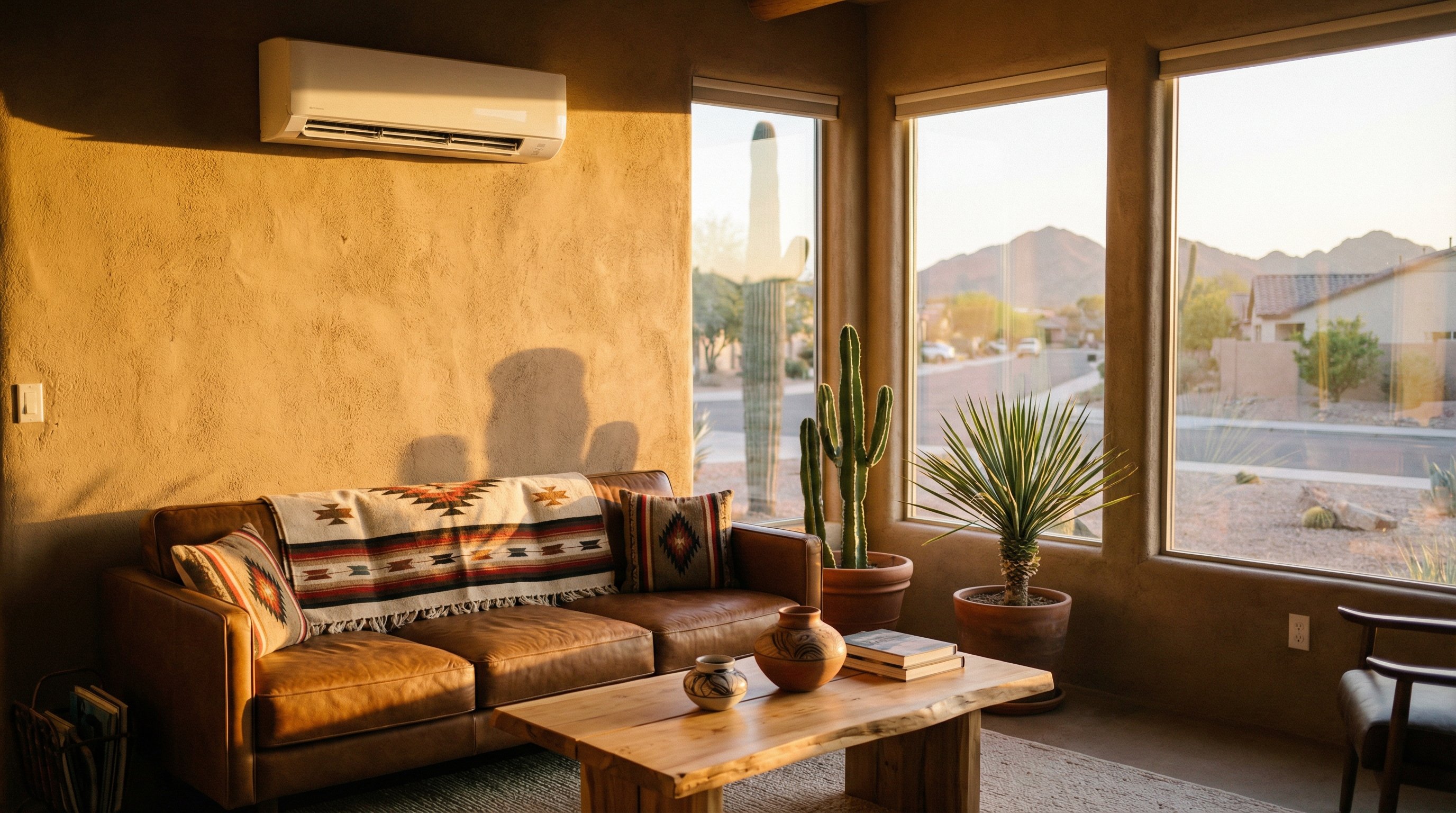
A ductless mini split does the same cooling job but without the duct network. One outdoor condenser connects to one or more indoor units mounted on walls or ceilings inside your home. Each indoor unit cools its own zone independently. There is no shared duct system.
The absence of ducts is the entire difference. That single fact drives almost every other consideration.
Upfront Installation Cost
This is where central AC typically wins for whole-home coverage.
A new central AC system for a 1,800 to 2,200 square foot Phoenix home runs $7,500 to $14,000 installed, depending on the brand, efficiency rating, and whether you need a new duct network. If your home already has ducts in good shape, you are usually looking at the lower end of that range. If you need new ductwork, add $3,000 to $6,000 on top of the AC equipment itself.
A single-zone ductless mini split runs $3,000 to $5,500 installed for the equipment and labor. A multi-zone setup covering three to four rooms typically lands in the $8,000 to $15,000 range. That sounds comparable to central AC, but you are not paying for a whole-house solution you may not need.
For a 1,200 square foot condo in Tempe with no existing ductwork, one ductless unit at $4,500 installed beats a central system at $10,000-plus. For a 3,000 square foot house in Chandler that already has functioning ducts, central AC is almost certainly the cheaper whole-home option.
Operating Efficiency in Phoenix Summers
Both system types use the same basic refrigeration cycle. Their efficiency is measured in SEER2 ratings for central AC and in SEER2 equivalent ratings for ductless systems.
Standard efficiency central AC systems in 2026 start at SEER2 14 to 15. High-efficiency models hit SEER2 18 to 25. Ductless mini splits commonly range from SEER2 18 to 30, with some premium units pushing higher.
Here is the practical reality for a Phoenix summer. Both system types can cool your home effectively on a normal 100-degree day. The difference shows up during the monsoon months when humidity spikes and during the stretches where temperatures hold above 108 degrees for a week straight. Central AC systems, particularly those with higher capacity and more robust compressor design, tend to hold up better during sustained extreme heat because their equipment is sized and engineered for whole-home cooling under load.
Ductless systems are highly efficient at their rated capacity, but if you are running multiple indoor units simultaneously during a brutal July heat wave, the combined load can push the outdoor condenser harder than it was designed for in certain installation configurations.
For a master bedroom that stays hot because the duct run from the attic loses most of its cool air before arrival, a single ductless unit dedicated to that room will outperform a central system every time. Context matters.
Skip the dealer markup
See What a New AC Actually Costs
AC Rebel shows you the real equipment price — no sales pitch, no inflated quote. Get matched with a licensed installer and keep $3,000–$5,000 in your pocket.
Get My Direct Price →Which System Fits Your Phoenix Home Type
Older Homes Without Ductwork
Phoenix metro has thousands of homes built between the 1950s and 1980s that were originally designed for evaporative cooling only. These homes often have no duct infrastructure at all. Running new ductwork through a finished older home is disruptive and expensive, sometimes requiring ceiling access or wall cutouts.
Ductless is the practical winner here. A few wall-mounted units solve the problem without tearing your house apart.
Room Additions and Converted Spaces
Added a garage apartment? Built a casita in your Gilbert backyard? Finishing an attic in Peoria? These spaces are rarely connected to your existing duct system, and extending ductwork to them is often cost-prohibitive.
A single-zone or two-zone ductless unit handles these additions perfectly and at a fraction of the cost of extending central ductwork.
New Construction and Full Replacements
If you are building new or replacing a failed central AC system in a home with functioning ducts, central AC still makes more financial sense. The cost per ton of cooling capacity is lower, the system is designed for whole-home integration, and there is no visual disruption from wall-mounted units.
Multi-Story Homes
Two-story homes in Surprise and Peoria often have uneven cooling problems with central AC. Hot upstairs, cool downstairs. Duct zoning can help, but it adds cost and complexity. A ductless system lets you directly address the problem rooms without rebalancing your entire duct network.
The Ductwork Problem Nobody Talks About
Central AC is only as good as its ductwork. In Phoenix, this is a real concern.
Attic temperatures in the summer regularly hit 140 to 160 degrees. Poorly insulated ductwork running through an unconditioned attic loses significant cooling capacity before the air ever reaches your vents. A central AC system pushing 400 CFM through hot ducts on a 115-degree Phoenix afternoon is working much harder than the SEER2 rating on the equipment label suggests.
Ductless systems eliminate this problem entirely. The cooling air goes directly from the indoor unit into your living space without traveling through an oven-hot attic.
If your home has aging ductwork and you are noticing hot spots despite running the central AC constantly, that is not necessarily an AC problem. It may be a duct problem. A ductless bypass of the offending rooms can be the fix without replacing your entire central system.
Maintenance and Repair Differences
Central AC requires filter changes every one to three months depending on usage and the type of filter. Ductwork itself needs periodic cleaning, and duct insulation in attics degrades over time. The entire system is interdependent, so one failing component often affects performance across the whole house.
Ductless systems have no duct network to maintain, which removes one entire maintenance variable. Filter cleaning on the indoor units is still required, usually every few weeks during peak summer, but the maintenance scope is smaller.
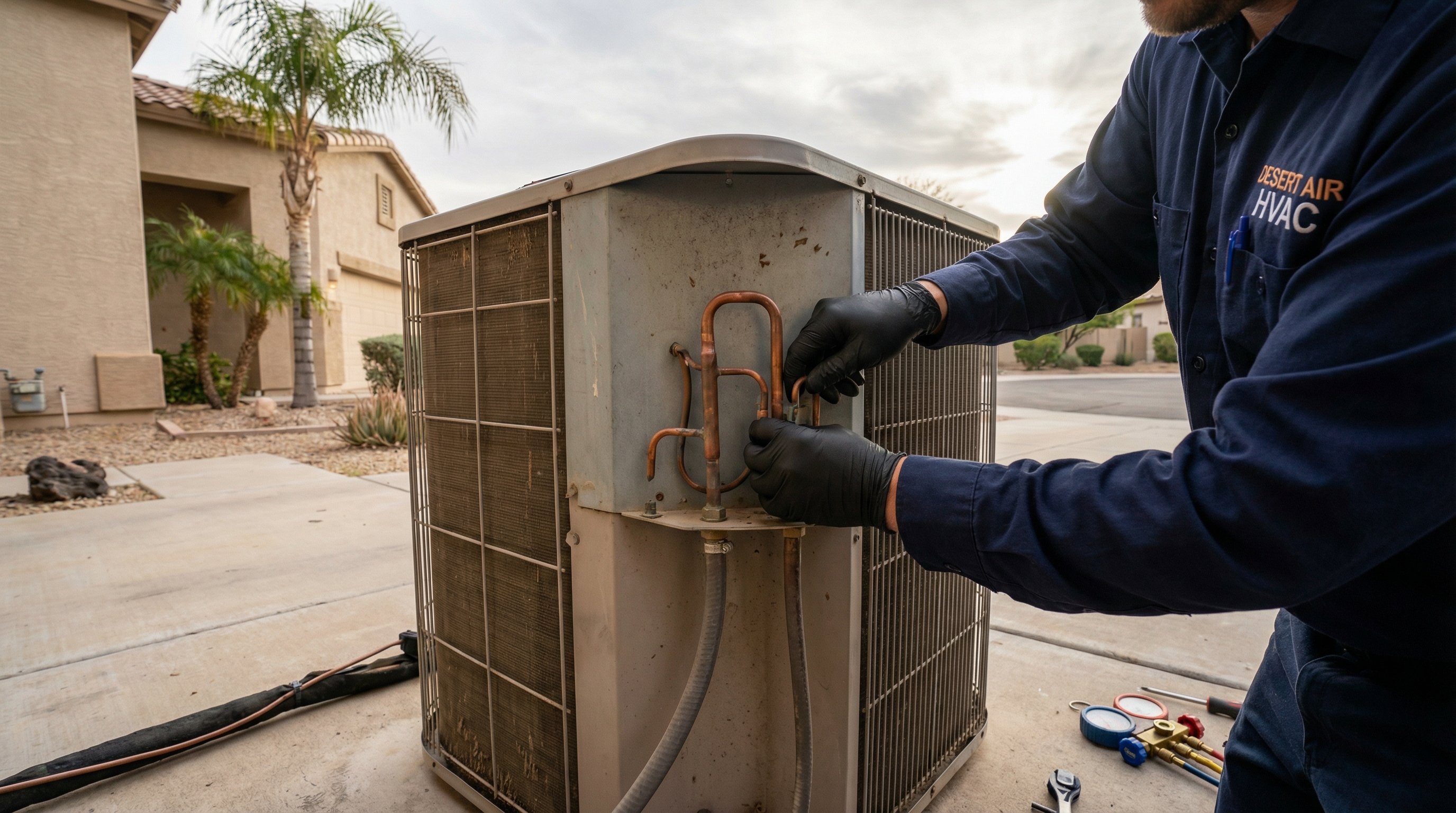
When a central AC compressor fails, you are looking at a full system replacement or a significant repair bill. Ductless systems allow you to replace individual components. If one indoor unit fails, you replace just that unit. If the outdoor condenser fails, it affects all connected zones, but you are still replacing one component rather than an entire centralized system.
Making the Call for Your Home
Choose central AC if your home already has ductwork in decent shape, you are cooling a consistently occupied whole home, and your budget favors the lower per-ton cost of central equipment. This is the majority of Phoenix metro homes, and it remains the sensible default.
Choose ductless if your home has no ducts, you are adding or finishing specific rooms, you have uneven cooling problems in certain areas, or the visual profile of wall-mounted units does not bother you. The efficiency gains in targeted cooling are real, and the installation simplicity for the right situation is genuine.
The wrong choice is letting a salesperson talk you into either system without first evaluating your specific home layout, existing infrastructure, and actual cooling needs. Both systems work. The right one depends on your house.
Get a free instant quote at acrebel.com and see what both options would cost for your specific Phoenix metro home.
Frequently Asked Questions
Q: Can a ductless mini split cool a whole house in Phoenix?
A single multi-zone ductless system can cool an entire house, but it depends on the number of zones, the total square footage, and the system's combined capacity. For a typical 2,000 square foot home, you would need a properly sized multi-zone setup. In many cases, a central AC system is more cost-effective for whole-home coverage than an equivalently sized ductless multi-zone system.
Q: Do ductless systems work in extreme Phoenix heat?
Yes. Most modern ductless mini splits are rated for operation in temperatures up to 115 to 118 degrees, which covers the vast majority of Phoenix summer conditions. During unusual heat waves where temperatures exceed 118 degrees, some units may reduce capacity or struggle to maintain set temperatures. If your home is in a west-facing location in Glendale or Buckeye that regularly sees afternoon temps above 115, discuss specific high-heat-rated models with your installer.
Q: How long does a ductless mini split last in Arizona?
A properly maintained ductless system lasts 15 to 20 years in Phoenix conditions, comparable to a central AC system. The indoor units may need capacitor or fan motor service around year 10 to 12. The outdoor condenser in both system types takes a beating from Phoenix summers and typically needs attention between years 12 and 18 depending on usage and maintenance.
Q: Are ductless systems noisier than central AC?
Ductless indoor units are generally quieter than central air handlers because there is no large blower fan pushing air through an extensive duct network. You hear air movement from the unit itself, which is comparable to a small desk fan. Central AC is silent when running but can produce duct whistling or rattling sounds as the system ages and ductwork shifts.
Q: Does Arizona have any utility rebates for ductless systems?
Both APS and SRP offer efficiency rebates that sometimes apply to ductless mini split systems, particularly high-SEER2 models. APS has had residential cooling rebate programs that include heat pump and high-efficiency air conditioning equipment. SRP also has demand response and efficiency programs that may apply. Check current rebate availability with both utilities before purchasing, as programs change annually and eligibility requirements vary.
Q: Can I add ductless to one room without replacing my existing central AC?
Yes. Many Phoenix homeowners use a single ductless unit to address a specific problem room, such as a west-facing bedroom that the central system cannot keep cool, while leaving the central system running for the rest of the house. This hybrid approach is common and cost-effective when the problem is localized.
Q: How much does it cost to install ductless AC in an existing Phoenix home?
A single-zone ductless installation typically runs $3,000 to $5,500 including equipment and labor. A two-zone system runs $5,500 to $9,000. These prices are for the Phoenix metro area and assume a standard installation with reasonable access to an exterior wall for mounting the indoor units and locating the outdoor condenser at ground level or on a dedicated pad.
Ready to stop overpaying?
See Your Direct AC Price in 2 Minutes
Skip the dealer. Buy your AC unit at direct pricing and pay a vetted local installer only for the installation. No sales calls. No hidden markup. Most homeowners save $3,000–$5,000+ compared to a traditional quote.
Get My Direct Price — No Credit Card2-minute quote · Licensed installers · 10-year warranty options