
Should I Replace My AC Before Summer in Phoenix? (What Actually Makes Sense)

Should I Replace My AC Before Summer in Phoenix? (What Actually Makes Sense)
TL;DR: If your AC is 12 years or older, has needed two or more repairs in the past two years, or is running noticeably less efficiently than before, replacing it before summer hits is usually the smarter financial move. Phoenix summers are not a gradual warm-up: they hit 108°F by May and your system gets zero recovery time until October. Waiting until the unit fails in July means emergency pricing, limited contractor availability, and the risk of being without cooling for days in extreme heat. Use this spring window to shop calmly, compare pricing, and get installation scheduled on your timeline instead of a contractor's emergency queue.
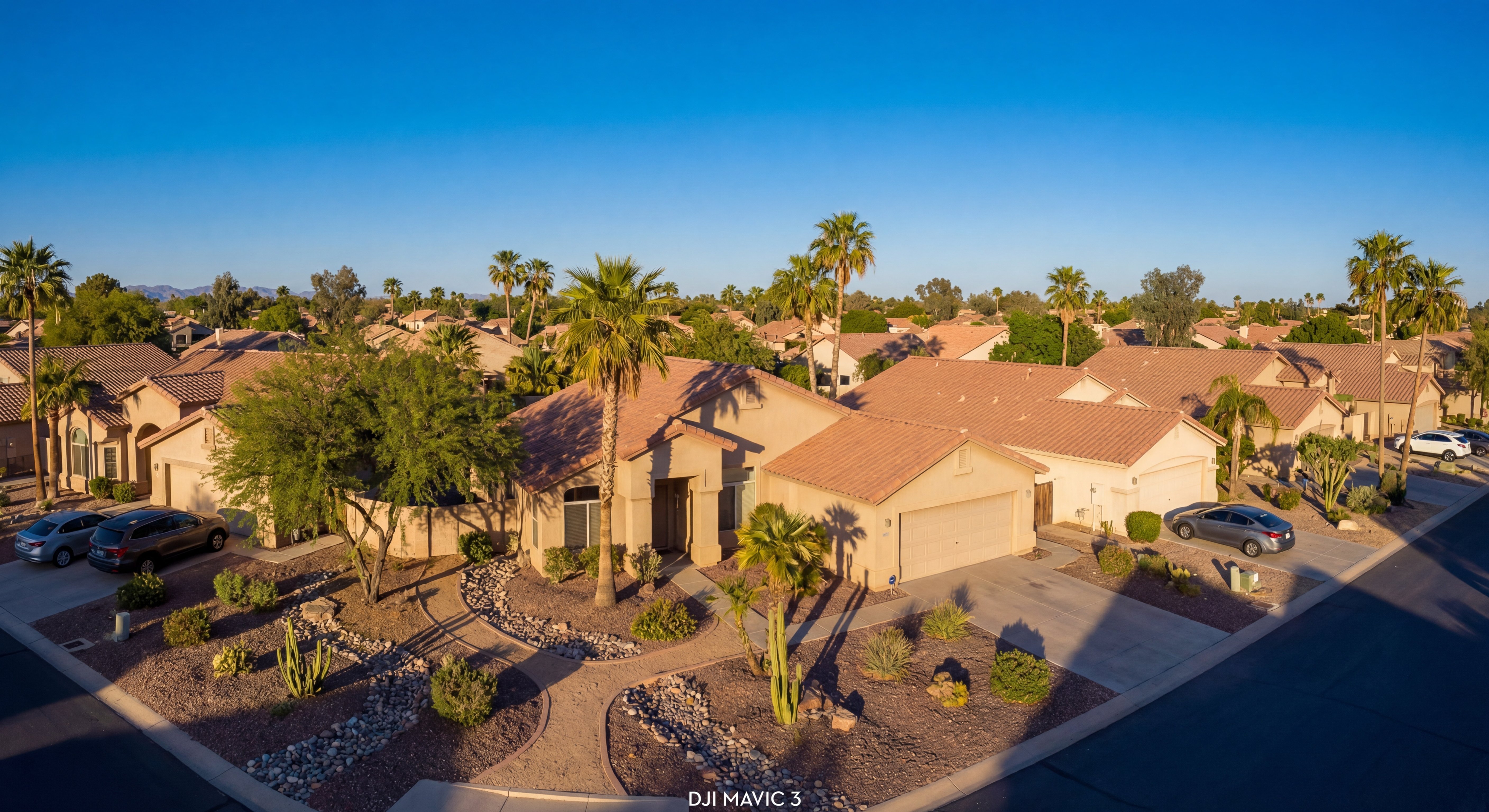
It is March in Phoenix. The temperature is somewhere in the 70s right now. Your AC is running, kind of, and you are wondering if you really need to deal with this.
I get that question a lot from homeowners who can tell something is not quite right but are not sure if it is bad enough to justify spending $8,000 to $12,000 on a new system.
Here is my honest answer: the decision is not whether you should replace your AC. It is whether you replace it now or in the middle of July when it finally dies.
Why Phoenix Changes the Replacement Timing Equation
Every HVAC guide you read online is written for a climate where summer ends in September and your AC gets a five-month rest. Phoenix does not work that way.
By May, overnight lows are pushing 70°F. By mid-June, you are running the AC nearly constantly. That continuous load does not ease up until late September. Your system runs for five to six months straight in temperatures that regularly exceed 110°F outside.
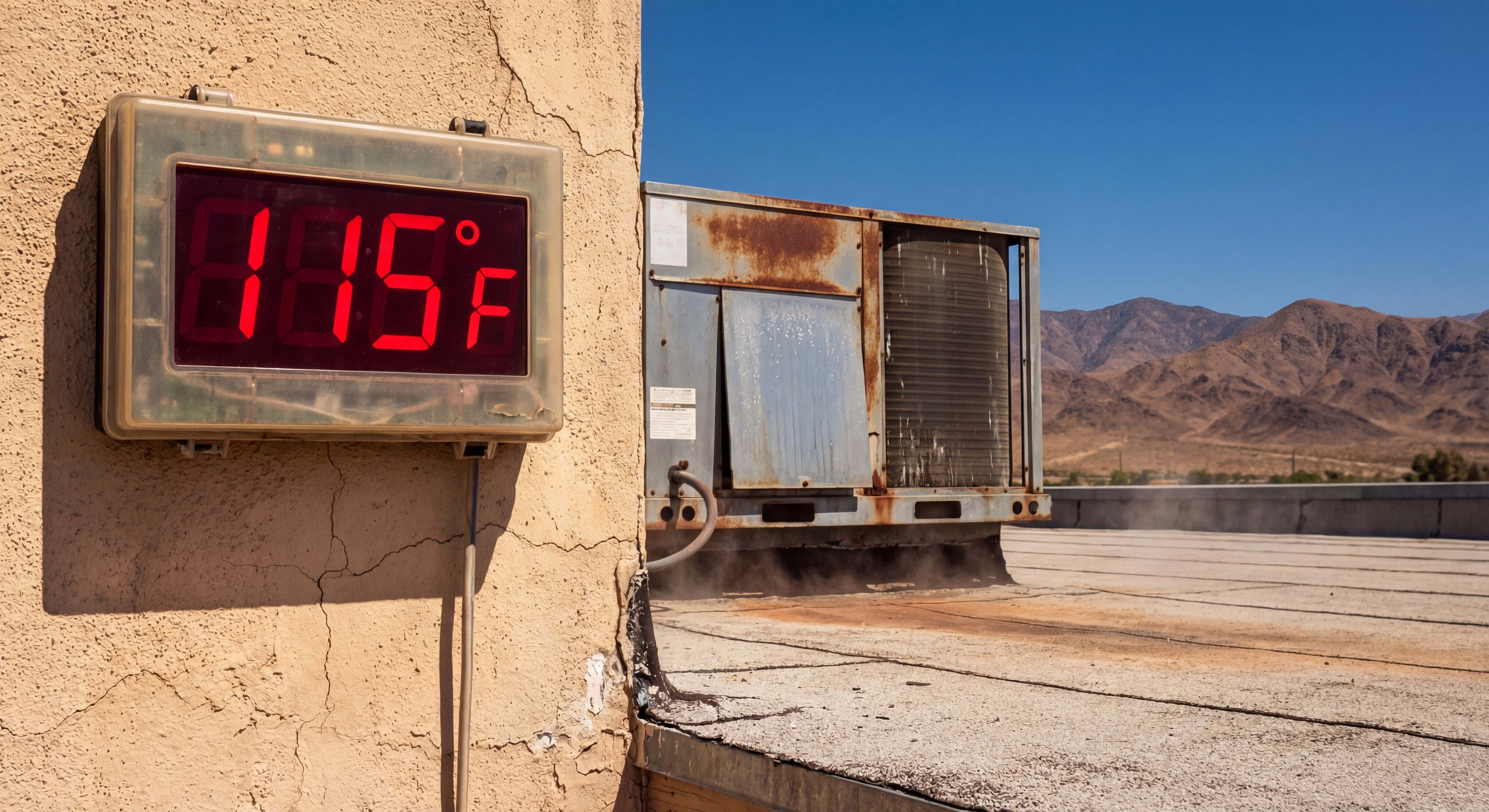
An AC unit in Ohio can limp through a 90°F afternoon and recover overnight. A unit in Phoenix recovering from a 115°F day has no such luxury. The thermal mass of your home, the roof, the walls, the concrete, everything radiates heat back into the house well past midnight.
This is why the age threshold for replacement in Phoenix is lower than the national average. The national guidance says 15 to 20 years. In Phoenix, I start having real conversations at the 12-year mark. At 15 years, I am usually suggesting replacement rather than suggesting they wait.
The Four Questions That Actually Matter
Four factors matter here. They are not complicated, but they matter more than any rule of thumb online.
How Old Is Your Current Unit?
Here is the practical age guide for Phoenix:
- 10 years or less: Probably fine if maintained.
- 10 to 12 years: Enter the zone where you should start budgeting and watching for warning signs.
- 12 to 15 years: Active consideration. Get an inspection. Start comparing quotes.
- 15 years or more: Borrowed time. Replacement is a matter of when, not if.
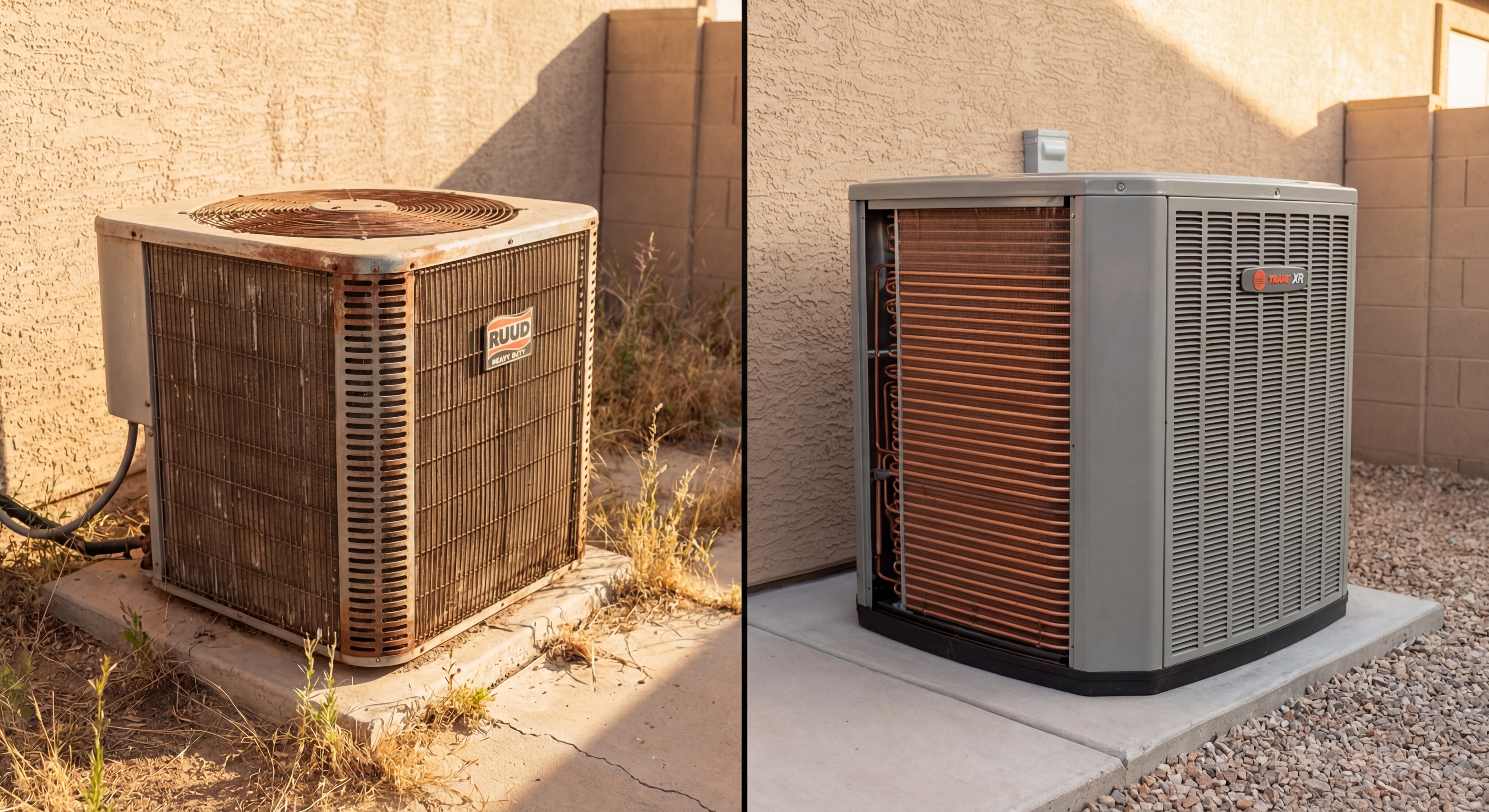
Age matters in Phoenix because of efficiency degradation. A 15-year-old unit rated at 10 SEER when new is now running closer to 7 or 8 SEER equivalent due to compressor wear, degraded coils, and refrigerant losses. That drop translates directly into higher electric bills.
What Have You Already Spent on Repairs?
If you have paid for two significant repairs in the past two years, you are past the crossover point. Each repair costs $300 to $800, and with an aging unit, the next failure is rarely the same part. You fix the capacitor today and the compressor fails in August.
The rough rule: if a repair today costs more than about one-third of a full replacement, you should usually just replace. With a unit at 12 years old that has already had one major repair, that crossover point comes fast.
A homeowner in Gilbert got a $1,200 quote to recharge her system. A second contractor identified a failing compressor and quoted $11,500 for a new unit. The recharge would have bought six weeks before a full failure.
Is Your Electric Bill Higher Than It Used to Be?
If your usage habits have not changed but your summer electric bill has climbed steadily, your AC is losing efficiency. This is one of the clearest signals you can get without a professional load calculation.
APS and SRP both make historical usage data available online. Pull last July and compare it to three years ago. If your consumption has gone up 20 to 30 percent without a change in thermostat behavior, your system is working harder to deliver the same result. The harder a compressor runs, the faster it wears out.
What Is Your Risk Tolerance for a July Failure?
This is the one most homeowners underestimate. When your AC fails on July 3rd in Phoenix, your options are:
- Pay whatever emergency after-hours rate a contractor is charging.
- Wait days for an available installer while sleeping in 95°F heat.
- Accept the first contractor who can show up, without time to check reviews or compare pricing.
That last option is how homeowners end up paying $14,000 for a 3-ton system that should have cost $8,500 installed.
The Specific Warning Signs That Mean Replace Now
Age alone is not enough. These signals mean stop patching and start planning:
The compressor is running but the house is not cooling. The most serious sign. Continuing to run it risks a complete lockup, meaning a full replacement anyway, plus emergency service charges.
You hear grinding or clicking sounds when the unit starts up. These are mechanical failures in the compressor or fan motor. They do not get better. They get more expensive.
The unit runs continuously but the airflow is weak. This points to a failing compressor, closed ducts, or a refrigerant issue. At 12-plus years, that money is usually better spent on replacement.
You have had to recharge the refrigerant more than once in three years. Modern systems should not lose refrigerant. If you are adding charge every year or two, you have a leak. Patching one leak often reveals another. This is a money pit on an aging unit.
The unit uses R-22 refrigerant. R-22 is no longer manufactured. A pound of reclaimed R-22 costs $200 to $300. A major repair on an R-22 system often makes replacement the cheaper option.
Skip the dealer markup
See What a New AC Actually Costs
AC Rebel shows you the real equipment price — no sales pitch, no inflated quote. Get matched with a licensed installer and keep $3,000–$5,000 in your pocket.
Get My Direct Price →The Cost Comparison You Should Actually Run
Here is the math I walk homeowners through.
Suppose your current system is 13 years old, costing $350 a month in summer electric bills. You just got a $650 quote to replace the capacitor.
Option A: Pay the $650 repair. Hope the compressor holds through summer. Spend $2,100 more in electric bills over the season versus a new unit. Roll the dice on a failure in August.
Option B: Replace with a new 16 SEER system before summer. Installed cost runs $8,500 to $10,500 depending on size and brand. Your new electric bill drops to $180 to $220 a month in summer. That is $130 to $170 in monthly savings during peak months. The system comes with a 10-year warranty. You eliminate emergency risk entirely.
The $650 repair buys you maybe one more year with real risk attached. A new system costs more upfront and pays back through lower bills and no emergency risk within three to four years.
How Long Does a New AC Installation Actually Take?
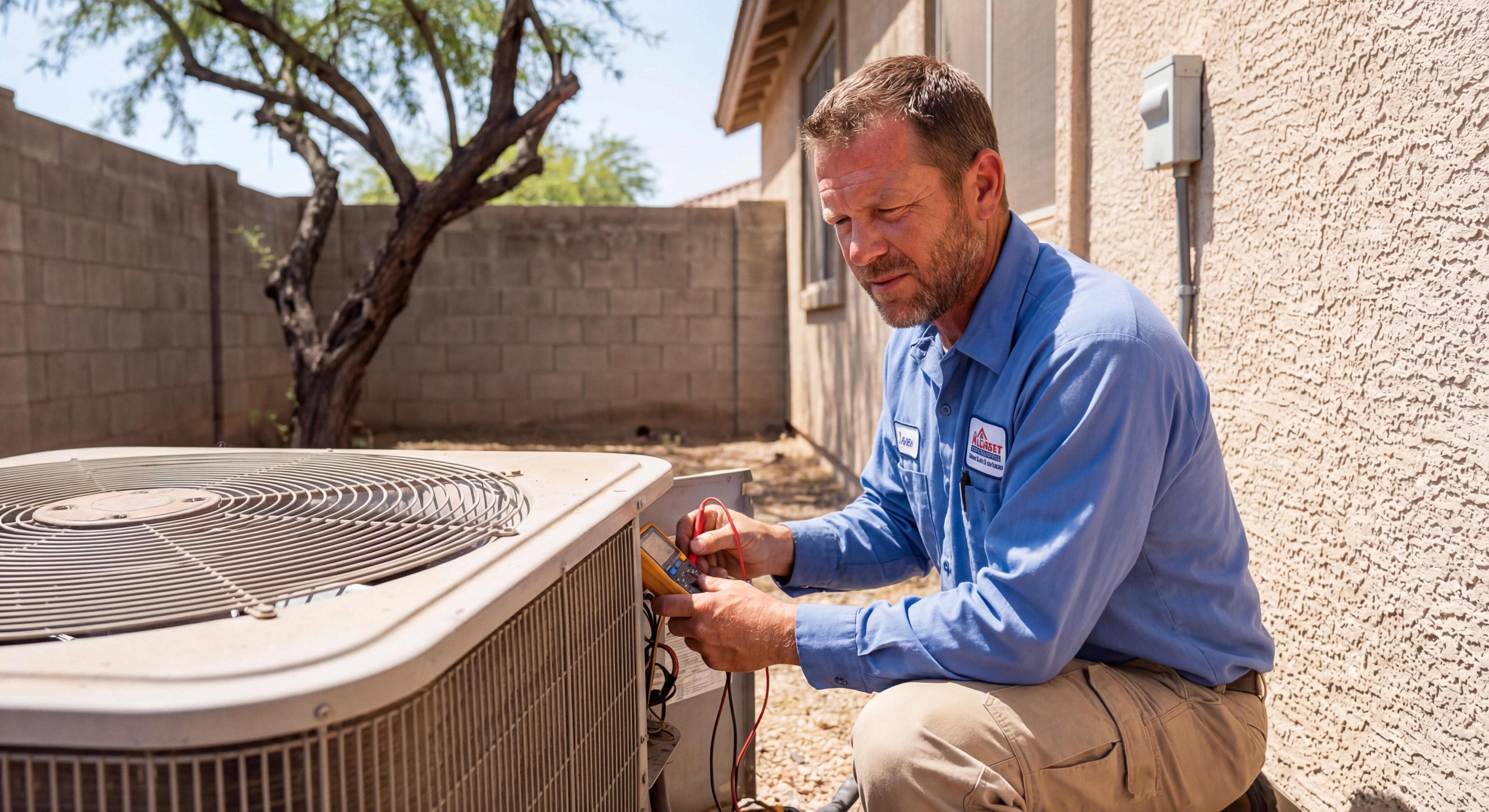
Most homeowners imagine weeks of disruption. A standard replacement takes one to two days for the physical work. Lead time for scheduling and permits in the Phoenix metro is usually two to four weeks.
Call a contractor in late March and you can realistically have a new system running by late April or early May, well ahead of the peak pricing and availability crunch of June and July.
What About Just Waiting Until Fall?
You can do that, but you are accepting real risk to save a few hundred dollars in upfront cost.
October might bring slightly better pricing since demand drops. But you spent an entire summer running an inefficient, failure-prone system and paid premium electric rates the whole time. Higher utility bills often wipe out any fall pricing advantage.
October is also popular for replacements, since that is when many homeowners realize their unit is not going to survive another summer. Spring scheduling gives you the most contractors to choose from and the most flexibility in getting the date you want.
What AC Rebel Offers for Spring Replacement
AC Rebel lets you browse unit pricing directly before involving a contractor. You see what the unit costs, what the dealer markup would have been, and what installation costs through a vetted local contractor. Most homeowners are surprised by how much less they pay compared to the first quote from a traditional contractor.
You choose your contractor based on ratings and license information. You are not assigned whoever happens to have availability. Financing is available, with payments starting around $47 a month depending on the unit and approval terms.

Frequently Asked Questions
Q: At what age should I replace my AC unit in Phoenix?
Consider replacement at 12 to 15 years, earlier than the national average of 15 to 20 years. Phoenix heat puts more stress on systems here. If your unit is over 12 and showing efficiency decline or needing repairs, spring replacement is usually the smarter move.
Q: Is it worth replacing a 15-year-old AC unit?
Usually, yes. A 15-year-old unit has lost significant efficiency and is closer to major failure. The cost of continued operation, higher electric bills, and emergency repair risk often exceeds the upfront cost of replacement. A new 16 SEER unit can cut summer electric bills by 30 to 40 percent.
Q: What is the best month to replace an AC unit in Phoenix?
April and May are ideal. Contractors are available, slots are easier to get, and your new system is running before extreme heat arrives. June and July bring peak pricing and limited availability. Fall is workable but you will have spent a full summer with your aging system.
Q: Can I replace my AC myself or do I need a licensed contractor?
You need a licensed contractor. Arizona requires a contractor license and permitted work for HVAC installation. A licensed contractor also keeps your warranty valid. AC Rebel connects you with vetted, licensed installers.
Q: How much does a new AC cost in Phoenix?
For a standard 3-ton system in the Phoenix metro area, expect $8,500 to $12,000 fully installed depending on brand, efficiency rating, and installation complexity. AC Rebel shows direct unit pricing separate from installation so you can see exactly where your money goes.
Q: Does replacing my AC before summer add value to my home?
A new efficient AC system is a genuine selling point for Phoenix homes. A 16 SEER or higher system with documentation is a meaningful selling point in a market where summer utility costs are part of every conversation.
Q: How do I know if my AC is inefficient without a professional inspection?
Pull your APS or SRP usage data and compare last July to three years ago. If your consumption has risen 20 percent or more without a change in thermostat habits or household size, your system is losing efficiency. Running nearly constantly and still struggling to hit your set temperature is a clear signal worth acting on.
Phoenix summers do not give you a grace period. A unit showing signs of strain in March is unlikely to make it through June, July, and August without a serious failure. The homeowners who handle this best decide in April, not during a heat wave.
Get a free instant quote at acrebel.com and see what a new system costs before you commit to patching an aging unit for one more summer.
Ready to stop overpaying?
See Your Direct AC Price in 2 Minutes
Skip the dealer. Buy your AC unit at direct pricing and pay a vetted local installer only for the installation. No sales calls. No hidden markup. Most homeowners save $3,000–$5,000+ compared to a traditional quote.
Get My Direct Price — No Credit Card2-minute quote · Licensed installers · 10-year warranty options