
Indoor Air Quality in Phoenix Homes: What Nobody Tells You

Indoor Air Quality in Phoenix Homes: What Nobody Tells You
TL;DR: Phoenix homes trap air quality problems more than most climates. Sealed envelopes for cooling efficiency, extreme heat driving VOC off-gassing from building materials, and monsoon humidity create a three-layer IAQ challenge. Upgrading to MERV 11+ filtration, running your AC fan continuously, adding a UV lamp or media air cleaner, and managing indoor humidity between 40-50% are the fixes that work. Most cost $150-$800 and some take a weekend.
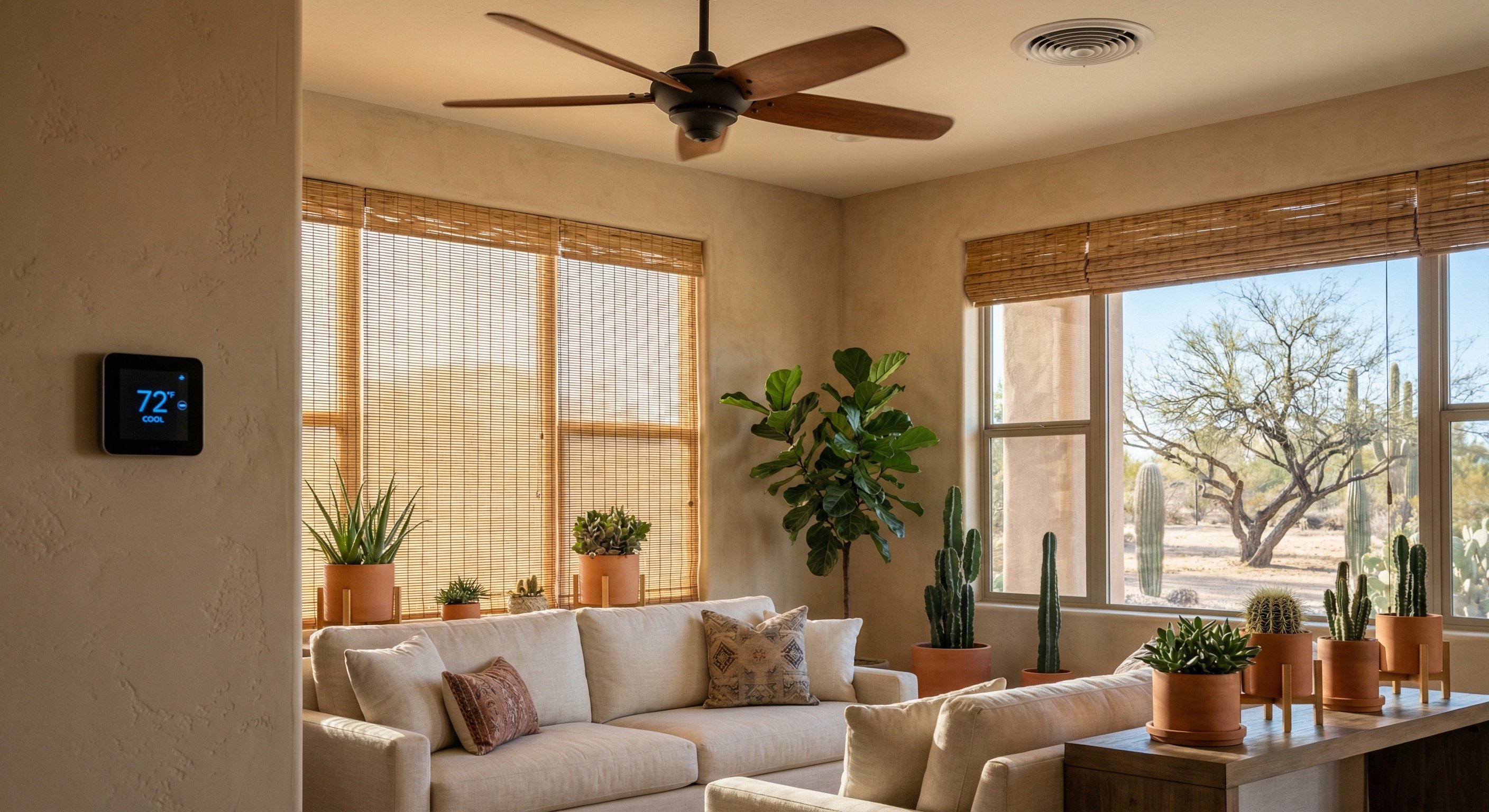
It is 7 a.m. in Gilbert and already 84 degrees outside. The homeowner wakes up with a scratchy throat, blames the AC, and fills a glass of water. The problem is probably not the unit itself. It is the air inside the house.
Phoenix homes face three distinct IAQ pressures that are different from humid coastal climates and different from cold northern states where ventilation is handled by drafty windows.
Why Phoenix Homes Are Different
Phoenix homes are built to keep heat out, which means they keep air in. Modern foam insulation, weatherstripped doors, and dual-pane windows create a sealed envelope that keeps your AC running efficiently. It also means that every particle generated inside your home, from cooking grease to the formaldehyde slowly off-gassing from particle board furniture, stays inside until you actively remove it.
Arizona summer heat accelerates chemical reactions that move slowly in temperate climates. VOCs off-gas faster at 110 degrees inside a sun-baked room than they do in a Boston January. Your home is a slow-bake oven for every synthetic material inside it.
Then there is the monsoon. July through September brings outside humidity that spikes to 60-70% inside a home where the AC is running but not dehumidifying properly. An oversized AC short-cycles, cools the air without pulling out enough moisture, and leaves you with that sticky feeling that nobody in Phoenix talks about because it seems like a humidity problem when it is really an air quality and comfort problem combined.
The Three Things Degrading Your Home Air
Dust and Particulates
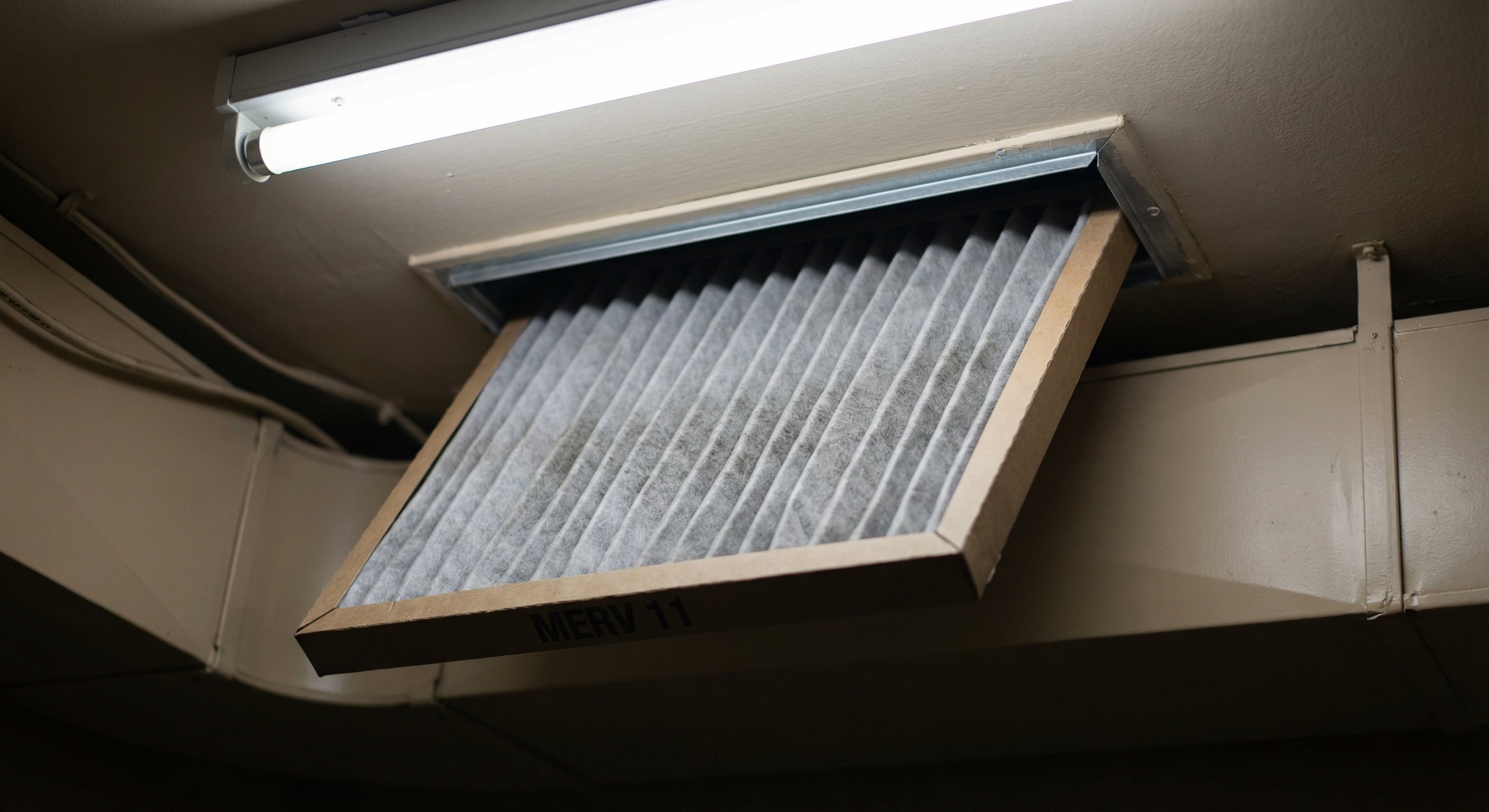
Arizona particulate matter includes calcium carbonate from caliche, pollen from mesquite and ragweed, and fine sand that works its way past basic filters. The standard 1-inch fiberglass filter that came with your AC unit protects the equipment, not your lungs. It traps large particles but lets everything smaller than about 10 microns pass straight through into your living spaces.
Moving to a 4 or 5-inch media filter cabinet with MERV 11 or higher filtration captures fine dust, mold spores, and most allergens. The critical point: a high-MERV pleated filter crammed into a standard 1-inch slot will restrict airflow and hurt your system. You need the proper cabinet that is designed for thicker filters.
Stale Air and Ventilation
Tight construction means your home does not breathe. You might get one good air exchange per day in a sealed Phoenix home. Compare that to a drafty Midwest house in winter, which might cycle air five or six times per day. That sounds like an energy win, but it means carbon dioxide builds up overnight, cooking odors linger for hours, and chemical off-gassing from furniture and paint concentrates in your living spaces.
The fix is not opening windows in July. The fix is mechanical ventilation. An energy recovery ventilator brings fresh outside air in while recovering cooling energy from exhaust air. For existing homes without ductwork for a full ERV, a fresh air intake valve on your return duct, controlled by your thermostat, brings in small amounts of outside air during cooler morning hours when your AC is not working as hard.
Humidity and Moisture
This gets overlooked in Phoenix because it is a desert. But a family of four generates about 2-3 gallons of water vapor per day from showering, cooking, and breathing. In a sealed Phoenix home, that moisture has nowhere to go unless your AC handles it or you actively vent it.
The tell-tale sign is a home that cools to 76 degrees but feels clammy. You turn the thermostat down and you are shivering but still sticky. The fix is running your AC fan in the ON position rather than AUTO, so air continuously cycles through the filter and across the evaporator coil, pulling moisture even when the compressor is not cooling. Or add a whole-home dehumidifier that sits alongside your air handler for about $800-$1,200 installed.
What Actually Works
Upgrade your air filter and filter cabinet. Move from that 1-inch basic filter to a 4 or 5-inch media filter in a proper cabinet. Cost: $150-$400 for the cabinet and first set of filters. Filters run $30-$60 each and last 6-12 months. This is the single highest-ROI IAQ investment you can make.
Run your fan in ON during cooling season. Air continuously pulls through the filter and across the evaporator coil, improving dehumidification and keeping particulates moving toward the filter. Electricity cost is minimal, typically $10-$20 a month.
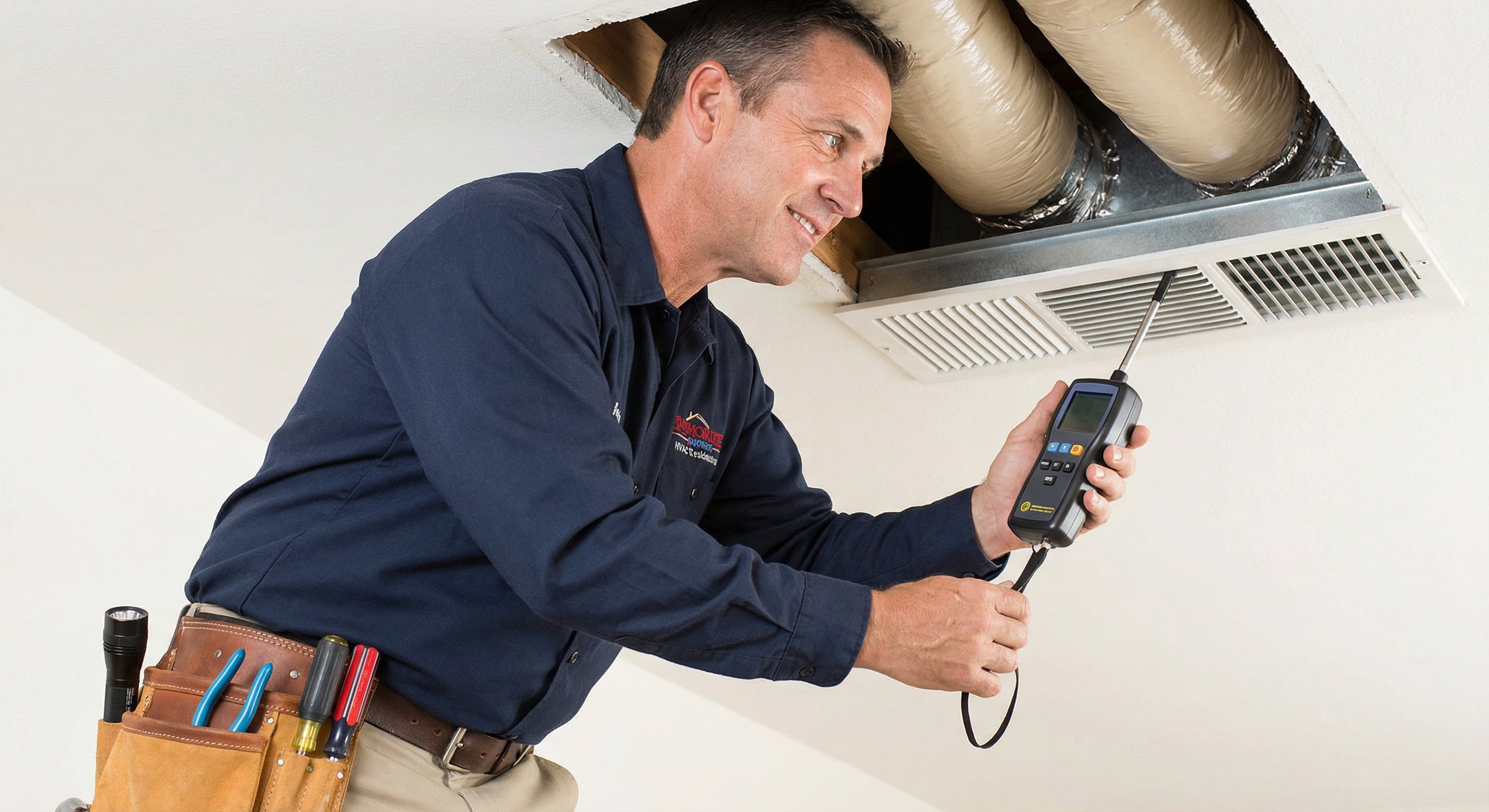
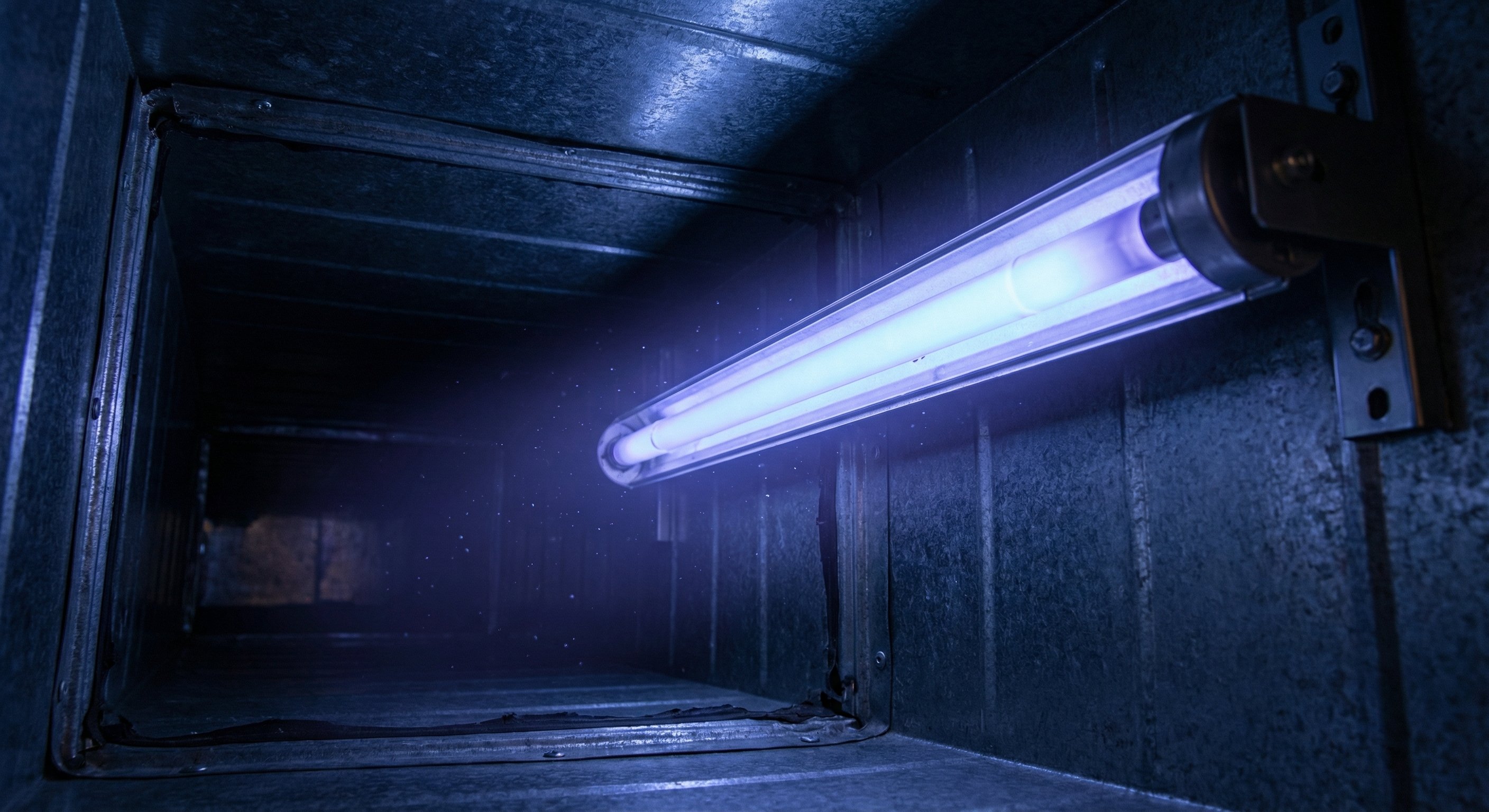
Add a UV lamp in your supply duct. UV-C lamps installed near the evaporator coil kill mold and bacteria that cause musty AC smell and restrict airflow over time. Cost: $300-$600 installed. Bulbs last 1-2 years and cost about $80-$120 to replace.
Install a whole-home media air cleaner. For homeowners with someone with respiratory issues, a media air cleaner with MERV 13-16 filtration makes a measurable difference. This is different from a standard filter upgrade because it handles airflow resistance properly. Cost: $500-$900 installed.
Add mechanical ventilation if your home is tight. If you have upgraded windows, added foam insulation, and live in a newer Phoenix community built since 2000, a fresh air damper controlled by the thermostat runs $200-$400. A full ERV system costs $1,500-$3,000 installed.
Skip the dealer markup
See What a New AC Actually Costs
AC Rebel shows you the real equipment price — no sales pitch, no inflated quote. Get matched with a licensed installer and keep $3,000–$5,000 in your pocket.
Get My Direct Price →What Does Not Work
Room air purifiers with HEPA filters. These clean air in one room. The moment you open a door you are back in the same air. Fine for a bedroom with the door closed. Not a whole-home solution.
Ozone generators. Banned in California for good reason. Ozone damages lung tissue and worsens respiratory conditions. Some companies still sell them in Arizona. Skip it.
Ionic or electrostatic precipitator filters sold as add-ons. These generate ozone as a byproduct and their particle removal efficiency is poor compared to properly-rated media filters.
Indoor plants. They do not meaningfully improve air quality in real homes. The studies showing dramatic VOC reduction were in sealed laboratory chambers with unrealistically high plant-to-volume ratios.
How to Think About IAQ Upgrades
The right investment depends on your situation. Pets: prioritize filtration and change filters every 60-90 days. Allergies or asthma: MERV 11 or higher media filter is worth the airflow tradeoff. New furniture or recent renovation: run your fan continuously for a few weeks and change filters monthly to clear VOCs faster.
Start with the filter upgrade because it has no downside if done correctly. If you notice improvements, decide whether to invest in more involved solutions. Most Phoenix homeowners find that moving from a 1-inch basic filter to a properly-sized media filter with MERV 11 is the single most noticeable improvement they make.
Musty smell when your AC first turns on in spring: UV lamp is a permanent fix. Stuffy home in the morning: ventilation problem, not filtration. Cold and clammy at 76 degrees: humidity problem, get the fan running continuously or add a dehumidifier.
Most IAQ improvements install in a single visit. Filter cabinet: under an hour. UV lamp: about an hour. Fresh air intake valve: 1-2 hours. None require major system replacement. They work with the AC you already have.
Get a free instant quote at acrebel.com to see what a new AC system with built-in IAQ features would cost versus what you are paying to patch an aging system.
Frequently Asked Questions
Q: What MERV rating should I use for my Phoenix home?
A: MERV 11 is the minimum upgrade worth making for most Phoenix homes. It captures fine dust, mold spores, and most allergens without restricting airflow if you use a proper thick media filter (4 or 5 inches) rather than cramming a high-MERV pleated filter into a standard 1-inch slot. MERV 13 and above is appropriate if someone in your home has respiratory conditions, but always pair high-MERV filters with a media filter cabinet or whole-home air cleaner designed to handle the increased airflow resistance.
Q: Does running my AC fan continuously really help with air quality?
A: Yes. When your fan runs in the ON position, air continuously pulls through the filter and across the evaporator coil, which means moisture is being removed even when the compressor is not active to cool the air. This improves dehumidification and keeps particulates moving toward the filter rather than settling on surfaces throughout your home. Electricity cost is minimal, typically $10-$20 a month depending on your fan motor size.
Q: How do I know if my Phoenix home has a ventilation problem?
A: The simplest test is whether your home feels noticeably stuffy after being closed up for several hours, particularly in the morning. If you cook dinner and the smell lingers for more than 30-45 minutes with the range hood fan running, your home is not exchanging air fast enough. A handheld air quality monitor measuring carbon dioxide levels gives a more precise answer: CO2 above 1,000 ppm indicates insufficient ventilation.
Q: Are UV lamps in AC systems worth it in Phoenix?
A: Yes, if you have ever noticed a musty smell when your AC first turns on in spring, or if your drain pan stays damp between cycles. UV-C lamps installed near the evaporator coil kill the biological growth that causes that smell and can restrict drainage over time. They are not a substitute for filtration but they address a specific problem that filters cannot solve. Expect to pay $300-$600 installed and replace bulbs every 1-2 years.
Q: Can an oversized AC cause air quality problems?
A: Indirectly, yes. An oversized AC cools your home quickly and then shuts off before humidity is adequately removed. This is why some Phoenix homeowners feel cold and sticky at the same time. The fix is either replacing the system with a properly sized unit based on a Manual J load calculation, or supplementing with a whole-home dehumidifier.
Q: What is the most cost-effective IAQ improvement for Phoenix homeowners?
A: Replacing your standard 1-inch filter with a 4 or 5-inch media filter in a proper cabinet. This costs $150-$400 to set up and $30-$60 per filter every 6-12 months. It does not require any ductwork modification, takes under an hour to install, and provides meaningfully better filtration without restricting airflow if the cabinet is sized correctly for your system.
Q: Does a new AC unit help with indoor air quality?
A: A new unit with a thicker filter cabinet, a built-in media air cleaner option, and a variable-speed blower motor provides better IAQ performance than a 15-year-old system running on a single-speed fan with a 1-inch filter slot. Newer units also run longer at lower speeds, which improves humidity removal and air filtration cycles. However, a new unit plus a proper media filter setup will outperform a new unit with the same cheap 1-inch filter you had before.
Sources: EPA Indoor Air Quality Guidelines (epa.gov/indoor-air-quality-iaq), ENERGY STAR Home Sealing and Insulation Standards, Arizona Department of Health Services Indoor Air Quality Resources, ASHRAE Standard 62.1 Ventilation for Acceptable Indoor Air Quality.
Ready to stop overpaying?
See Your Direct AC Price in 2 Minutes
Skip the dealer. Buy your AC unit at direct pricing and pay a vetted local installer only for the installation. No sales calls. No hidden markup. Most homeowners save $3,000–$5,000+ compared to a traditional quote.
Get My Direct Price — No Credit Card2-minute quote · Licensed installers · 10-year warranty options